 Angela Stefani
WASHINGTON – President Donald Trump and Vice President J.D. Vance have vociferously condemned the recent influx of migrants into Ceuta, Spain's North African exclave, characterizing the events as an "invasion" and a direct consequence of "left-wing globalist policies." Their strong remarks, issued three months before the pivotal US congressional elections, strategically align with a broader conservative narrative on border security and migration, aiming to galvanize their political base.
The President described the scenes unfolding in Ceuta as "shocking," a sentiment echoed by Vice President Vance, who articulated his view that the dramatic surge underscores the failures inherent in liberal migration approaches. The Spanish government and European Union officials are grappling with the humanitarian and logistical challenges posed by thousands of individuals attempting to cross into the enclave.
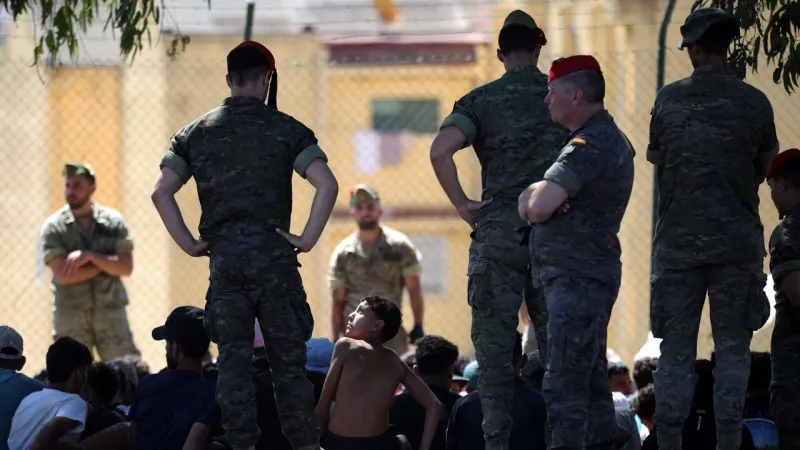
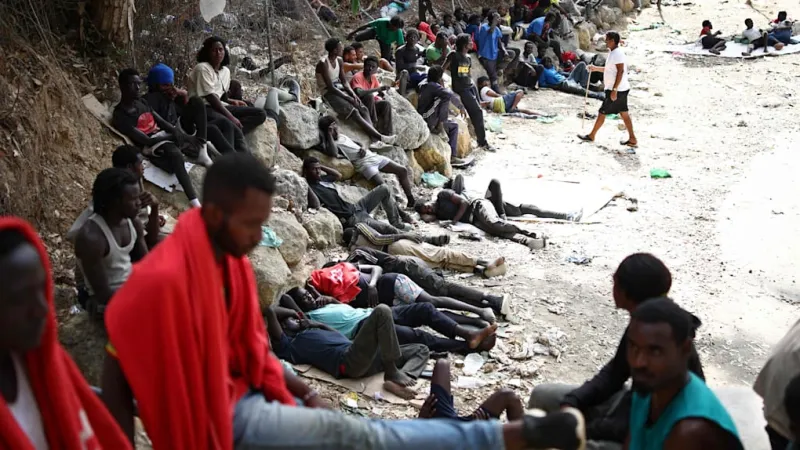
Images disseminated globally depict scores of migrants, many attempting to swim or climb fences, overwhelming border defenses. These visuals have become a focal point in the international discourse on migration, drawing stark reactions from leaders across the political spectrum.
For the Trump administration, the events in Ceuta offer a potent backdrop for domestic political messaging. With congressional elections looming in November 2026, the administration appears poised to highlight border security as a paramount issue, drawing parallels between the European situation and debates over America's southern border.
Vice President Vance, a prominent voice within the Republican Party, expanded on the administration's stance. "What we are witnessing in Ceuta are the direct consequences of left-wing globalist policies that erode national sovereignty and encourage uncontrolled migration," Vance stated, suggesting that such approaches create instability.
This rhetoric is not new for the administration, which has consistently advocated for stringent border controls and stricter immigration enforcement. The Ceuta situation provides current, vivid imagery to reinforce long-held positions on national borders and the perceived dangers of open-border policies.
The timing of these condemnations is particularly noteworthy. As the midterm election cycle intensifies, both President Trump and Vice President Vance are actively campaigning, seeking to expand Republican majorities in Congress. Issues of migration and national security frequently resonate with their core supporters.
The situation in Ceuta has also prompted a robust response from European leaders. Several heads of state, including Italian Prime Minister Giorgia Meloni, have pressed for an emergency EU summit to address the escalating migration crisis, signaling a continent-wide concern. This broader European discussion is detailed in reports such as Meloni, 21 EU Leaders Force Ceuta Summit; Sanchez Denounces Schengen Curbs.
Spain has found itself at the epicenter of this latest migration challenge. Its Prime Minister, Pedro Sanchez, has vehemently defended the country's border integrity while navigating complex diplomatic relations with neighboring Morocco and the broader European Union. The delicate balance between humanitarian concerns and border enforcement remains a contentious debate.
The European Union, for its part, has often struggled to forge a unified strategy on migration. While some member states advocate for greater solidarity and shared responsibility, others prioritize national border protection, often leading to policy disagreements and logistical impasses. Reports have also highlighted how Europe Grapples Ceuta Migration: Klingbeil Urges Solidarity, Weber Eyes Frontex Boost.
Critics of the Trump administration's comments argue that framing the migrant surge as an "invasion" dehumanizes individuals seeking safety and opportunities, potentially exacerbating xenophobic sentiments. They contend that a more nuanced approach is required, focusing on the root causes of migration and international cooperation.
However, supporters of the administration maintain that the strong language is necessary to underscore the severity of uncontrolled border crossings and the need for robust national security measures. They view the Ceuta crisis as a cautionary tale for any nation without firm immigration policies.
The immediate future of Ceuta remains uncertain, with Spanish authorities continuing efforts to manage the arrivals and process asylum claims. The incident has once again placed the spotlight on the external borders of the European Union, prompting renewed calls for strengthened Frontex capabilities and enhanced border protection measures.
As the US congressional elections draw closer, the issue of migration, both domestically and internationally, is expected to remain a significant talking point. The events in Ceuta provide a powerful, if controversial, talking point for politicians seeking to sway public opinion and secure electoral victories. The political leverage gained from such crises is evident, especially for an administration keen on emphasizing its tough stance on borders.