Gabriella
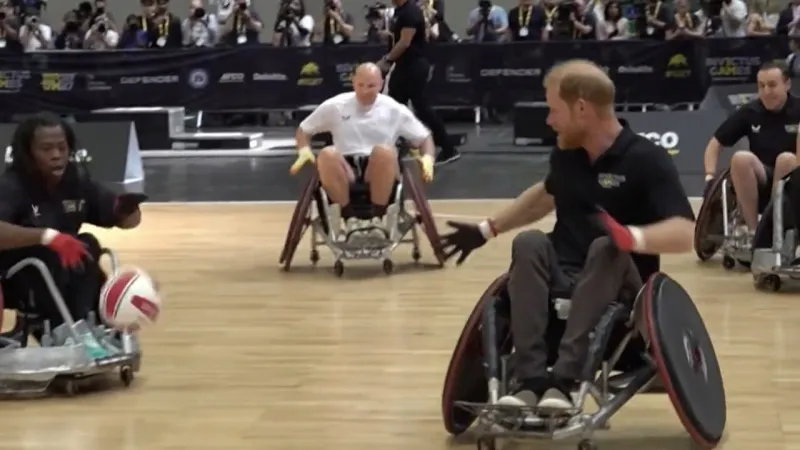
Birmingham witnessed Prince Harry, the Duke of Sussex, actively participate in wheelchair basketball and pickleball this week, underscoring his enduring commitment to the Invictus Games, an international adaptive multi-sport event for wounded, injured, and sick armed services personnel and veterans. His engagement served as a powerful testament to the rehabilitative and empowering spirit of the competition he founded.
The Duke immersed himself in the competitive spirit, joining athletes on the court for spirited matches that highlighted skill, resilience, and camaraderie. Spectators and fellow competitors observed his focused participation, an embodiment of the event's core message that recovery is not merely physical but also deeply psychological and social.
Since its inception in 2014, the Invictus Games have become a beacon of hope and inspiration for countless veterans worldwide. Prince Harry, himself a veteran who served two tours in Afghanistan, conceived the idea after witnessing the Warrior Games in the United States, recognizing the profound impact adaptive sports had on injured service members.
His personal connection to the military community lends significant credibility and passion to the Games. This week's appearance in Birmingham reiterated his unwavering dedication to ensuring that those who have sacrificed for their countries receive the recognition, support, and opportunities they deserve through sport.
Wheelchair basketball, a cornerstone event of the Invictus Games, demonstrates exceptional athletic prowess and teamwork. Prince Harry's decision to join a team not only drew considerable attention but also provided a visible demonstration of the sport's accessibility and its capacity to challenge and uplift.
Pickleball, a rapidly growing sport that combines elements of badminton, tennis, and table tennis, offered another avenue for the Duke to interact with the athletes. Its lower impact nature and strategic depth make it an ideal adaptive sport, fostering competitive spirit without excessive physical strain on recovering bodies.
These personal engagements by the Duke serve a dual purpose. They provide a morale boost to the competitors, affirming their value and strength, and they also elevate the profile of the Invictus Games on a global stage, encouraging broader public and governmental support for veteran rehabilitation initiatives.
The ethos of the Invictus Games extends beyond the medal count. It champions the journey of recovery, the development of new skills, and the building of a supportive community among those who share similar experiences. The Games are a platform for participants to reclaim their confidence and define their future on their own terms.
Harry's sustained advocacy has been instrumental in the growth and success of the Games, transforming it from a novel idea into a globally recognized institution. His presence this week was a reminder of the personal investment he maintains in the lives of these brave men and women.
The event in Birmingham concluded with a renewed sense of purpose and pride among the athletes. Prince Harry's active participation underscored the Games' fundamental principle: that through sport, the wounded, injured, and sick can find strength, camaraderie, and a new path forward.
Looking ahead, the momentum generated by events like these is crucial for the continued expansion and impact of the Invictus Games. The Duke of Sussex remains a pivotal figure in this global movement, ensuring that the legacy of service and sacrifice is honored and celebrated through the power of adaptive competition.