 Angela Stefani
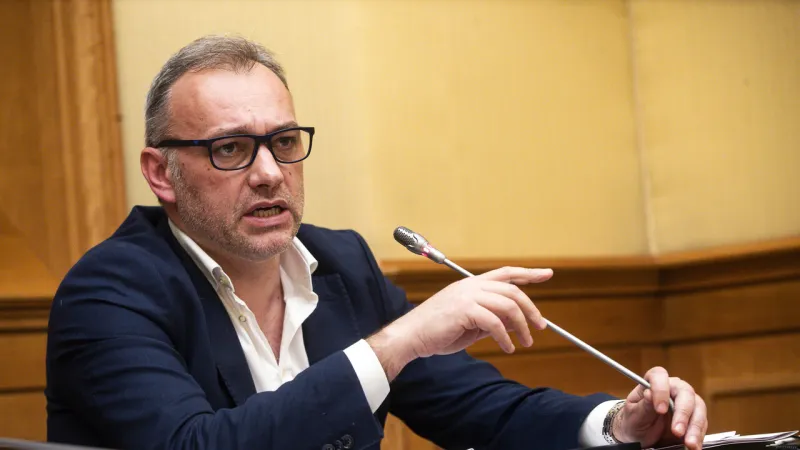
ROME — Italian politician Richetti recently issued a definitive declaration, asserting he would never assume a presidency role for any parliamentary body representing the political right. His pronouncement underscores a broader critique of opposition tactics, advocating for active engagement and battle within legislative structures rather than withdrawal through resignation.
Richetti's statement arrived amidst ongoing political discussions regarding the composition and independence of key oversight committees, specifically mentioning the Rai Supervisory Committee (Vigilanza Rai). This influential body holds significant sway over Italy's public broadcasting service.
The politician, known for his centrist or center-left affiliations, explicitly stated, “I will never serve as president of anything on behalf of the right.” This unreserved rejection signals a firm boundary against perceived political co-option or alignment.
His remarks extended beyond a personal refusal, offering a strategic blueprint for parliamentary engagement. Richetti emphasized, “But opposition is waged by fighting, not by resigning from parliamentary bodies.”
This perspective highlights a fundamental debate within Italian politics about the effectiveness of various opposition tactics. Some factions might advocate for principled withdrawal from bodies perceived as compromised, while others, like Richetti, argue for direct confrontation and persistent debate.
The Vigilanza Rai, in particular, has been a frequent battleground for political influence, given its crucial role in ensuring the pluralism and impartiality of Rai, the national public broadcaster. Appointments to its presidency and membership are often keenly contested by various political forces.
Richetti's call for sustained battle within parliamentary frameworks suggests a conviction that abandoning such platforms cedes ground to the ruling majority, diminishing the opposition's voice and ability to scrutinize power effectively.
The current political landscape in Italy, marked by a coalition government in 2026, provides the immediate backdrop for such discussions. Opposition parties frequently grapple with how to effectively challenge government policies and appointments while maintaining their distinct political identity.
Political analysts suggest Richetti's statement could be interpreted as a subtle rebuke to those who might consider tactical resignations as a form of protest. He implicitly champions a more robust, persistent form of democratic engagement that actively shapes legislative outcomes.
The integrity and perceived independence of public institutions like Rai are consistently under intense public scrutiny. Richetti's stance reinforces the expectation that oversight bodies should operate free from undue partisan control and represent diverse viewpoints.
The politician's emphasis on actively fighting within the system aligns with a traditional view of parliamentary democracy, where legislative bodies serve as the primary arena for debate, amendment, and checks on executive power.
Richetti's refusal to accept a presidency “on behalf of the right” also implies a concern about legitimizing or enabling the political agenda of a bloc he fundamentally opposes, especially in a sensitive and influential role like overseeing public media.
The implications of his declaration extend to future political appointments and the overall conduct of parliamentary business. It sets a clear precedent for how individual politicians might respond to offers of institutional leadership, driven by their ideological commitments.
For the Rai Vigilanza specifically, Richetti's comments highlight the ongoing tension between political appointments and the imperative for independent oversight—a critical balance for maintaining public trust in the media landscape.
This episode contributes to the broader narrative of political maneuvering and ideological divides that continue to shape Italy's governmental structures and institutional integrity in the current year, 2026.
His clear articulation of principles provides significant fodder for both allies and opponents, shaping the ongoing discourse around parliamentary ethics and the responsibilities inherent in effective political opposition.