 Robert Andrison
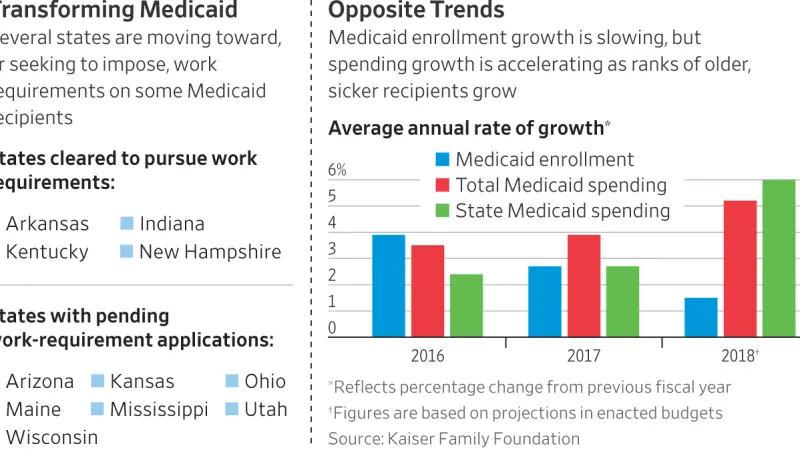
WASHINGTON — Red states across the nation are accelerating plans to impose Medicaid work requirements in 2026, emboldened by the supportive stance of President Donald Trump’s administration. This decisive move signals a significant push to reshape public health assistance, potentially reducing enrollment and shifting states fiscal responsibilities while promoting self-sufficiency.
The policy, which mandates certain beneficiaries engage in work, training, or volunteer activities for a specified number of hours weekly to maintain coverage, represents a vigorous revival of efforts previously stalled or reversed by legal challenges and shifts in federal policy.
President Trump has consistently championed such requirements, articulating a vision where welfare programs encourage employment and personal responsibility. His administration has notably streamlined the federal waiver approval process, granting states greater autonomy to implement these stringent conditions.
States like Arkansas, Kentucky, and Wisconsin, long proponents of stricter eligibility criteria, are at various stages of reintroducing or expanding these mandates. Officials in these states argue that the measures are vital for fiscal sustainability and for fostering a stronger workforce.
Historically, the implementation of Medicaid work requirements has been contentious. Previous attempts faced robust legal challenges, with federal courts in some instances blocking the policies, citing concerns about their congruence with Medicaids core objective of providing healthcare to the needy.
Advocates for the requirements assert that linking benefits to productive activity fosters economic independence, reduces reliance on public assistance, and ensures taxpayer funds are allocated judiciously toward those genuinely in need of temporary support.
Conversely, opponents argue these mandates often erect formidable bureaucratic barriers for vulnerable populations. Individuals grappling with chronic illnesses, disabilities, mental health conditions, or caregiving obligations frequently face immense difficulty complying with hourly quotas, leading to unwarranted coverage loss.
Healthcare access advocates warn that such policies risk a substantial increase in the uninsured population, particularly impacting residents in rural areas and those struggling with substance use disorders, who may lack the necessary infrastructure and resources to meet new demands.
From an economic perspective, while states project considerable cost savings, the administrative apparatus required to track compliance, process exemptions, and manage appeals can be complex and expensive, sometimes diluting the anticipated fiscal benefits.
The renewed emphasis on Medicaid work requirements underscores a broader philosophical commitment among conservative leaders to reform the social safety net. This aligns with a persistent push for reduced governmental expenditure and an enhanced focus on individual accountability within public welfare programs.
Federal oversight, while largely granting states flexibility under the current administration, technically continues to monitor implementation for adherence to broader Medicaid objectives. However, the operational focus has demonstrably shifted towards facilitating state-level initiatives.
Public sentiment regarding work requirements remains sharply polarized, frequently along entrenched partisan lines. This division reflects fundamental disagreements concerning the appropriate scope of government intervention in healthcare provision and social services.
Anticipation of renewed legal battles is high, with numerous advocacy organizations preparing to challenge the approved state waivers. These groups contend the requirements fundamentally undermine Medicaids foundational purpose as a health coverage program.
The policy changes could inadvertently establish a tiered healthcare system where access is contingent not only on income thresholds but also on employment status. This creates a potential for widening disparities within the already diverse Medicaid beneficiary demographic.
Ultimately, the efficacy and societal consequences of these invigorated Medicaid work requirements in 2026 will profoundly influence subsequent policy discourse regarding federal-state dynamics in healthcare and the long-term trajectory of social welfare provisions across the United States.