 Dorry Archiles
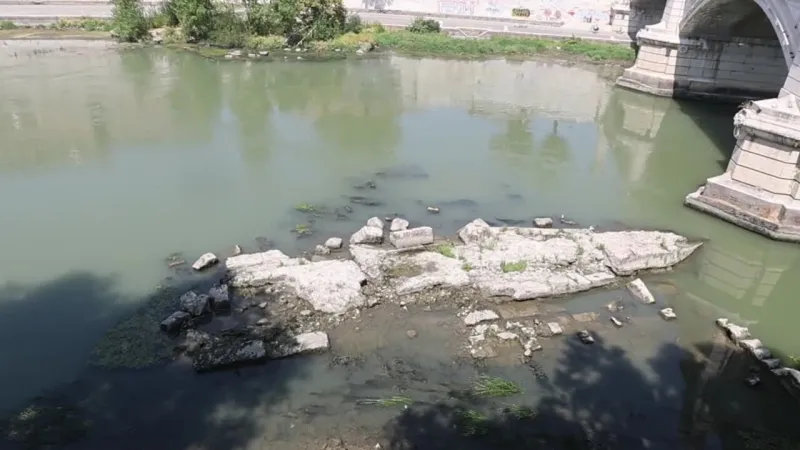
Rome, Italy – The perpetually flowing Tiber River has relinquished a profound secret, with the ancient remains of a Roman bridge resurfacing from its diminished waters. This extraordinary archaeological discovery, visible due to exceptionally low river levels exacerbated by a persistent heatwave, offers a rare glimpse into the citys storied past and simultaneously highlights pressing environmental concerns.
For centuries, these submerged remnants have lain hidden beneath the currents that carve through the heart of the Eternal City. Their reappearance now provides a tangible link to Rome's imperial grandeur, allowing experts and the public alike to witness a piece of history that usually remains obscured by the river's flow.
Archaeologists and local authorities were reportedly surprised by the extent to which the riverbed has become exposed. While occasional glimpses of ancient structures are not unheard of during drier periods, the current visibility of these bridge remains is described as unusually extensive, prompting heightened interest.
The phenomenon is directly attributed to an ongoing period of elevated temperatures and reduced rainfall across the region. Prolonged heatwaves, increasingly common in recent years, have significantly lowered the Tibers water volume, revealing structures that have been hidden for generations or even millennia.
This specific discovery underscores the critical impact of climate change on natural landscapes and historical sites. Rivers worldwide are experiencing fluctuating levels, with both drought and extreme flooding presenting unique challenges to preservation and environmental stability. Similar environmental stressors have been observed elsewhere, as evidenced by reports such as "German Harz District Bans Water Extraction Amid Critical Low Levels," reflecting a broader European struggle with water scarcity.
Ancient Roman bridges were marvels of engineering, designed to withstand the test of time and the forces of nature. They were crucial for military movements, trade, and the daily life of one of historys greatest empires, connecting disparate parts of the sprawling city and its territories.
Identifying the specific Roman bridge requires careful archaeological investigation. Experts will be meticulously studying the visible masonry, construction techniques, and historical records to ascertain its exact identity, whether it be a well-documented structure previously known only from texts or a hitherto unknown crossing.
This event also serves as a poignant reminder of the fragility of historical monuments in the face of environmental shifts. While the exposure of the bridge offers an unparalleled research opportunity, it also signals a worrying trend of ecological imbalance that could threaten other submerged or low-lying historical assets.
The revelation has sparked considerable public interest, drawing curious onlookers to the riverbanks. The ancient bridge acts as a powerful, albeit silent, testament to Rome's enduring legacy and the continuous interplay between human civilization and its natural surroundings.
Going forward, the focus will undoubtedly shift towards conservation and analysis. While the river's natural ebb and flow will eventually re-submerge the structure, the temporary exposure provides invaluable data for archaeologists, helping them to map and understand Rome's complex ancient infrastructure more comprehensively.
Discussions among cultural heritage officials will likely address potential measures to document and protect the site more thoroughly. The challenge lies in balancing archaeological investigation with the natural environment, ensuring that a fleeting moment of discovery can yield lasting historical insights.
Beyond its historical significance, the reappearance of the bridge also opens a dialogue about urban planning and climate resilience in modern cities. As global temperatures continue to rise, the interaction between environmental conditions and the preservation of historical legacies becomes an increasingly vital area of concern.
As the heatwave persists and river levels remain low, the ancient bridge stands as a compelling, visible artifact, prompting reflection on both the achievements of the past and the environmental challenges of the present and future. It is a profound historical echo, brought forth by contemporary environmental realities.