 Chris Robert
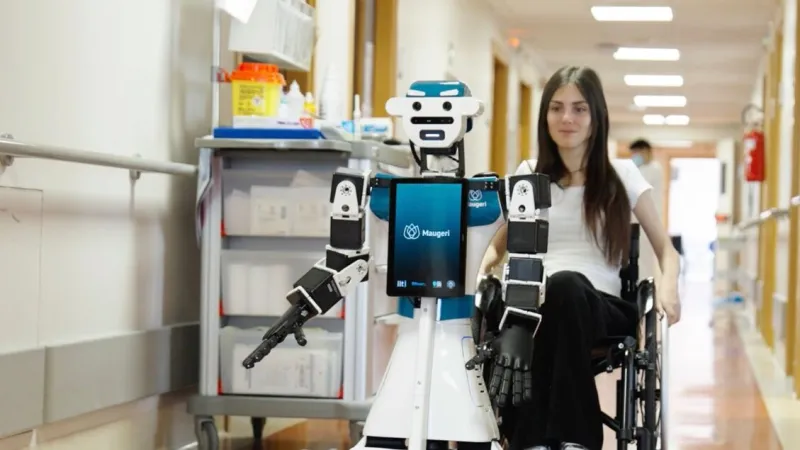
GENEVA – A groundbreaking robot-avatar named Alter-Ego is undergoing clinical experimentation, offering a new frontier in assistive technology for individuals battling Amyotrophic Lateral Sclerosis (ALS) by facilitating remote visits and providing crucial companionship to patients.
The innovative system aims to bridge the profound communication and mobility gaps that often isolate ALS patients, a progressive neurodegenerative disease that affects nerve cells in the brain and spinal cord. As the condition advances, patients gradually lose the ability to initiate and control muscle movement, leading to paralysis and severely limiting their interaction with the outside world.
Alter-Ego is engineered to serve as a physical proxy, enabling friends, family, and medical professionals to engage with patients from a distance. This capability is paramount for individuals whose physical limitations make in-person visits challenging or impossible, thereby sustaining vital social connections and medical oversight.
The robot-avatar's core functionality extends beyond mere telepresence; it is designed to offer genuine companionship. For many ALS patients, the loss of independence can be emotionally devastating. A constant, accessible presence, even if robotic, can alleviate loneliness and provide a sense of connection that significantly improves mental well-being.
The current clinical experimentation phase is critical for evaluating Alter-Ego's efficacy, user experience, and safety protocols. Researchers are meticulously gathering data on how effectively the robot can facilitate communication, provide emotional support, and integrate into daily life without overwhelming patients or their caregivers. The results will inform future refinements and potential broader deployment of the technology.
This development underscores a broader trend in healthcare technology, where artificial intelligence and advanced robotics are increasingly leveraged to tackle complex medical challenges. The integration of AI into assistive devices, as seen with Alter-Ego, reflects a growing commitment to enhancing the quality of life for those with chronic and debilitating conditions. Major university systems, for example, have already begun to embrace AI, sparking widespread campus debate on its societal implications, as explored in articles like Major University System Embraces AI, Sparks Campus Debate.
The ethical dimensions of employing robot-avatars in such sensitive contexts are also a significant consideration. While the technology offers immense practical benefits, questions arise concerning the balance between technological assistance and authentic human interaction. Debates on the ethical imperatives of AI development continue, with some prominent voices, like Pope Leo, urging AI disarmament and citing profound ethical concerns for humanity, a topic highlighted in Pope Leo Urges AI Disarmament, Citing Ethical Imperative for Humanity.
Nevertheless, proponents emphasize that Alter-Ego is not intended to replace human caregivers but rather to augment their capacity and extend the reach of support systems. It provides an additional layer of engagement, ensuring patients remain part of their communities and receive consistent attention.
The potential impact of such assistive robotics extends beyond ALS, offering a blueprint for managing other conditions where mobility is severely compromised or where patients require prolonged home care. This could reshape paradigms for elder care, rehabilitation, and long-term illness management, making specialized care more accessible and less geographically constrained.
As the clinical trial progresses, the hope is that Alter-Ego will demonstrate its capacity to meaningfully improve the daily lives of ALS patients. Its success could herald a new era where advanced robotics play an integral role in providing compassionate, effective, and connected care for those facing life-altering diseases.