 Dodi Irawan
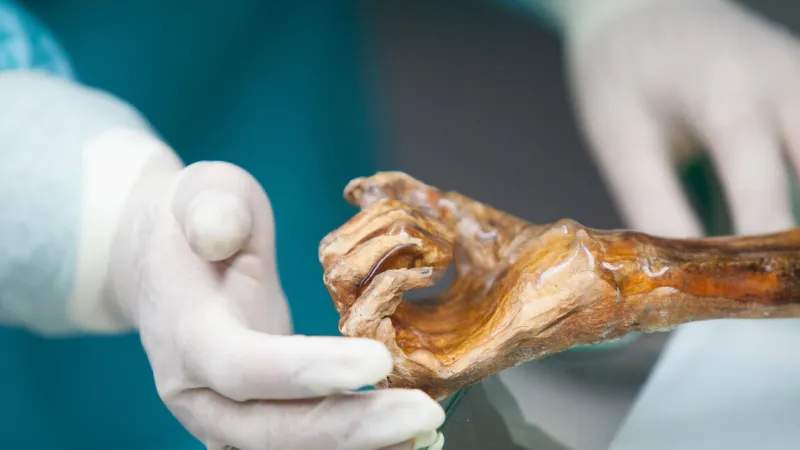
Leading European scientists have recently achieved a remarkable feat, successfully mapping the complex, 5,000-year-old gut microbiome of Ötzi the Iceman. This pioneering research, conducted by an international consortium, offers unprecedented insights into the health and diet of ancient humans while simultaneously creating novel scenarios for industrial research and development across various sectors.
The significant discovery, which delves into the microbial inhabitants of the famous Alpine mummy, was unveiled after years of meticulous analysis. Researchers leveraged advanced metagenomic sequencing techniques to reconstruct the microbial ecosystem that thrived within Ötzi some five millennia ago, providing a window into prehistoric human biology.
Ötzi, also known as the Iceman, represents a uniquely preserved specimen of a Copper Age man discovered in 1991 in the Ötztal Alps on the border between Austria and Italy. His exceptional preservation, naturally mummified in glacial ice, has made him an invaluable resource for understanding ancient European life, offering data on everything from his diet and clothing to his health and genetic makeup.
The gut microbiome, a complex community of microorganisms inhabiting the digestive tract, plays a critical role in human health, influencing metabolism, immunity, and even mood. Understanding the composition of an ancient microbiome like Ötzi's provides crucial comparative data for modern human biology, revealing how microbial populations have evolved and adapted over millennia.
Researchers faced considerable challenges in isolating and sequencing the ancient microbial DNA, contending with degradation and contamination. However, persistence and innovative methodologies allowed them to overcome these hurdles, yielding a remarkably comprehensive profile of the Iceman's internal bacterial world.
The findings indicate a distinct microbial signature that likely reflects Ötzi's hunter-gatherer lifestyle and the environmental conditions of his time. This ancient microbial blueprint offers direct evidence of the types of bacteria prevalent before the widespread impact of modern diets, antibiotics, and industrialized living.
Crucially, the results from this Ötzi microbiome study extend far beyond historical curiosity. The potential applications for industrial research are profound. Scientists anticipate that these ancient microbial insights could lead to the identification of novel enzymes, unique metabolic pathways, or even new antibiotic compounds that have been lost or altered in modern microbial populations.
Biotechnology firms and pharmaceutical companies are particularly keen on such discoveries. For instance, the understanding of ancient pathogens or beneficial bacteria could inform the development of next-generation probiotics or targeted therapies, much like ongoing efforts to discover new treatments, such as those detailed in the article EU Seeks Compassionate Access to Novel Pancreatic Cancer Drug. The ancient world may hold keys to future medical breakthroughs.
Moreover, the study of Ötzi's microbiome can contribute to the food industry by shedding light on ancient fermentation processes or the unique properties of microbes that aided in digestion of prehistoric diets, potentially inspiring new food products or preservatives. It also offers a baseline for environmental microbiology research, comparing ancient ecological niches with contemporary ones.
This breakthrough underscores the immense value of paleontological and anthropological research when combined with cutting-edge genomic techniques. It establishes a new benchmark for paleomicrobiology and reinforces the notion that the past holds considerable data for addressing present and future scientific and industrial challenges.
The research teams involved plan further investigations, seeking to cultivate some of these ancient microbial strains in laboratory settings to fully characterize their unique properties. Such in-vitro studies could unlock the functional potential of Ötzi's ancient inhabitants, bringing these millennia-old organisms into modern biotechnological use.
Ultimately, the unveiling of Ötzi's ancient microbiome is not merely a scientific curiosity; it represents a significant step forward in understanding the co-evolution of humans and their microbial partners. The profound implications for industrial research promise to redefine approaches in medicine, biotechnology, and beyond, proving that sometimes, the most innovative solutions emerge from the deepest recesses of history.