Dorry Archiles
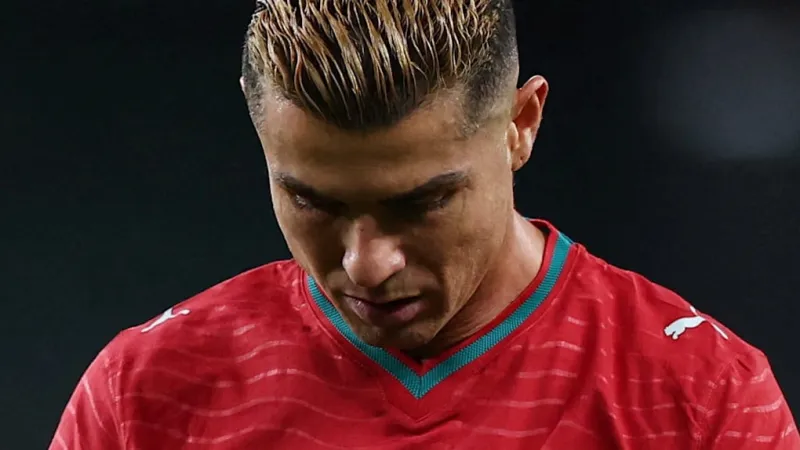
Lisbon – The enduring controversy surrounding football superstar Cristiano Ronaldo's contentious exit from the Portuguese national team, often framed by a narrative highlighting his purported ego, warrants deeper examination. While Ronaldo's actions, characterized by some as a desertion, ignited significant public debate regarding his conduct, critical analysis suggests that the primary responsibility for the unfortunate rupture lies with an influential figure whose decisions fostered an environment ripe for discord.
Ronaldo, a global icon renowned for his unparalleled achievements and competitive drive, has long been a polarizing figure. His perceived self-centeredness, frequently a subject of media commentary, reached a zenith during the contentious period that preceded his departure from the national squad. This perception often overshadowed the underlying complexities of the situation.
The exact circumstances of his exit remain subjects of speculation and hushed conversations within football circles. Reports at the time suggested disagreements over playing time, tactical roles, and a perceived lack of respect from team leadership. These internal frictions culminated in a highly publicized rift that captivated sports headlines worldwide.
Public opinion largely condemned Ronaldo for what many viewed as a selfish act, prioritizing personal grievances over team harmony. This widespread sentiment cemented the prevailing narrative that the five-time Ballon d'Or winner was the sole architect of the crisis, a figure critics often labeled an egocentric peacock whose behavior undermined national pride.
However, a more nuanced perspective challenges this simplistic conclusion. Seasoned observers of high-level football politics and team dynamics contend that individual player actions, no matter how disruptive, seldom occur in a vacuum. Instead, they often represent a symptom of broader systemic issues or failures in leadership.
This alternative viewpoint posits that a key individual within the national team's hierarchy bears greater culpability. This figure, likely holding a position of significant authority such as head coach or technical director, arguably failed to manage the delicate ecosystem of a squad containing a generational talent like Cristiano Ronaldo.
Such failures could manifest in several ways: a breakdown in communication, an inability to integrate a veteran player's vast experience, or an authoritarian approach that stifled dialogue and fostered resentment. The inability to navigate the strong personalities inherent in elite sports can catastrophically impact team cohesion.
The resulting fallout extended beyond mere headlines. The controversy undoubtedly affected the team's performance in subsequent competitions, distracting players and management alike from their core objectives. Fan morale also suffered, witnessing the unceremonious exit of one of their most celebrated athletes.
Ultimately, while Ronaldo's behavior contributed to the tension, reducing the entire saga to his individual ego overlooks the critical role of leadership in mitigating or exacerbating such situations. Effective management requires more than just tactical prowess; it demands astute psychological understanding and conflict resolution skills.
The incident serves as a stark reminder that even global superstars like Cristiano Ronaldo are part of a larger organizational structure. The responsibility for maintaining harmony and achieving collective goals rests heavily on those entrusted with guiding the team. The unworthy theater that unfolded could have been avoided or handled with greater tact.
Football history is replete with examples of star players clashing with management, but the resolution often dictates the lasting impact. In this instance, the lack of a graceful exit strategy or effective mediation pointed to a deeper flaw in the leadership's approach, elevating the drama to an international spectacle.
Thus, while the characterization of an egocentric peacock may capture a facet of Cristiano Ronaldo's persona, it fails to encompass the full scope of responsibility. The narrative that places ultimate blame on the player conveniently absolves others who held the power to prevent the escalation.
This critical evaluation underscores the necessity for transparent leadership and robust conflict management mechanisms within elite sporting organizations. Without these, even the most talented squads risk fracturing under internal pressures, regardless of individual player temperaments.
The legacy of this event for Portuguese football, and indeed for Ronaldo himself, will be shaped not merely by his actions, but by the understanding of how power dynamics and leadership decisions ultimately guided the outcome of this high-stakes standoff.