Robert Andrison
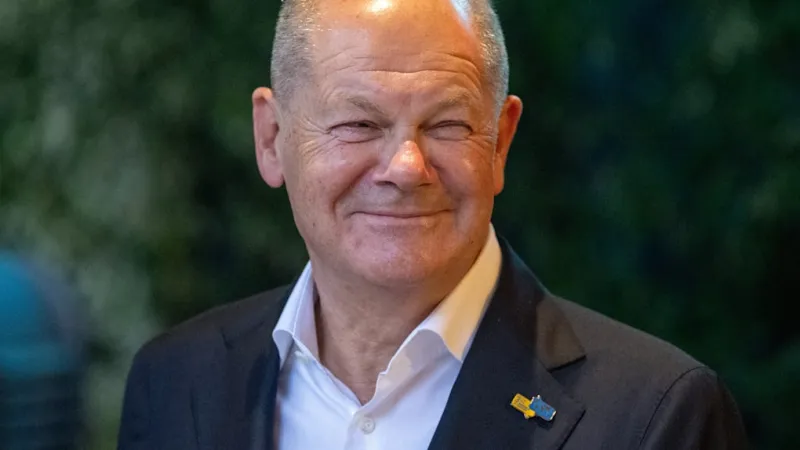
Former Chancellor Olaf Scholz delivered a resolute message affirming the stability of German democracy following recent election outcomes, concurrently advocating for substantial urban expansion within Berlin, specifically proposing new city districts on Tempelhofer Feld. Scholz articulated these views during an appearance on his 'Elefantenrunde' podcast.
The former chancellor characterized the latest electoral results as a compelling testament to the robustness of the democratic system, countering what he termed as cynical predictions regarding its potential decline. His statements underscore a deep conviction in the foundational strength of German governance and public participation.
Scholz expressed a clear message aimed at detractors and those who harbor doubts about the future of democratic institutions. He posited that the electorate's engagement and the orderly conduct of elections serve as irrefutable proof of democracy's enduring vitality and capacity for self-renewal.
Beyond national political commentary, Scholz shifted focus to pressing local issues, spotlighting the acute housing shortage confronting Berlin. He put forth a bold proposition for developing Tempelhofer Feld, the vast former airport site now serving as a popular public park, into residential areas.
This controversial proposal seeks to address the critical need for affordable housing and urban growth, envisioning modern, sustainable neighborhoods that could alleviate the city's demographic pressures. Tempelhofer Feld, currently protected as a green space, has been the subject of intense public debate regarding its future use.
The former chancellor emphasized the strategic importance of unlocking such large tracts of land for development to accommodate Berlins expanding population. He argued that innovative solutions are required to ensure the capital city can sustainably grow and provide adequate living spaces for its residents.
Scholz's call for development on Tempelhofer Feld is not new to the political discourse, yet his renewed advocacy as a prominent national figure injects fresh impetus into the discussion. Previous attempts to develop portions of the field have met with strong public opposition and local referendums.
His remarks come at a time when political stability and public trust in institutions are frequently discussed across Europe. As Ex-President Gauck noted, firm governance is critical to public trust amid reforms, a sentiment Scholz appears to echo with his emphasis on democratic resilience.
The 'Elefantenrunde' podcast serves as a platform for Scholz to share his perspectives on both domestic and international affairs, allowing him to maintain an active voice in shaping public opinion and policy discussions.
Olaf Scholz, a seasoned political veteran, continues to wield influence through his public statements, reflecting on Germany's trajectory and offering solutions to complex challenges. His recent comments highlight a determination to confront both ideological skepticism about democracy and practical urban dilemmas.
The debate surrounding Tempelhofer Feld development encompasses environmental concerns, recreational needs, and the imperative for housing. Scholz's intervention signals a desire to reopen this dialogue with a renewed sense of urgency.
Ultimately, the former chancellor's dual pronouncements aim to foster a sense of optimism about Germany's democratic future while simultaneously pushing for concrete, albeit challenging, steps to improve living conditions in its capital.