 Dodi Irawan
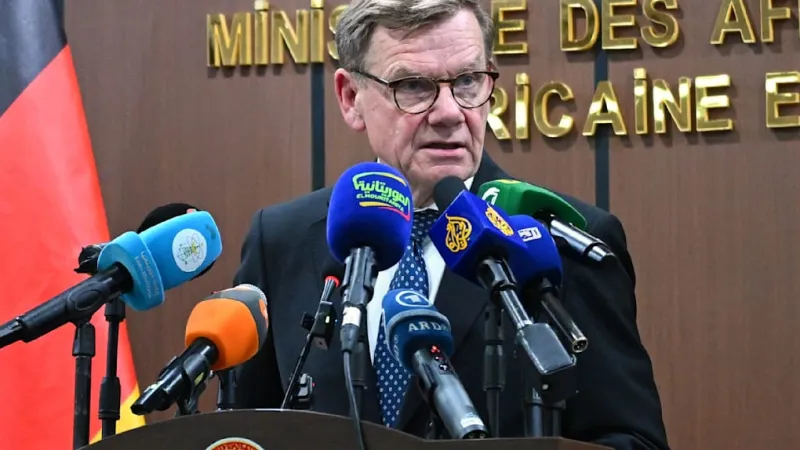
Nouakchott, Mauretania — German Foreign Minister Wadephul initiated a pivotal diplomatic journey to the West African nation, marking the first such high-level visit from Berlin in two decades. The mission seeks to solidify Germany's role as a vital, dependable, and consistent ally in the region, a commitment juxtaposed against considerable concerns regarding Mauretania's approach to press freedom.
The arrival of Minister Wadephul underscores a renewed strategic interest from Germany in a country often overlooked by traditional European diplomatic efforts. This engagement signals a broader re-evaluation of partnerships across the Sahel, a region confronting multifaceted challenges including security, economic instability, and democratic governance deficits.
During his discussions with his Mauretanian counterpart, Minister Wadephul articulated Germany's aspiration to foster a robust and enduring collaboration. He emphasized Berlin's readiness to contribute to regional stability and development, framing Germany's presence as a long-term investment in mutual prosperity and security.
This pledge of partnership, however, confronts the stark reality of Mauretania's human rights landscape, particularly concerning media liberties. International observers and human rights organizations have consistently highlighted constraints on journalists and independent reporting within the country.
The lack of a favorable environment for a free press in Mauretania poses a significant dilemma for Germany's stated foreign policy objectives, which frequently champion democratic values and transparency abroad. A strong partnership, Berlin typically argues, requires shared foundational principles.
Observers suggest that while economic and security cooperation might progress, the issue of press freedom will likely remain a critical talking point in bilateral relations. Diplomatic efforts will necessitate a careful balance between fostering ties and advocating for fundamental rights.
The discussions in Nouakchott encompassed a wide array of topics beyond immediate security concerns. These included potential avenues for economic investment, development aid, and cultural exchange, aiming to build a multifaceted relationship rather than one solely focused on strategic imperatives.
Germany's strategic pivot towards Mauretania also reflects a growing awareness of the nation's pivotal geographic position. Situated at the crossroads of North Africa and West Africa, Mauretania holds considerable significance for regional migration routes, counter-terrorism efforts, and maritime security.
This diplomatic outreach contrasts with previous periods where German engagement in the region was less pronounced at the ministerial level. The twenty-year gap between foreign minister visits illustrates a shifting geopolitical calculus and perhaps a recognition of past oversight.
The Mauretanian government, while welcoming the German delegation, has offered limited public comment on the specific criticisms related to press freedom. Official statements have largely focused on the positive aspects of enhanced bilateral cooperation and mutual respect.
Analysts contend that for Germany to truly become an important, reliable, and stable partner, it must not shy away from candidly addressing areas of concern. The effectiveness of its diplomatic influence often hinges on its willingness to uphold universal values even when inconvenient.
The visit serves as an early indicator of how Germany plans to navigate complex partnerships in regions where strategic interests intersect with human rights challenges. The outcome of these delicate negotiations in Nouakchott could set a precedent for future engagements across the African continent.