 Stefani Rindus
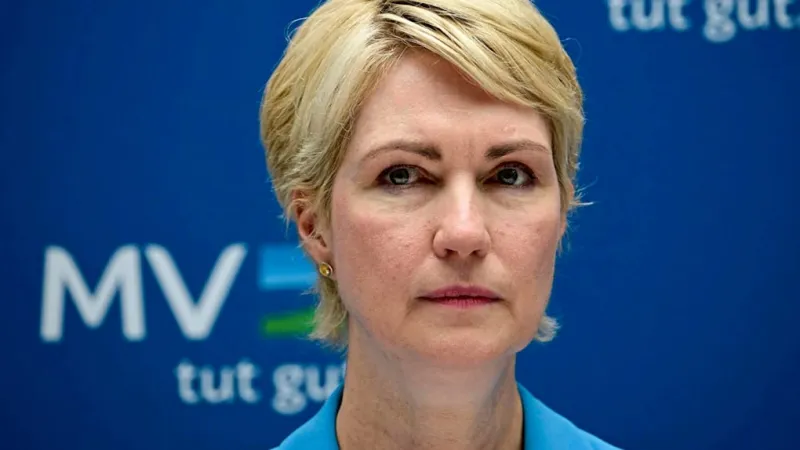
BERLIN – Manuela Schwesig, the Social Democratic Governor of Mecklenburg-Western Pomerania, has ignited a fresh political debate by vociferously demanding a national fuel price cap and an extraordinary profits tax for energy corporations. Her pronouncements, made during a recent appearance on a Politico podcast, directly challenge the current federal government's economic strategy and opposition leader Friedrich Merz to provide viable solutions.
Governor Schwesig did not mince words, aiming sharp criticism at Chancellor Olaf Scholz's administration for its perceived inaction on soaring energy costs impacting German households and businesses. She stressed the urgency of implementing tangible relief measures to alleviate the financial burden on citizens.
Her proposals center on two key pillars: a government-mandated cap on fuel prices to stabilize consumer costs at the pump, and a windfall profits tax levied on oil and gas companies. Schwesig argues these companies have reaped excessive earnings amidst global energy market volatility, necessitating their contribution to public welfare.
The push for a fuel price cap, or Benzinpreisdeckel, comes amidst sustained high inflation and significant public concern over living expenses. German policymakers have grappled with effective strategies to shield consumers from external economic shocks, particularly since the geopolitical events of recent years.
Schwesig explicitly addressed the stance of Christian Democratic Union (CDU) leader Friedrich Merz, whose party has largely opposed such direct market interventions. Referencing Merz's rejection of her proposals, Schwesig stated, “Merz says no, but then he must provide another answer.” This statement underscores a perceived void in the opposition's economic counter-proposals.
Friedrich Merz, head of Germany's leading opposition party, has previously voiced concerns about state intervention in market mechanisms, often advocating for supply-side solutions and fiscal discipline. The CDU's general policy tends to favor market-driven solutions over price controls, which they argue can distort economic incentives.
Economic experts remain divided on the efficacy and potential side effects of a fuel price cap. Proponents highlight immediate consumer relief and a check on corporate profiteering. Opponents, however, warn of potential supply shortages if prices are artificially suppressed, along with the administrative complexity and financial strain on state budgets.
Similarly, the concept of a windfall profits tax draws both support and critique. Advocates see it as a fair way to redistribute unexpected gains derived from crises. Critics often argue it could deter investment in the energy sector and set a problematic precedent for government intervention in corporate earnings.
Governor Schwesig's intervention injects renewed urgency into the national discourse on economic stability and social equity. Her call for a fuel price cap and windfall tax reflects a broader sentiment among some political factions that the government must adopt more assertive measures to protect ordinary citizens.
This debate highlights a fundamental ideological divide within German politics regarding the role of the state in market regulation, particularly during times of economic stress. As Chancellor Scholz's coalition navigates complex fiscal and social challenges, pressure mounts to demonstrate decisive action.
The CDU, under Merz, has been keen to position itself as a credible alternative to the current government, focusing on long-term structural reforms. For context on his broader political commitments, readers may recall that Merz Vows CDU Integrity, Firmly Rejects AfD Alliance, emphasizing his party's commitment to democratic principles.
The coming weeks will likely see intensified discussions in the Bundestag and across German media outlets as political parties jockey for position ahead of upcoming regional elections and in preparation for the next federal election cycle.