 Chris Robert
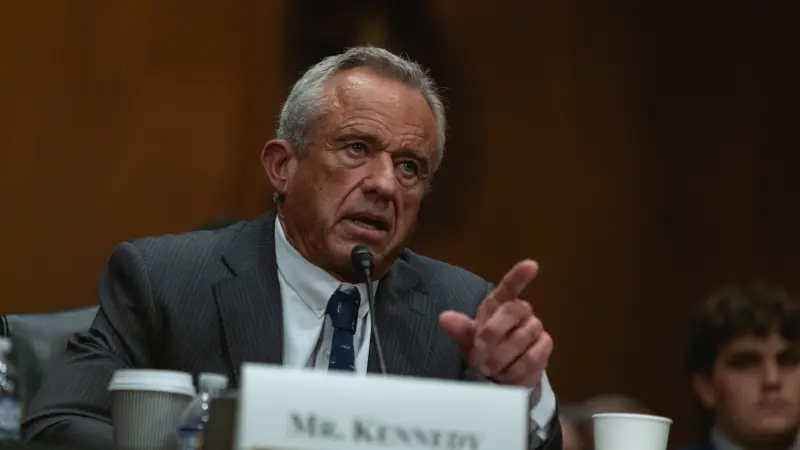
WASHINGTON — Robert F. Kennedy Jr. faced rigorous questioning from U.S. Senators today during a contentious Capitol Hill hearing, where lawmakers pressed him extensively on his contentious views regarding vaccine efficacy, the pharmaceutical industrys role in drug pricing, and other policy positions.
The high-stakes session underscored deep divisions within Washington concerning public health policy and corporate influence, with Senators from both parties seeking clarity on the prominent public figure’s stances.
Much of the scrutiny focused on Kennedys well-documented skepticism surrounding the safety and necessity of certain vaccines, a position that has drawn sharp criticism from public health experts and medical associations nationwide.
Leading Democrats on the committee opened the interrogation by challenging Kennedy to reconcile his public statements with established scientific consensus, particularly concerning the resurgence of vaccine-preventable diseases.
Kennedy, known for his long-standing advocacy on environmental health, defended his position, asserting a need for greater transparency and independent research into vaccine adverse effects, without directly retracting his previous statements.
The discussion then pivoted sharply to the escalating costs of prescription drugs, with Senators questioning Kennedy about his proposals to rein in pharmaceutical company profits and reduce consumer burdens.
Lawmakers highlighted recent legislative efforts by the President Donald Trump administration to negotiate drug prices, contrasting them with Kennedys more radical suggestions for industry restructuring.
Kennedy articulated a vision where pharmaceutical corporations would face stricter regulatory oversight and increased accountability for pricing practices, proposing mechanisms to foster greater market competition and consumer protection.
The hearing also touched upon broader issues of corporate power, environmental regulations, and the intersection of public health with economic policy, revealing the extensive range of Kennedys influence and advocacy.
Observers noted the bipartisan intensity of the questioning, signaling a collective congressional concern over the potential impact of misinformation and the urgency of addressing healthcare affordability across the nation.
Political analysts suggested the hearing serves as a significant litmus test for prominent public figures who challenge mainstream scientific narratives, particularly in an election cycle where public health remains a pivotal issue.
Proceedings concluded with Kennedy reiterating his commitment to what he described as scientific inquiry and public advocacy, while promising to continue his efforts to reform public health institutions.