Chandra Wijayanto
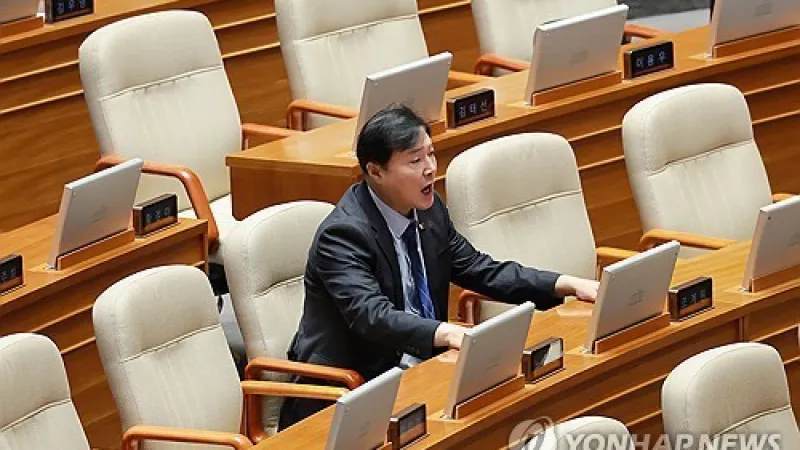
SEOUL, Nov. 21 — South Koreas ruling Democratic Party (DP) is poised to initiate an impeachment motion against the nations Supreme Court chief, a prominent lawmaker announced today. The proposed action coincides with the second anniversary of a contentious martial law bid that allegedly threatened the foundations of the countrys democratic institutions.
The highly anticipated impeachment motion stems from accusations that the Supreme Court chief played a complicit role, or at the very least failed to adequately challenge, an attempt by certain governmental factions in 2024 to declare martial law amidst widespread civil unrest. This alleged endeavor was widely condemned as an executive overreach, aiming to suppress dissent and circumvent due process.
The specific charges underpinning the impeachment motion are expected to revolve around dereliction of duty, abuse of power, and undermining judicial independence. Democratic Party officials assert that the chief justice failed to uphold constitutional principles during a critical period, thereby betraying public trust and compromising the judiciarys impartiality.
A lawmaker, speaking anonymously due to the sensitivity of ongoing internal deliberations, stated, The move to impeach is not a matter of political retribution but a necessary step to restore faith in our justice system. The nations highest judicial officer must be held accountable when the very core of our democracy is jeopardized. The anniversary serves as a solemn reminder of that precarious moment.
The initial martial law bid in 2024, though ultimately unsuccessful, cast a long shadow over South Koreas political landscape. It sparked widespread protests and drew international concern regarding the stability of the countrys democratic framework. Critics pointed to a perceived lack of firm judicial resistance as a worrying precedent.
Opposition parties have largely remained cautious in their public statements, with some expressing concerns about potential political interference in the judiciary, while others acknowledge the gravity of the accusations. Navigating this delicate balance will be crucial for the Democratic Party as it seeks cross-party support for the impeachment effort.
The procedural path for an impeachment motion in South Korea requires a majority vote in the National Assembly to pass. If successful, the motion then moves to the Constitutional Court for a final ruling. This process is arduous and fraught with political challenges, often exposing deep societal divisions.
Historical precedents in South Korea indicate the rarity and significance of such actions. Impeachment attempts against high-ranking officials, particularly within the judiciary, are infrequent and typically reserved for cases of extreme misconduct or constitutional breaches, underscoring the severity of the current situation.
The Democratic Party is expected to formally introduce the impeachment motion in the coming days, following extensive internal discussions and a review of evidence related to the 2024 martial law attempt. Their strategy aims to demonstrate a compelling case that transcends partisan politics and addresses fundamental issues of governance.
The potential removal of the Supreme Court chief would send a powerful message about accountability within the nations highest institutions. It would also likely trigger a period of uncertainty for the judiciary, necessitating a careful transition to maintain public confidence in its operations and rulings.
Observers note that the timing of the impeachment motion, coinciding with the martial law bid anniversary, is a deliberate strategy by the ruling party to highlight the perceived threat to democracy and emphasize the importance of judicial oversight. This action underscores the ongoing vigilance required to safeguard the nations hard-won democratic freedoms.
International relations experts suggest that a stable political and judicial environment is paramount for South Koreas standing on the global stage. Domestic political turmoil, particularly involving core democratic institutions, can reverberate through its foreign policy and alliances. For example, a strong and stable democracy in Seoul is considered crucial for the broader regional security efforts, as discussed in the context of the US, South Korea Cement Alliance As Crucial for Enduring Asian Peace.
As the debate unfolds, the nation watches closely, acutely aware that the outcome of this impeachment motion will not only determine the fate of the Supreme Court chief but also profoundly shape the future trajectory of South Koreas judicial independence and democratic resilience.
Image Caption: The Supreme Court of South Korea building in Seoul, where an impeachment motion against its chief justice is expected to be initiated on the second anniversary of a martial law bid.