Angel Doris
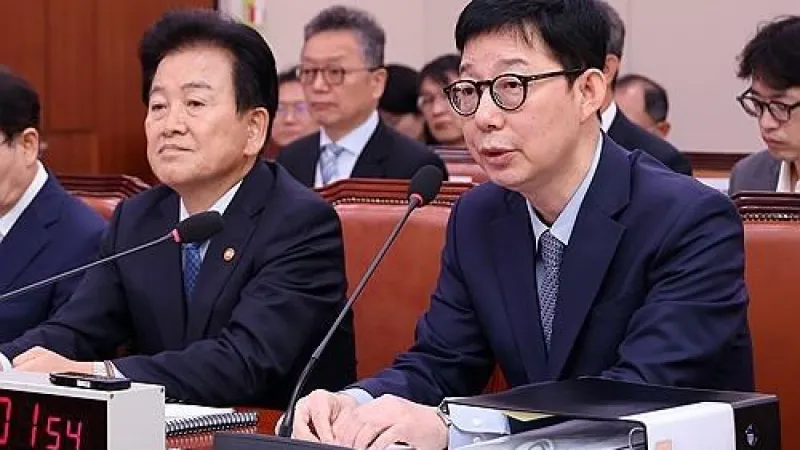
SEOUL, November 12, 2026 – South Korea’s Vice Foreign Minister confirmed today that Seoul is meticulously monitoring developments surrounding a prospective summit between the United States, China, and Russia. This high-stakes diplomatic maneuver, if realized, promises to reshape global geopolitical landscapes and holds significant ramifications for regional stability, prompting intense vigilance from the East Asian nation.
The potential gathering of leaders from the world's foremost military and economic powers signals a pivotal moment in international relations. Such a summit, bringing together President Donald Trump, Chinese President Xi Jinping, and Russian President Vladimir Putin, would inevitably address a myriad of pressing global issues, from lingering regional conflicts to nuclear proliferation and international economic cooperation.
For South Korea, a staunch ally of the United States deeply intertwined economically with China and politically sensitive to Russia's influence, the prospect of this trilateral discussion carries immense weight. Seoul maintains a delicate diplomatic balance, navigating complex relationships that directly impact its national security and economic prosperity.
Observers believe any agenda at a U.S.-China-Russia summit would likely touch upon the volatile security situation on the Korean Peninsula. North Korea's nuclear ambitions and its continued missile development pose an enduring challenge, and the postures adopted by these three powers could profoundly influence denuclearization efforts and regional stability.
President Donald Trump's administration has consistently pursued a foreign policy aimed at direct engagement with major global players, often prioritizing pragmatic outcomes over traditional multilateral frameworks. A summit of this magnitude aligns with his perceived strategy of high-level diplomacy to address complex challenges.
China, facing ongoing economic and geopolitical competition with the United States, alongside deepening strategic ties with Russia, would likely view such a summit as an opportunity to assert its global influence and advocate for a multipolar world order. Beijing's participation would signal its intent to be a central player in resolving international crises.
Russia, despite facing international sanctions and diplomatic isolation from some Western nations, consistently seeks to reaffirm its status as a major global power. Engagement at a trilateral summit with Washington and Beijing would offer Moscow a platform to advance its strategic interests and re-engage on critical security dossiers.
“Such a meeting would not only symbolize a significant recalibration of global power dynamics but also necessitate careful strategic planning from middle powers like South Korea,” stated Dr. Lee Chang-min, a professor of international relations at Korea National University. “The outcomes, whether tangible agreements or merely a reduction in tensions, will ripple across continents.”
While trilateral discussions at various levels are not uncommon, a full leadership summit involving these three nations has historically been fraught with challenges due to their divergent interests and ideological differences. Overcoming these hurdles to find common ground would represent a substantial diplomatic achievement.
Seoul's foreign ministry has initiated internal discussions and engaged with allied partners to strategize its approach should the summit materialize. Ensuring its interests are represented, directly or indirectly, remains a paramount concern for the South Korean government.
This intense diplomatic scrutiny by Seoul underscores the broader international anticipation surrounding any potential engagement of these global powers. Many nations would be keenly watching not just for the direct outcomes but also for the tenor of discussions, seeking indications of future stability or heightened tensions in a rapidly evolving world order.
The intensified focus on global security extends beyond traditional military concerns. Recent reports, such as those highlighting how Seoul Warns: Crypto Heists Pose Grave Global Security Threat, underscore the evolving nature of transnational challenges that could feature in high-level discussions. The interconnectedness of economic and cyber security with broader geopolitical stability is undeniable.
Beyond security, economic ramifications would also loom large. Discussions on global trade, supply chain resilience, and energy security are probable, given the economic heft of the participating nations. South Korea, a trade-dependent economy, stands to be significantly affected by any shifts in global economic policy stemming from such a dialogue.
As diplomatic channels continue to hum with speculation, the precise timing, location, and comprehensive agenda for such a potential U.S.-China-Russia summit remain unconfirmed. However, the mere possibility has already heightened diplomatic activity worldwide.