Robert Andrison
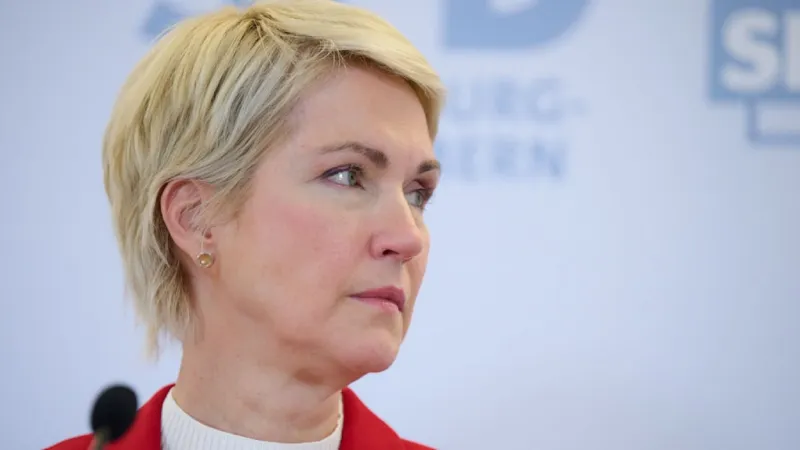
BERLIN – Public sentiment in Mecklenburg-Vorpommern has shifted notably, with a recent Insa poll revealing a continued increase in support for the Alternative for Germany (AfD) following the state election. Concurrently, State Premier Manuela Schwesig faces significant public disapproval for her potential aspirations in federal politics, casting a shadow over her national trajectory.
The survey, conducted by the reputable Insa institute, underscores a growing momentum for the AfD in Germany's northeastern region. This surge comes shortly after the recent state parliamentary elections, indicating a sustained shift in voter allegiance and an ongoing consolidation of the party's base within the state.
The findings highlight a deepening divide in German political landscapes, particularly within the eastern federal states where the AfD has consistently demonstrated strength. Analysts suggest this continued growth could signify a broader trend impacting national politics ahead of upcoming federal elections.
Adding to the complexities, the poll results delivered a clear message regarding State Premier Schwesig's national ambitions. A majority of respondents nationwide expressed opposition to her moving from state leadership into federal political roles, a significant blow to the prominent Social Democrat.
Schwesig, a respected figure within the Social Democratic Party (SPD), has frequently been considered a potential candidate for higher office. Her current role as State Premier of Mecklenburg-Vorpommern has positioned her as a key leader, yet these new poll numbers suggest a distinct lack of appetite for her at the federal level.
This public rejection presents a substantial challenge for both Schwesig and her party. The SPD must now reassess the viability of such high-profile transitions for their established regional leaders, particularly when facing an increasingly fragmented and polarized electorate.
The AfD's sustained growth in a region like Mecklenburg-Vorpommern is not an isolated incident. It mirrors broader discontent felt across parts of Germany concerning economic policies, immigration, and the performance of established political parties. The party often capitalizes on these sentiments.
For the AfD, these numbers offer validation of their strategy and message, particularly in regions where they have invested heavily in grassroots organizing. The party seeks to translate this regional strength into greater influence in the Bundestag and other federal institutions.
The political climate in Germany remains highly dynamic. Discussions surrounding coalition governments and the effectiveness of current policies are frequent, as evidenced by concerns from other parties. For instance, statements such as those by Wolfgang Kubicki, warning that a Berlin Left Coalition Threatens State Ruin, FDP Demands End, underscore the intense political debates occurring nationally.
This latest Insa poll serves as a critical barometer, reflecting the evolving landscape of German public opinion. It signals a potential realignment of political power dynamics, forcing mainstream parties to reconsider their approaches to regional strongholds and national leadership.
The implications for the SPD are particularly stark. As a party striving to maintain its position as a leading political force, the lukewarm reception for one of its prominent figures in a potential federal role demands introspection and strategic recalibration.
Conversely, the AfD will likely leverage these positive poll numbers to further fuel its campaign efforts, particularly in regions where they perceive an opportunity for further electoral gains. The party's ability to maintain this momentum will be a key storyline in German politics moving forward.
The precise reasons for the public's reluctance towards Schwesig's federal ambitions are multifaceted, potentially stemming from a desire for stability in state leadership, differing policy stances, or simply a lack of national appeal compared to her regional popularity.
As Germany navigates a period of significant domestic and international challenges, the interplay between regional electoral successes and national political aspirations will continue to shape the country's political future. This poll provides a snapshot of current sentiments.
This development underscores the continued volatility in German politics, where traditional allegiances are being tested by populist movements and voter dissatisfaction. The established parties face an ongoing struggle to adapt to these shifting political currents.