 Chris Robert
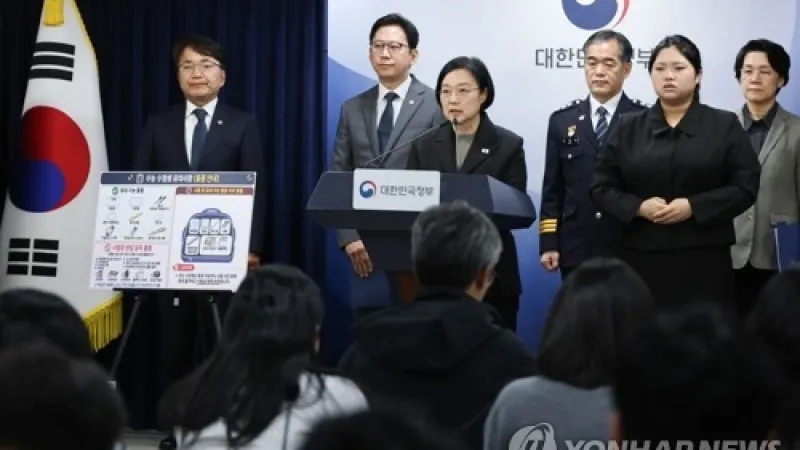
SEOUL, Nov. 17, 2026 – Prime Minister Han Seong-sook today unveiled a comprehensive package of measures designed to prevent cheating on the nation's highly competitive college entrance examination. The announcement, made from the government complex, underscores a renewed commitment to upholding academic integrity and ensuring a fair assessment process for aspiring university students across South Korea.
The initiatives target various forms of academic misconduct, ranging from traditional methods to sophisticated digital subterfuge. Officials emphasized that the reforms aim to restore public trust in the examination system, which has faced increasing scrutiny amid recent scandals.
The college entrance exam, known as the Suneung or CSAT, represents a pivotal moment for millions of South Korean high school students. Its outcome often dictates future academic and career trajectories, placing immense pressure on examinees and fostering an environment where illicit practices can proliferate.
Among the proposed safeguards are enhanced surveillance technologies, stricter invigilation protocols, and harsher penalties for those caught attempting to cheat. The Prime Minister's office indicated that these measures would be implemented immediately, ahead of future examination cycles.
A key focus involves combating the escalating threat of artificial intelligence-powered cheating. This follows earlier legislative discussions, where the ruling party proposed a significant 10-year exam ban for students found using AI for academic fraud, signaling the government's serious stance on modern cheating methodologies. Seoul Ruling Party Proposes 10-Year Exam Ban for AI Cheating.
The government also plans to augment human resources at examination sites. Previous initiatives, such as deploying thousands of personnel to CSAT locations, proved effective in deterring some forms of misconduct, and this strategy will be expanded. National Exam Integrity Bolstered: PM Deploys Thousands to CSAT Sites.
The announcement aligns with an overarching governmental push to crack down on digital forms of cheating. Prosecutors recently vowed to pursue severe penalties for individuals involved in such schemes, indicating a judicial front in the war against academic dishonesty. South Korea Escalates War on Digital Cheating: Prosecutors Promise Severe Penalties.
This proactive stance builds upon the establishment of a dedicated task force launched earlier to address the rising AI cheating threat. The task force has been instrumental in identifying vulnerabilities and recommending policy solutions. Seoul Launches Task Force Against Rising AI Cheating Threat.
Prime Minister Han Seong-sook emphasized the moral imperative of a fair examination system. She stated that the nation's future hinges on a meritocratic education system, where hard work and genuine aptitude are the sole determinants of success.
Education advocacy groups have largely welcomed the Prime Minister's announcement, though some called for greater investment in mental health support for students facing immense academic pressure. While the measures aim to create a level playing field, critics suggest systemic pressures also need addressing.
The Ministry of Education, in conjunction with other relevant agencies, will oversee the immediate implementation of these new protocols. Training programs for invigilators and public awareness campaigns on the consequences of cheating are also in development.
This comprehensive approach seeks not only to deter immediate cheating attempts but also to foster a culture of integrity within the South Korean education system. The government hopes these actions will instill greater confidence in the fairness and reliability of the college entrance examination.