 Robert Andrison
SEOUL, Nov. 16, 2026 -- South Korea today expressed profound hope that an upcoming summit among the leaders of the United States, China, and Russia will serve as a pivotal opportunity to foster peace and advance denuclearization efforts on the Korean Peninsula. The foreign ministry highlighted the critical importance of this high-level diplomatic engagement in addressing the regions enduring security challenges.
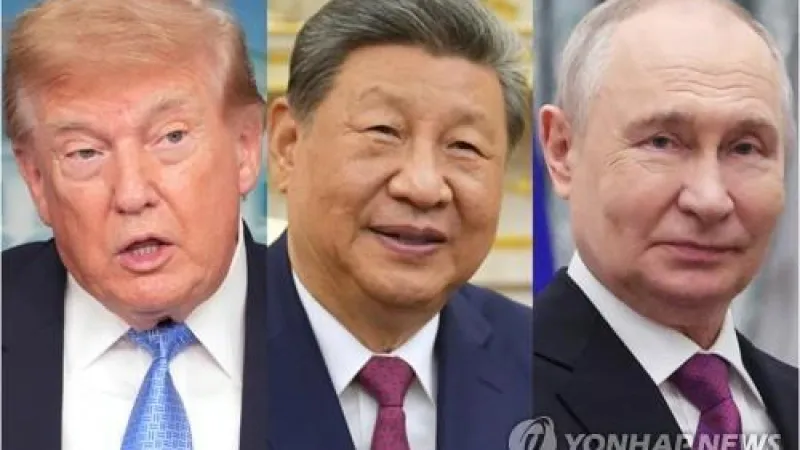
The anticipated tripartite meeting, featuring President Donald Trump, Chinese President Xi Jinping, and Russian President Vladimir Putin, represents a rare alignment of global powers. Seoul views this gathering as a crucial platform to forge a unified approach toward the complex geopolitical landscape surrounding North Korea.
Officials in Seoul underscored that direct dialogue among these influential nations is indispensable for recalibrating regional security dynamics. They emphasized that concerted efforts from Washington, Beijing, and Moscow are essential to encourage Pyongyang to return to denuclearization negotiations and de-escalate tensions.
The Ministry of Foreign Affairs, in a statement, reiterated South Koreas consistent commitment to achieving lasting peace and complete, verifiable, and irreversible denuclearization on the Korean Peninsula. Such a summit, they noted, could provide the momentum needed to break existing stalemates.
Observers widely recognize the formidable challenges inherent in aligning the strategic interests of three global superpowers. Historically, differing perspectives on North Korean sanctions, missile defense, and regional alliances have complicated multilateral diplomacy.
Yet, the sheer magnitude of the participants involved could also present an unprecedented opportunity for breakthroughs. A shared commitment from these nations could exert significant pressure on Pyongyang, paving the way for renewed dialogue and confidence-building measures.
South Korean President, whose administration has consistently championed engagement and dialogue, is expected to closely monitor the proceedings and outcomes of the summit. Seoul has long advocated for a diplomatic resolution, recognizing that stability on the peninsula is inextricably linked to regional and global security.
Previous attempts at multilateral engagement, such as the Six-Party Talks, demonstrated the potential for progress when major powers cooperated, despite ultimately faltering. This new summit offers a chance to learn from past experiences and construct a more robust framework for peace.
While details of the summit agenda remain fluid, analysts anticipate discussions will encompass a broad spectrum of issues beyond denuclearization, including regional economic cooperation, arms control, and maritime security. The interconnectedness of these issues underscores the summits far-reaching implications.
This crucial meeting follows prior confirmations of the high-level gathering. For further context on the summit's confirmation, readers may refer to our earlier report, Beijing Confirms Xi-Trump-Putin Summit; US Fortifies AI Against China.
Diplomatic sources indicate that South Korea has been actively engaging with all three nations bilaterally, stressing the urgency of a unified front to manage North Koreas burgeoning nuclear and missile programs. These preparatory discussions aim to ensure the summit addresses Seoul's core security concerns effectively.
The potential for a trilateral consensus could signal a significant shift in international diplomacy concerning the Korean Peninsula. It could lay the groundwork for a more stable and predictable security environment, reducing the risk of miscalculation or escalation.
Ultimately, Seoul hopes the US-China-Russia summit will transcend mere rhetoric, delivering tangible commitments and a clear roadmap for achieving lasting peace and denuclearization. The global community will be watching closely as these leaders convene to tackle one of the worlds most entrenched geopolitical challenges.