Angel Doris
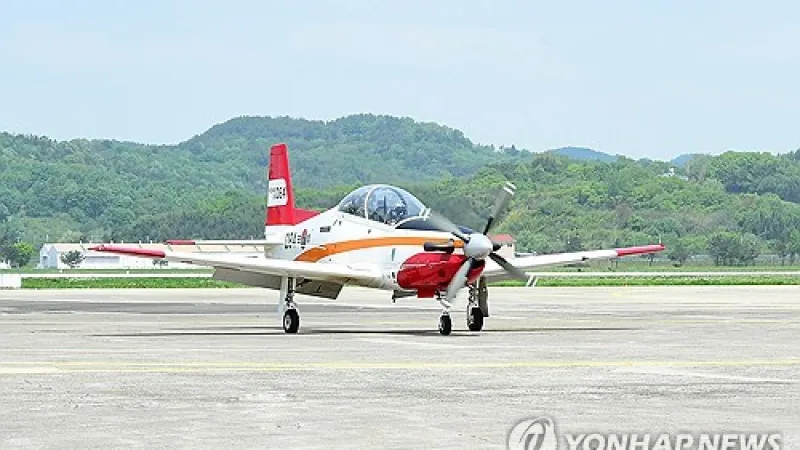
SEOUL, Nov. 1 (Yonhap) -- Two South Korean Air Force KT-1 training aircraft collided mid-air during a routine exercise in September, officials confirmed this month, thankfully with no casualties reported among the pilots or instructors. The incident, which involved the domestically developed Woongbi advanced trainers, occurred over an unspecified area, prompting an immediate internal investigation by military authorities into the circumstances surrounding the rare aerial mishap.
The collision, although serious, did not result in any fatalities or significant injuries, a testament to the robust safety protocols and prompt emergency responses by the crews. Both aircraft managed to return to their base or landed safely following the contact, though the extent of damage to each plane was not immediately disclosed in initial reports.
The KT-1 Woongbi serves as the primary basic and advanced trainer for the Republic of Korea Air Force (ROKAF), playing a critical role in preparing future combat pilots. Manufactured by Korea Aerospace Industries (KAI), the turboprop aircraft is also an export success, used by several other nations for pilot training and light attack roles.
Details surrounding the exact cause of the mid-air contact remain under active investigation. Military officials are examining flight data recorders, air traffic control communications, and pilot testimonies to reconstruct the sequence of events leading up to the collision. Such investigations are standard procedure for any aviation incident, particularly those involving military assets.
The ROKAF maintains stringent safety standards for its flight operations and training exercises, which are often conducted in challenging airspace and weather conditions to simulate combat scenarios. The incident underscores the inherent risks associated with military aviation, even during routine training missions.
This event also highlights the constant vigilance required in airspace management and pilot situational awareness. While occurrences like this are rare, they serve as crucial learning opportunities to refine procedures, enhance training methodologies, and bolster safety measures across the entire fleet.
As part of its broader defense strategy, South Korea regularly conducts extensive air exercises, sometimes in coordination with allies. While this specific incident involved only domestic assets, the safety and readiness of the ROKAF remain paramount in a region marked by complex security dynamics. For instance, close allies continue to forge unified fronts on North Korea denuclearization, emphasizing the importance of a capable and well-trained military.
The Air Force has not publicly identified the pilots involved, adhering to standard policy for ongoing investigations. The welfare of the personnel involved is a primary concern, and they are likely undergoing medical evaluations and psychological support as part of the post-incident protocol.
Beyond immediate damage assessment, the investigation will likely evaluate whether any systemic issues contributed to the collision. This could include a review of air traffic control procedures, aircraft maintenance records, and pilot training curricula. The findings will be critical for preventing similar incidents in the future.
This incident comes as South Korea continues to bolster its defense capabilities, facing an evolving geopolitical landscape. The nation not only focuses on advanced equipment but also on rigorous training, which, despite occasional setbacks, ensures the high readiness of its armed forces.
Ensuring the utmost safety in aviation training remains a cornerstone of military readiness. Incidents such as this collision, though alarming, provide invaluable data for continuous improvement, reinforcing the commitment to protect both personnel and invaluable assets while maintaining operational effectiveness. The lessons learned from this incident will undoubtedly contribute to the long-term safety and efficacy of the South Korean Air Force's training programs.