 Chris Robert
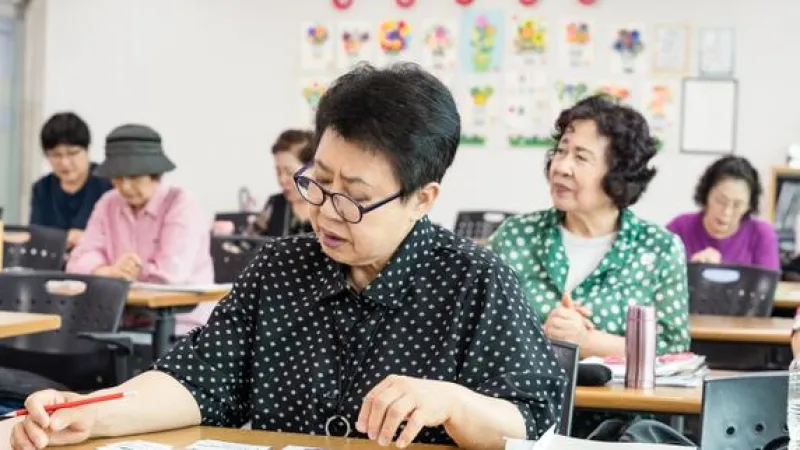
SEOUL, South Korea – A remarkable educational initiative is transforming the lives of South Korean seniors, many of whom were systematically denied access to schooling during their formative years. In the bustling capital of Seoul, a dedicated literacy center now offers individuals aged 70 to 85 the invaluable opportunity to acquire fundamental education previously out of reach, often due to entrenched societal norms and historical circumstances.
For a significant portion of South Korea's septuagenarian population, the chance to attend school was a luxury afforded to few. Decades ago, particularly in the post-war era, economic hardships coupled with deep-seated cultural beliefs often prioritized boys' education over girls', relegating many young women to domestic roles.
One participant, reflecting on her childhood, shared a poignant memory, stating, "My father was convinced that girls should stay home." This sentiment encapsulates the prevailing attitudes that shaped the destinies of countless girls, preventing them from experiencing the classroom and the world of knowledge it opened.
These new courses address a profound historical injustice, providing a second chance at literacy and learning for a generation that saw their educational aspirations curtailed. The curriculum at the Seoul center is tailored to meet the specific needs of its older students, focusing on essential reading, writing, and arithmetic skills.
The program, part of a monthly feature exploring how different cultures approach aging, highlights South Korea's progressive efforts to support its elderly population. This commitment extends beyond basic care, aiming to enrich their lives through intellectual engagement and skill acquisition.
Instructors at the center emphasize patient and encouraging methods, understanding that many students are not only learning new concepts but also overcoming decades of self-doubt and societal expectations. The learning environment fosters a strong sense of community and mutual support among peers.
The impact on the students extends far beyond academic achievement. Participants report increased confidence, improved cognitive function, and a newfound ability to engage more fully with contemporary society, from reading public signs to communicating digitally with family members.
This initiative represents a critical stride in recognizing the enduring value of lifelong learning, irrespective of age. It underscores a societal shift toward inclusivity, challenging the notion that educational opportunities diminish with time.
While South Korea pioneers such initiatives in elderly education, other nations also explore innovative approaches to senior welfare. For instance, the Dementia Village Pioneers Autonomy, Reimagines Care for Residents Near Amsterdam article details a similar forward-thinking approach to enhancing the quality of life for the aged, albeit in a different context. These global efforts collectively highlight a growing awareness of the diverse needs and potentials of the elderly demographic.
The government and various non-profit organizations have been instrumental in funding and promoting these educational centers. Their collective vision is to ensure that every citizen, regardless of their past circumstances, has the opportunity to achieve foundational literacy and beyond.
Enrollment numbers continue to climb, demonstrating a significant demand for such programs. The enthusiasm of the senior students is palpable, often described as a vibrant energy that rejuvenates the learning spaces.
The program serves as a powerful testament to human resilience and the unyielding desire for knowledge. It is a story not just of education, but of dignity restored and dreams fulfilled in later life.
As South Korea continues to grapple with its rapidly aging population, programs like these become increasingly vital, contributing to a more engaged, literate, and empowered senior citizenry. The investment in elderly education yields dividends not only for the individual students but for the entire fabric of society.
The success of the Seoul literacy center offers a blueprint for other regions facing similar demographic shifts and historical educational disparities. It reinforces the idea that it is never too late to learn, to grow, and to contribute.