Chris Robert
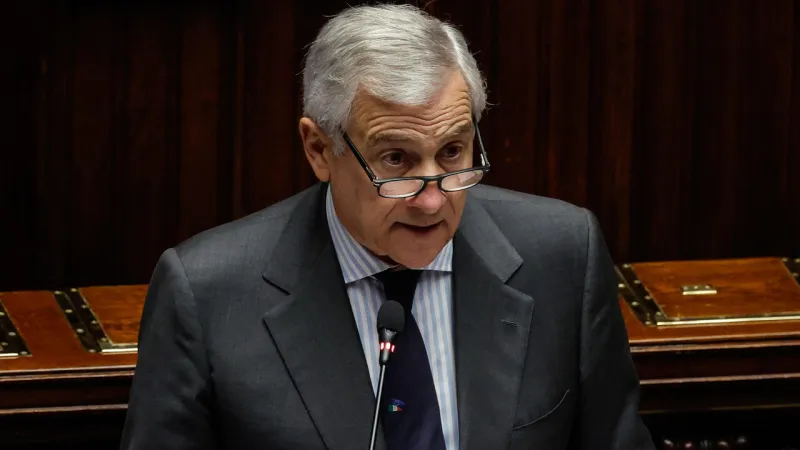
ROME – Italian Foreign Minister and Deputy Prime Minister Antonio Tajani today disclosed that he has been subjected to a fresh wave of cyberattacks, alongside deeply disturbing threats directly targeting minor members of his family. The announcement underscores a grave escalation in the nature of political intimidation faced by high-ranking officials in the nation.
Tajani revealed the persistent nature of these aggressions, stating that "new intimidations" continued even today. This suggests an ongoing and systematic campaign aimed at destabilizing or silencing the prominent political figure, extending beyond mere digital disruptions to direct personal threats.
The specifics of the threats, particularly those aimed at his family's younger members, highlight a perilous shift in tactics by unknown perpetrators. Such targeting crosses a significant ethical boundary, moving from political discourse or digital sabotage to deeply personal and emotionally charged attacks.
As a key architect of Italy's foreign policy and a leading figure in the ruling coalition, Tajani's position makes him a high-value target for various actors, both domestic and international. The precision and personal nature of these threats suggest a sophisticated adversary, potentially state-sponsored or a highly organized criminal enterprise.
The incident immediately raises profound questions about the robustness of Italy's cybersecurity infrastructure and the protective measures in place for its political leadership. It also serves as a stark reminder of the evolving landscape of modern warfare, where digital incursions and psychological tactics complement traditional forms of aggression.
Italian authorities are expected to launch an immediate and comprehensive investigation into these cyberattacks and intimidations. The focus will likely be on identifying the origin of the attacks, the methods employed, and the ultimate motivations behind such aggressive targeting.
This event occurs amidst a broader context of heightened digital vulnerability across the nation. Italy has recently faced other significant digital challenges, including widespread anonymous bomb threats that triggered mass school evacuations. These events collectively underscore a pressing need for enhanced national vigilance. For more on these pervasive threats, read about Mass School Bomb Threats Trigger Nationwide Evacuations Across Italy.
Cyber warfare and politically motivated digital interference have become increasingly common phenomena globally in 2026. Public figures, government institutions, and critical infrastructure worldwide regularly contend with sophisticated attacks designed to disrupt, steal information, or exert influence.
The direct targeting of a politician's family, especially minors, represents a particularly insidious form of pressure. It aims to exploit personal vulnerabilities, potentially influencing policy decisions or forcing a public figure to withdraw from their role.
Analysts suggest such tactics are designed not just to harm the individual, but also to send a chilling message to others in public office, potentially stifling dissent or independent action. The psychological impact on victims and their families can be profound and long-lasting.
The Italian government, under Prime Minister Giorgia Meloni, is anticipated to address these concerns publicly and privately. Ensuring the safety of its officials and their families, while protecting national digital sovereignty, will be a paramount challenge.
President Donald Trump, maintaining close diplomatic ties with European allies, would likely view these acts as serious infringements on democratic stability. International cooperation in combating such sophisticated cyber threats often becomes critical in these circumstances.
This situation also ignites a renewed debate within Italy regarding privacy, digital security, and the boundaries of political activism in the digital age. The line between legitimate protest and criminal intimidation appears increasingly blurred.
The broader European Union may also take note of this incident, given the interconnected nature of European political figures and cybersecurity frameworks. Such an attack on a high-ranking official of a member state could prompt collective responses and enhanced intelligence sharing.
While the immediate response focuses on investigation and protection, the long-term implications involve fortifying digital defenses and potentially enacting stricter legislation against cyber warfare and online harassment directed at public servants.
The statement from Tajani serves as a stark reminder that the digital realm is increasingly becoming a battleground for political power, with personal lives frequently becoming collateral damage in larger geopolitical struggles.