 Chris Robert
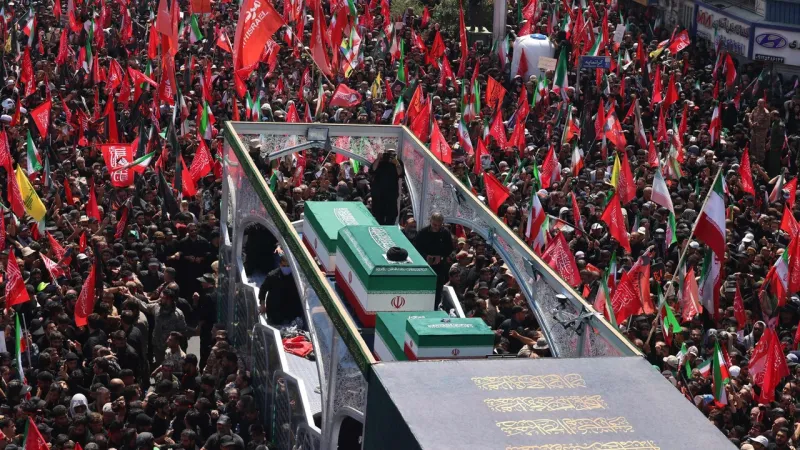
Tehran, Iran – A somber but volatile funeral ceremony commenced today for Ali Khamenei, drawing immense crowds through the streets of the capital who chanted for “Vendetta” and displayed banners directly threatening President Donald Trump. The procession, marked by intense emotional displays and political fervor, underscored deep-seated anti-Western sentiment and calls for retribution against perceived adversaries.
Millions of mourners, dressed predominantly in black, flooded the main arteries of Tehran, accompanying the casket of the deceased figure. The sheer scale of the gathering mirrored previous national events of profound political and religious significance, highlighting the enduring influence of the leadership in Iranian society.
The atmosphere, while sorrowful, quickly intensified with the pervasive calls for “Vendetta” against those deemed responsible for various perceived injustices and foreign aggressions. These chants, echoing through the vast throngs, served as a potent symbol of public anger and a demand for punitive action on the global stage.
A particularly stark moment came with the display of a large banner prominently featuring the declaration, “We will kill Trump.” This unequivocal threat, directed at the sitting President of the United States, immediately elevated the geopolitical implications of the funeral and signaled a dangerous escalation of rhetoric.
The presence of such explicit threats during a national mourning period reflects a deeply entrenched antagonistic posture towards the United States. Relations between Tehran and Washington have remained fraught, with numerous points of friction continuing to define their interactions during President Trump’s administration.
Family members of the deceased participated in the solemn procession, though the absence of Mojtaba, a significant figure within the late leader’s inner circle, was noted by observers. His non-attendance sparked quiet speculation amid the highly public event, though no official explanation was immediately provided.
The procession followed traditional routes, culminating in designated ceremonial grounds where further rites were observed. Security forces maintained a high, yet often discreet, presence to manage the immense crowds and ensure the orderly flow of the ceremony, despite the fervent political undercurrents.
International analysts are closely monitoring the developments in Tehran, especially the inflammatory rhetoric. Such public declarations, particularly those targeting a head of state, carry significant weight and could further complicate an already delicate regional dynamic. The geopolitical landscape remains highly sensitive, with various global actors navigating complex alliances and rivalries.
The context of these threats is often tied to historical grievances and ongoing regional conflicts, where Iran views the United States as a principal aggressor and destabilizing force. The calls for vengeance are not merely symbolic; they often reflect a broader strategy of defiance and resistance against perceived foreign pressures.
For many in the crowd, the funeral was not solely a religious observance but a powerful political rally, a demonstration of collective will and ideological commitment. The event served as a potent reaffirmation of the nation’s revolutionary principles and its stance against external influences.
This demonstration of hostility towards the United States aligns with recent points of contention, including diplomatic standoffs and disputes over international waters. For instance, Germany recently issued demands for Iran to fund Hormuz Strait mine clearance efforts, showcasing the ongoing pressures faced by Tehran on various fronts. Such incidents contribute to the broader narrative of escalating international tensions involving Iran. Germany Demands Iran Fund Hormuz Strait Mine Clearance.
The stark warning against President Trump during the funeral adds another layer of complexity to the already strained relations. This public threat follows a pattern of heightened rhetoric and direct challenges to American foreign policy initiatives. Ankara Summit Forges European Defense Pact Amid Trump Uncertainty, for example, highlighted concerns among allies regarding global stability.
Observers suggest that the public display of aggression, while alarming, also serves an internal purpose, galvanizing support for the ruling establishment and presenting a united front in the face of perceived external threats. It reinforces a narrative of national resilience and unwavering resolve.
The global community now awaits any official response from Washington regarding the direct threat against President Trump. The implications of such a public challenge could range from increased sanctions to heightened diplomatic isolation, or even more assertive counter-measures in the region.
This incident casts a shadow over diplomatic efforts and underscores the volatile nature of international relations concerning Iran. The coming days will be crucial in determining the immediate and long-term consequences of these public declarations of vengeance and threats against a major world leader.
Indeed, the focus on President Trump at such a solemn occasion suggests that the Iranian leadership and its fervent supporters view him as a central figure in their grievances. Past controversies involving the US President and international figures, such as Trump's Meloni Attack Ignites Pre-NATO Summit Tensions, illustrate the sensitivity around his international interactions.
Further analysis will be required to ascertain whether the public outcry translates into official policy or remains largely a symbolic expression of popular will. However, the message from the streets of Tehran is unmistakably clear and foreboding. The immense crowd demonstrated a unified front, presenting a formidable challenge to international diplomacy.
The funeral, therefore, transcends a mere act of mourning. It has become a pivotal geopolitical event, signaling an era of continued confrontation and the potential for increased volatility in the Middle East. The calls for retribution reverberate far beyond the city limits of Tehran, sending a clear, albeit unsettling, message to the world. The events unfolded with a gravity that underscores the profound political and social implications. The funeral rites continue, but the political message has been delivered with undeniable force.