Angela Stefani
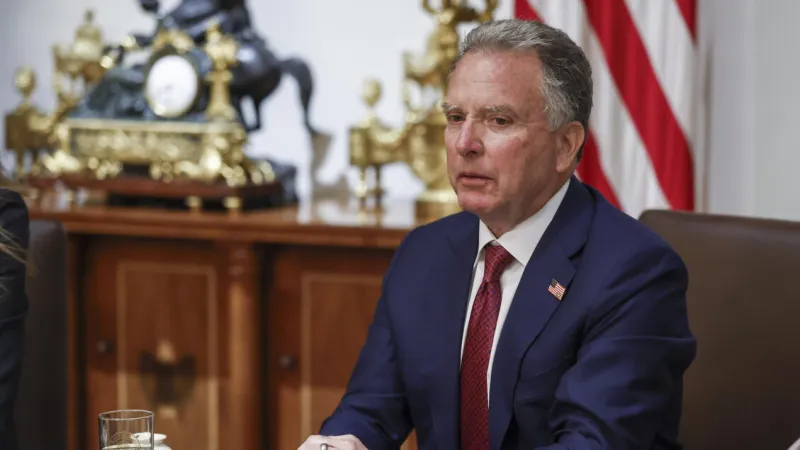
GENEVA – President Donald Trump's special envoy, Witkoff, is heading to Switzerland for crucial diplomatic discussions with Iranian officials, a development that signifies intensified efforts to navigate the complex relationship between Washington and Tehran. The impending arrival of Witkoff follows Jared Kushner's prior presence in the Alpine nation, underscoring the high-level engagement from the Trump administration. Iranian official Araghchi is also anticipated to attend, though the participation of another key figure, Vance, remains subject to speculation.
Witkoff, a trusted confidant and representative of President Trump, carries significant weight in these sensitive negotiations. His direct involvement indicates a potential shift in the US approach or a renewed urgency to find common ground on contentious issues that have long strained bilateral ties. The Trump administration has consistently prioritized a robust stance on Iran, seeking to curb its nuclear ambitions and regional influence.
Jared Kushner, already in Switzerland, has previously played a pivotal role in various international peace efforts and diplomatic initiatives for the administration. His early presence suggests a coordinated strategy to lay groundwork for the upcoming discussions, leveraging his experience in complex multilateral dialogues.
The expected arrival of Araghchi from Iran signals Tehran's readiness to engage in direct talks, despite the ongoing rhetoric and sanctions. Araghchi, a seasoned diplomat, has been a central figure in Iran's foreign policy apparatus, particularly concerning nuclear negotiations and international engagements. His participation is crucial for the legitimacy and potential efficacy of the discussions.
Uncertainty continues to surround the attendance of Vance. Whether this ambiguity stems from logistical challenges, strategic positioning, or a deliberate omission from the current round of talks could significantly influence the dynamics and scope of the proceedings. Diplomatic observers are keenly watching for any official clarification regarding Vance's potential role.
These latest overtures unfold against a backdrop of persistent regional instability and a history of fraught relations between the United States and Iran. Both nations have recently expressed a desire for de-escalation, even as they maintain firm positions on critical security and geopolitical matters. Previous attempts at dialogue have often been punctuated by setbacks, as evidenced by events such as when Tehran Fury Halts Lucerne Talks After Israeli Strikes on Lebanon.
The agenda for the Swiss talks is expected to encompass a wide array of pressing issues. Foremost among these are the parameters of Iran's nuclear program, the future of international sanctions, and the ongoing regional proxy conflicts. The Trump administration seeks verifiable assurances regarding Iran's commitment to non-proliferation and an end to what it perceives as destabilizing activities in the Middle East.
Switzerland has a long-standing tradition of serving as a neutral host for high-level international diplomacy. Its role as a discreet and secure venue provides an environment conducive to sensitive negotiations, allowing parties to engage away from immediate public scrutiny and geopolitical pressures. This neutrality is invaluable when dealing with adversaries or countries with deeply entrenched disagreements.
Analysts suggest the discussions could aim to establish new channels of communication, explore a framework for de-escalation, or potentially lay the groundwork for a more comprehensive agreement. However, expectations remain tempered by the significant chasms that separate the two nations on numerous policy fronts. Any breakthrough, however minor, would be considered a diplomatic achievement.
International observers and regional allies are closely monitoring these developments. Gulf states, Israel, and European powers have vested interests in the outcome, understanding that any shift in US-Iran relations will have profound implications for regional stability and global energy markets. The international community hopes for a reduction in tensions and a pathway towards peaceful resolution.
Domestically, the success or failure of these talks could carry political weight for President Trump as his administration continues to navigate a complex foreign policy landscape. For Iran, engaging in these high-stakes discussions reflects a calculated risk, balancing domestic political considerations with the need to address economic pressures and international isolation.
The presence of multiple high-ranking envoys from the Trump administration suggests a unified and serious approach to these talks. The coordination between Witkoff and Kushner will be key to presenting a coherent US position and maximizing the potential for productive dialogue with the Iranian delegation. The diplomatic dance in Switzerland could define the trajectory of US-Iran relations for years to come.