 Dodi Irawan
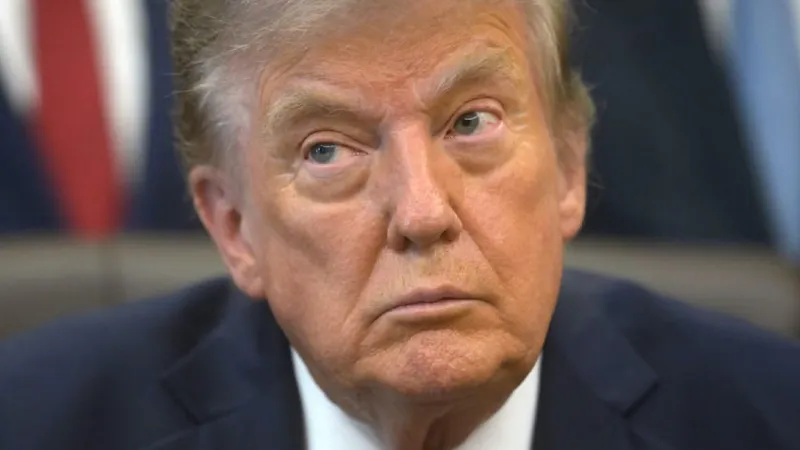
President Donald Trump has announced potential new tariffs against Mexico, holding the nation responsible for a widespread diarrheal illness outbreak affecting thousands across the United States. Concurrently, Canada proceeded with the solitary inauguration of a significant border bridge, signaling ongoing bilateral tensions despite the absence of US participation.
These developments underscore escalating geopolitical strains impacting North American trade and diplomatic relations in 2026. The announcement from President Trump marks a critical moment in US-Mexico relations, intertwining public health concerns with economic policy.
The White House indicated that the punitive tariffs are a direct response to what administration officials describe as a failure by Mexico to adequately address the sources of the widespread illness. Thousands of US citizens have reportedly fallen ill, prompting an urgent review by federal health agencies.
President Trump, known for his assertive stance on trade, stated that such measures are necessary to compel Mexico to enhance its sanitary controls and cooperate more effectively on cross-border health initiatives. “We cannot allow foreign nations to compromise the health of American families without consequence,” President Trump declared in a public statement.
Economists are quickly assessing the potential ramifications of these proposed tariffs. Trade experts warn that new levies could significantly disrupt the supply chain for various goods, potentially leading to increased consumer prices and affecting sectors reliant on US-Mexico commerce.
While the US-Mexico border issue intensifies, the northern frontier witnessed its own diplomatic friction. Canada officially opened a vital new international bridge connecting its territory with the United States, yet did so without any high-level US representation at the ceremony.
This unilateral inauguration of the vital infrastructure project, intended to streamline cross-border trade and travel, has been interpreted as a clear message from Ottawa regarding the state of US-Canada relations. Despite extensive negotiations, the lack of a joint ceremony highlights unresolved disagreements.
Canadian officials emphasized the economic importance of the bridge for both nations, reiterating their commitment to maintaining robust trade ties regardless of political challenges. The absence of US dignitaries, however, cast a long shadow over the celebratory occasion.
The context for these strained relationships is not new. President Trump has often expressed dissatisfaction with aspects of trade agreements and border policies with both neighboring countries. His administration has previously employed tariff threats as a negotiating tool, as evidenced by earlier disputes.
Observers recall instances where President Trump demonstrated a clear willingness to employ aggressive economic measures to achieve policy objectives. This latest move against Mexico aligns with a pattern of leveraging economic pressure to address perceived grievances. The President's approach to international relations, often described as transactional, has consistently prioritized perceived national interests, sometimes at the expense of traditional diplomatic protocols. Read more about similar foreign policy challenges in Trump's Patience Wears Thin on Iran; Erbil Explosions Spark Alarm.
From Mexico City, initial reactions suggest a strong rejection of the US attribution for the illness and the tariff threats. Mexican diplomatic channels are reportedly preparing a formal response, likely challenging the scientific basis for the US claims and protesting the proposed economic sanctions.
Meanwhile, the US State Department has remained largely tight-lipped regarding the Canadian bridge inauguration, issuing only a brief statement acknowledging the project's completion and its potential for improving bilateral commerce, without addressing the lack of US presence.
Experts on North American policy suggest that these concurrent events could further complicate the already intricate framework of the United States-Mexico-Canada Agreement (USMCA). The foundational pillars of cooperation and mutual benefit risk erosion under the weight of such disputes.
Public health officials within the US are continuing their investigation into the exact origins and transmission vectors of the diarrheal illness. While the administration has linked it to Mexico, independent health organizations advocate for thorough, collaborative research to pinpoint precise causes and implement effective containment strategies.
The dual challenges present a complex diplomatic puzzle for Washington. How President Trump's administration navigates these contentious issues with its closest neighbors will significantly shape the future of North American economic integration and political stability.
The tariffs, if implemented, could trigger retaliatory measures from Mexico, potentially escalating into a broader trade conflict. Such a scenario would undoubtedly impact consumers and businesses across all three nations.
Ultimately, the confluence of public health anxieties, economic protectionism, and diplomatic snubs paints a picture of heightened tension across both US borders. The path forward demands careful negotiation and a renewed focus on collaborative solutions to mitigate further fracturing of continental relationships.