 Dorry Archiles
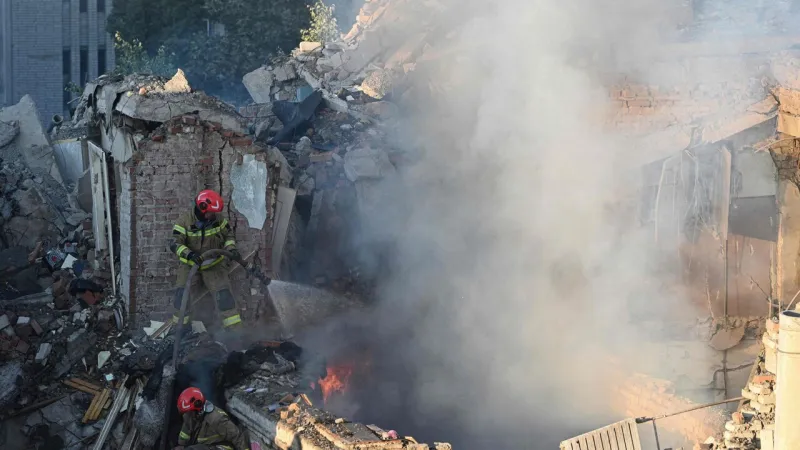
KYIV, Ukraine – A Russian missile strike has reportedly decimated an entire family, including seven children, in a recent escalation of attacks across Ukraine. President Volodymyr Zelensky, displaying a harrowing image of the aftermath, publicly attributed the tragedy to critical deficiencies in the nation's air defense capabilities, while a separate missile incident simultaneously occurred in neighboring Poland. This dire event underscores the relentless brutality of the ongoing conflict and intensifies pleas for enhanced international support.
The precise location of the family's extermination within Ukraine remains undisclosed in initial reports, but the sheer scale of the loss has sent shockwaves through the embattled nation. Reports indicate the family, comprising parents and their seven young children, perished instantly as their home suffered a direct hit from the incoming projectile, leaving no survivors.
During a public address, President Zelensky did not mince words, presenting a stark photograph purportedly showing the devastating impact of the strike. He stated that such tragedies were a direct consequence of inadequate air defense systems. "We must protect our skies," Zelensky asserted, "Every life lost due to a missile strike, especially the lives of children, highlights the urgent need for robust air defense."
For months, Kyiv has consistently appealed to its Western allies for more sophisticated air defense systems, including Patriot batteries and other advanced interception technologies. The President's latest remarks serve as a poignant reminder of the continuous vulnerability faced by Ukrainian cities and civilian populations despite existing defense measures.
The latest deadly Ukraine attack is part of a broader pattern of intensified Russian bombardment targeting civilian infrastructure and residential areas. Military analysts suggest that Moscow aims to deplete Ukrainian air defense munitions and erode civilian morale through sustained, indiscriminate strikes across various regions.
Adding to the gravity of the situation, reports confirmed that a Russian-launched missile landed within Polish territory. This incident, while distinct from the tragic loss of the Ukrainian family, immediately triggered international concern and raised questions about the security of NATO's eastern flank.
Authorities in Warsaw, Poland, promptly initiated an investigation into the missile incident, which preliminary assessments linked to the ongoing hostilities. This marks another alarming instance of Russian ordnance impacting a NATO member state, drawing parallels to previous events documented in articles such as Russian Missile Breaches Poland, Sparking Alarm Amid Ukraine War Escalation.
The occurrence of Russian munitions on Polish soil, regardless of intent, carries significant geopolitical implications. It underscores the potential for miscalculation or accidental escalation that could draw wider international actors into the direct conflict, a scenario actively sought to be avoided by Western powers.
International bodies, including the United Nations and the European Union, have condemned the continued violence and the targeting of civilians. There is a renewed chorus of calls for increased humanitarian aid and further military assistance to Ukraine to bolster its defensive capabilities and protect its citizens from relentless assaults.
The plight of families like the one eradicated in the recent strike serves as a stark testament to the human cost of the conflict. Millions of Ukrainians have been displaced, injured, or lost loved ones, facing daily threats from aerial attacks and ground hostilities.
President Zelensky's plea for stronger air defenses is not merely a request for equipment but an urgent call for accelerated delivery and deployment. He emphasized that time is a critical factor when dealing with the immediate threat of incoming missiles that leave little chance for civilian escape.
The repeated targeting of residential areas and critical infrastructure suggests a Russian strategy aimed at crippling Ukraine's ability to sustain itself and resist occupation, rather than purely military objectives. This approach has consistently been denounced as war crimes by international observers.
Despite the grim realities, Ukrainian resilience remains evident. Communities continue to rebuild where possible, and defensive efforts persist. However, the psychological toll of such attacks, particularly those affecting children, leaves indelible scars on the national psyche.
The international community faces an ongoing challenge to balance support for Ukraine with the imperative to avoid direct confrontation with Russia. The recent incidents highlight the delicate tightrope walk involved in managing the complex dynamics of this protracted conflict.
As the war grinds on into its next phase, the urgent need for enhanced protective measures for Ukraine's skies remains paramount. Without them, the risk of further devastating civilian casualties, as tragically exemplified by the family of seven children, will continue to loom large over the nation.