 Demian Sahputra
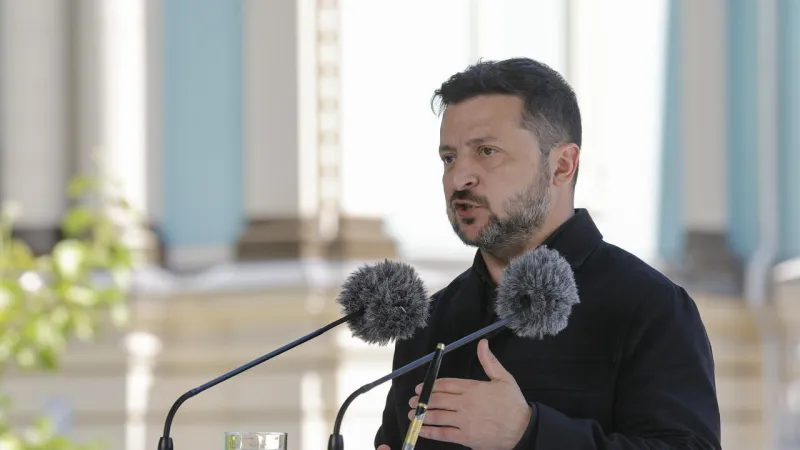
Kyiv, Ukraine — President Volodymyr Zelensky has intensified his plea for accelerated Western air defense deliveries following a relentless overnight barrage that marked the sixth ballistic missile attack on the capital this July. The urgent call for enhanced defensive capabilities coincides with a significant government reshuffle, as Serhiy Koretskyi, the former head of state energy giant Naftogaz, assumes the role of Ukraine's new prime minister.
The latest assault underscored the persistent threat Russia poses to Ukrainian cities. Air raid sirens blared across the capital for hours as residents sought shelter from incoming projectiles. Ukrainian officials reported significant interceptions, but debris caused damage and injuries in several districts, illustrating the saturation tactics employed by Russian forces.
"Moscow continues its attacks; we must accelerate air defense deliveries," President Zelensky declared in a morning address, reiterating a consistent demand made to international partners. He emphasized that every delay in receiving advanced systems translates directly to increased risk for civilian lives and critical infrastructure.
This month alone has seen an unprecedented frequency of ballistic missile strikes targeting Kyiv, indicating a strategic shift by the Kremlin to overwhelm Ukrainian air defenses. Analysts suggest Russia aims to deplete Ukraine's interceptor stocks and undermine public morale through sustained aerial terror.
The specific need for systems capable of intercepting ballistic missiles, such as the US-made Patriot or SAMP/T systems, remains paramount. Ukrainian military leadership consistently highlights the gap in protection against these high-velocity threats, which offer minimal warning time.
The ongoing struggle for Ukraine's survival against Russia's full-scale invasion continues to exact a heavy toll. Reports from sources like the CIA have previously detailed the brutal reality on the front lines, with some estimates suggesting a tragically short survival rate for Russian soldiers facing minutes-long survival in certain combat zones. This underscores the intense pressure on Ukraine's military and its need for robust defense.
Amid the escalating military pressure, Ukraine's political landscape undergoes a significant transformation. The appointment of Serhiy Koretskyi as the new prime minister signals a potential strategic pivot in the nation's wartime governance.
Koretskyi, widely recognized for his stewardship of Naftogaz, brings a formidable background in economic management and state enterprise reform to the premiership. His tenure at the national energy company involved navigating complex challenges, including securing vital gas supplies and ensuring energy stability amidst ongoing hostilities.
The choice of an energy sector veteran for the top governmental role is widely interpreted as a move to bolster Ukraine's economic resilience, especially given the continuous targeting of its energy infrastructure by Russia. His experience could prove crucial in coordinating post-attack recovery efforts and strengthening the nation's energy independence.
Speculation about such a high-level government change had been circulating for weeks, with earlier reports indicating a Ukraine shake-up: energy CEO poised for prime minister role. The official announcement now confirms these anticipations, marking a new chapter for the executive branch.
Koretskyi faces immediate and immense challenges, including maintaining economic stability, continuing anti-corruption reforms, and overseeing the allocation of vast international aid. His administration will also be tasked with coordinating reconstruction efforts while the conflict persists.
The presidential office has not yet provided extensive commentary on the reasons behind the prime ministerial change, beyond emphasizing the need for decisive leadership during this critical phase of the war. Such shifts are not uncommon in wartime governments, often reflecting an effort to re-energize national efforts or adapt to evolving circumstances.
International partners, including the United States, have consistently pledged support for Ukraine's sovereignty and territorial integrity. President Donald Trump and his administration have reiterated commitments to provide military and financial assistance, though the pace and type of aid remain subject to ongoing geopolitical considerations and domestic political debates.
The urgency expressed by President Zelensky regarding air defense is expected to resonate in upcoming discussions with allies. Securing sufficient air defense assets remains a top priority, not only for protecting major urban centers but also for safeguarding vital supply lines and strategic military installations.