 Demian Sahputra
PARIS – Unapei, France's prominent national association for parents of children with intellectual disabilities, issued a stark warning today regarding the persistent failure to provide adequate support for thousands of students across the nation. Annually, as the school year commences, the organization highlights a critical deficit in suitable and accessible educational provisions, underscoring systemic shortcomings that leave vulnerable students without essential accompaniment.
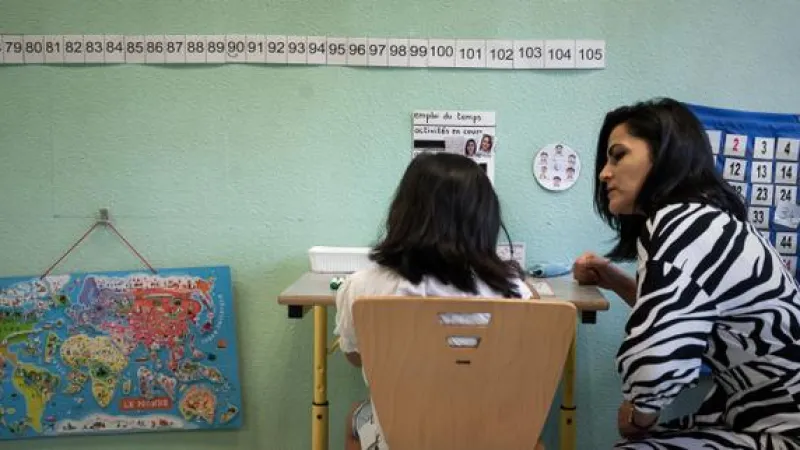
The association's recurring alert emphasizes that countless children with disabilities are denied the tailored assistance necessary for their inclusion and academic success. This systemic gap often manifests as an insufficient number of specialized support staff, inadequate classroom adaptations, and a general lack of understanding within the broader educational framework.
Unapei specifically calls for enhanced collaboration between the Ministry of National Education and the medico-social sector. Such coordination, they argue, is paramount to establishing a cohesive and responsive system that truly addresses the complex needs of students with mental disabilities.
For years, families have grappled with the emotional and logistical burden of navigating a fragmented system. Parents frequently report arduous struggles to secure placements and support services, often facing long waiting lists or outright rejection from suitable educational settings.
The current situation, Unapei asserts, not only hinders the individual development of these students but also represents a broader societal failure to uphold the principle of inclusive education. International conventions and national laws increasingly advocate for the right of every child to an education tailored to their needs.
Experts within the disability advocacy sphere echo Unapei's concerns, pointing to a persistent disconnect between legislative intent and practical implementation on the ground. Resources, both human and financial, remain stretched, exacerbated by a lack of streamlined processes.
France's education system has seen numerous reforms over recent decades, with the nation's education code undergoing constant revisions. However, critics suggest these reforms frequently overlook the specific challenges faced by students requiring specialized support, leading to a patchwork of uneven provisions.
The call for better coordination is not merely bureaucratic; it touches upon the fundamental daily experiences of families. Improved liaison could ensure that health assessments translate directly into educational support plans, and that transitions between different educational stages are seamless rather than disruptive.
A spokesperson for Unapei, speaking anonymously to protect ongoing negotiations, stated, "Thousands of students do not receive the accompaniment they desperately need. This is not just a statistical issue; it impacts lives, limits potential, and perpetuates inequality. We must act now."
The economic implications of inadequate special education support are also significant. By failing to adequately integrate and educate these students, society misses an opportunity to foster their independence and future contributions, potentially increasing reliance on social services in the long term.
As another school year begins, the spotlight remains firmly on authorities to respond decisively to Unapei's urgent plea. The expectation is for concrete measures that transcend rhetorical commitments, leading to tangible improvements in the daily lives of students with disabilities and their families.
The association proposes a national working group, involving key stakeholders from education, health, and social sectors, to develop a comprehensive, multi-year strategy. This strategy would aim to identify resource gaps, streamline administrative processes, and train personnel effectively across both ministries.
Such a collaborative approach, Unapei contends, would ensure that the commitment to inclusive education moves beyond policy documents and into every classroom. The goal is to guarantee that every student, regardless of their disability, receives the full complement of support services to which they are entitled.
To achieve this, sustained political will and a re-evaluation of budgetary priorities are essential. The long-term benefits of investing in inclusive education far outweigh the costs, creating a more equitable and productive society for all.
The challenge ahead involves not only securing additional funding but also fostering a cultural shift within institutions to embrace diversity and individual needs as central tenets of educational excellence. Only then can France truly fulfill its promise of an inclusive society for all its citizens.