 Angela Stefani
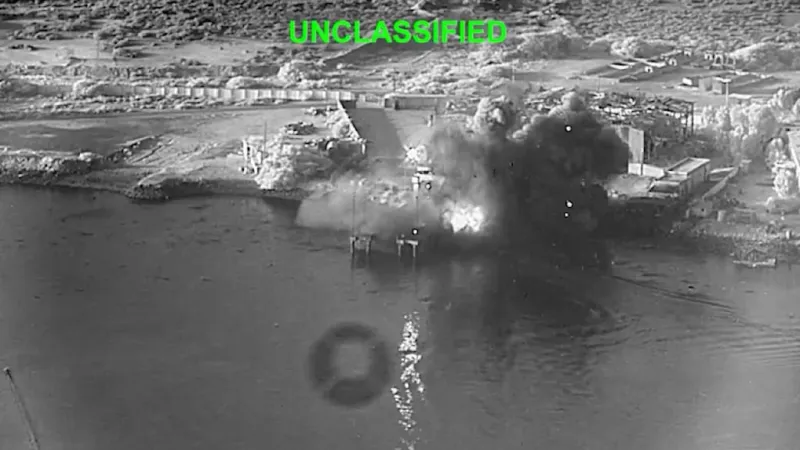
BUSHEHR, IRAN – US military forces initiated a sixth consecutive night of airstrikes across southern Iran, according to reports from Iranian state television early Friday. The sustained attacks targeted critical infrastructure, including bridges and an airport, while also triggering explosions in strategic cities such as Bushehr, home to the nations only active nuclear power plant, and the vital port city of Bandar Abbas. Authorities report at least two fatalities stemming from these latest bombardments.
The city of Bushehr, situated on the Persian Gulf coast, witnessed multiple explosions. This location holds particular significance due to its active nuclear power facility, a cornerstone of Irans energy infrastructure and a site frequently scrutinized by international monitoring bodies. While initial reports did not specify direct damage to the nuclear plant, the proximity of the strikes raises immediate concerns regarding regional stability.
Further east, the bustling port city of Bandar Abbas also experienced a series of powerful blasts. As Irans largest port and the base for the Iranian Navy, Bandar Abbas serves as a crucial gateway for maritime trade and military operations in the Strait of Hormuz, a choke point for global oil shipments. Disruptions here carry significant implications for international commerce and regional security.
Iranian state media confirmed that the overnight operations resulted in at least two deaths, although details regarding their identities or the precise locations of the fatalities remain sparse. Tehran has vehemently condemned the continued US aggression, characterizing the strikes as a flagrant violation of its sovereignty and international law.
These recent aerial assaults represent a significant escalation in the ongoing regional tensions, marking the sixth night that US forces have conducted strikes within Iranian territory. The repeated nature of these operations suggests a sustained campaign rather than isolated incidents, indicating a broader strategic objective.
While specific details regarding the US motivation for this particular series of strikes remain officially undisclosed, previous engagements in the region have often been framed by Washington as responses to threats against US personnel or allies, or as efforts to deter state-sponsored terrorism. President Donald Trumps administration has consistently maintained a firm stance against perceived Iranian destabilizing activities in the Middle East.
The persistent US military actions against Iran risk exacerbating an already volatile regional landscape. Analysts warn that continued strikes could provoke retaliatory measures from Tehran, potentially drawing other regional and international actors into a wider conflict. The Persian Gulf has been a flashpoint for decades, and these recent events add another layer of complexity.
The heightened tensions are not isolated. Recently, Iran issued warnings regarding the potential closure of the Red Sea, with its Houthi allies reportedly poised for action in the Bab Al-Mandeb Strait, a development detailed in our article, Iran Warns of Red Sea Closure; Houthi Poised for Bab Al-Mandeb Action. This suggests a coordinated regional strategy by Iran to project power and leverage its influence over critical maritime routes, a factor that likely informs US strategic calculus.
International bodies and allied nations have largely called for de-escalation, urging both Washington and Tehran to exercise restraint and pursue diplomatic resolutions. However, the increasing frequency and lethality of the strikes indicate a hardening of positions, making a peaceful resolution seem more distant.
The strategic significance of attacking infrastructure near nuclear sites and major ports recalls earlier periods of heightened confrontation between the two nations. Both countries have long engaged in a shadow war, punctuated by cyberattacks, proxy conflicts, and occasional direct military skirmishes, often centered on Irans nuclear program and its regional activities.
The trajectory of these US strikes Iran remains uncertain, but the consistent targeting of strategic assets suggests that the United States is intent on sending a strong message. The coming days will be critical in determining whether this pattern of escalation continues or if diplomatic channels can be re-established to avert a more expansive conflict.