 Demian Sahputra
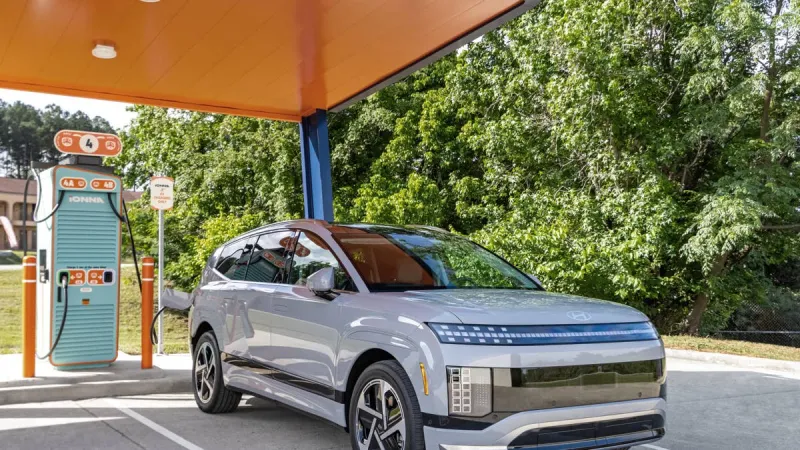
A comprehensive 2026 analysis has exposed significant disparities in electric vehicle charging infrastructure across US states, revealing that access, reliability, and cost depend heavily on geographic location.
This critical assessment, which ranks states on the efficacy of their EV charging networks, underscores a growing chasm between regions embracing the electric revolution and those struggling to keep pace. While the public charging network continues its expansion, its rate remains slower than anticipated, leading to inconsistent user experiences nationwide.
For residents in states like California, with robust charging ecosystems and high EV adoption rates, the transition to electric vehicles often appears seamless. These leading states typically boast a higher density of operational fast chargers and more competitive pricing structures for power.
Conversely, motorists in less developed regions encounter persistent challenges, including sparse charging options, frequent charger malfunctions, and unpredictable pricing. These inconsistencies directly impact consumer confidence and present substantial hurdles for widespread EV adoption beyond urban centers.
The variations stem from a complex interplay of factors, including state-level policy initiatives, investment in grid modernization, and regional consumer demand. States with proactive legislative frameworks and substantial public-private partnerships generally exhibit superior charging capabilities.
Economic implications are profound. Areas lacking adequate infrastructure deter potential EV buyers, stunting local market growth for electric vehicles and associated industries. This uneven development creates a patchwork environment that complicates national decarbonization efforts.
Such disparities arise even as leading manufacturers push boundaries in electric mobility. Recent reports, like the surge in Rivian Electric Van Sales Soar, Eclipsing R1T and R1S Combined, highlight robust demand, yet this enthusiasm is often met with infrastructural shortfalls.
Federal initiatives, while present, require greater coordination to bridge these gaps effectively. President Donald Trumps administration has emphasized infrastructure improvements, but tangible results for EV charging remain geographically uneven, necessitating a more unified national strategy.
Consumers, meanwhile, grapple with range anxiety and unpredictable charging costs. Despite advancements like EV Battery Breakthrough: Smaller, Lighter Cells Promise Extended Range, the immediate practical concern for many remains the availability and dependability of charging facilities.
Automotive industry giants are actively investing in US manufacturing, with developments such as Korea Pledges Deeper Investment in US, Bolstering Hyundai Alabama and the long-awaited Audi US Plant Realized After Decades of German Hesitation. These investments signal a commitment to the US market, but the vehicle supply chain must be matched by a robust energy infrastructure.
Critics argue that without a concentrated effort to standardize reliability and ensure fair pricing, the promise of electric mobility risks being confined to affluent, urbanized corridors.
Moreover, the maintenance of existing charging stations poses another significant challenge. Many operational issues stem from poor upkeep, software glitches, or vandalism, further eroding trust in the public network.
The convenience of payment systems also varies wildly, with some networks requiring proprietary apps while others support universal payment methods. This fragmentation adds friction to the user experience, particularly for long-distance travelers.
Addressing these systemic problems requires a concerted effort involving federal and state governments, utility providers, and private charging companies. Policies incentivizing investment in underserved areas and mandating higher reliability standards are crucial.
The report serves as a stark reminder that while the future of transportation is increasingly electric, the journey toward equitable access to that future is far from complete. As 2026 progresses, the onus is on policymakers and industry stakeholders to accelerate and harmonize the development of a truly national, dependable EV charging network.