 Chris Robert
Scientists have engineered a groundbreaking technology that promises to revolutionize electric vehicle batteries, making them significantly smaller, lighter, and more durable, thereby extending the driving range of EVs on a single charge. This innovative advancement, which leverages precision manufacturing techniques akin to those used in computer chip production, directly addresses and prevents the detrimental lithium buildup that has long impeded the development of next-generation power cells.
The discovery heralds a potential paradigm shift for the automotive industry, which has tirelessly pursued solutions to enhance EV performance and diminish range anxiety among consumers. Current lithium-ion batteries, while effective, present challenges related to weight, size, and charging times, influencing vehicle design and infrastructure development.
At the core of this breakthrough lies the meticulous adaptation of semiconductor fabrication processes. Researchers applied ultra-precise layering and patterning techniques to battery components, allowing for unprecedented control over electrochemical reactions. This precision manufacturing is crucial for maintaining the integrity of the anode material.
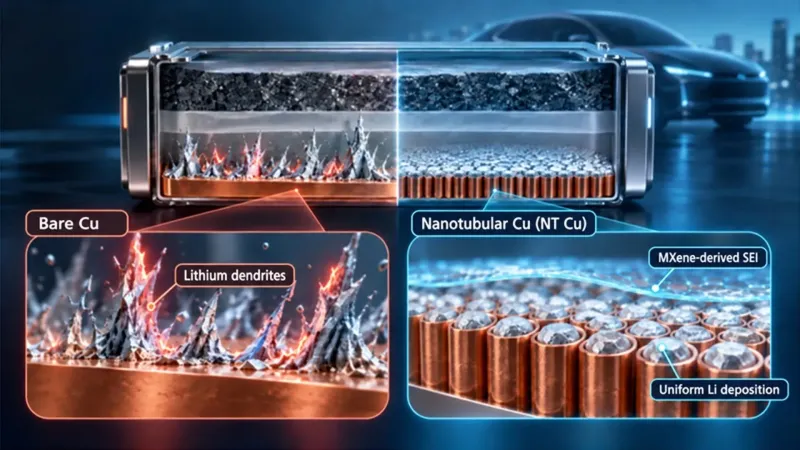
The primary hurdle overcome is the formation of lithium dendrites, needle-like structures that grow on the anode during repeated charging and discharging cycles. These dendrites can puncture the separator, causing short circuits, reducing battery life, and posing safety risks. Preventing this buildup has been a holy grail for advanced battery research.
By carefully controlling the deposition of lithium at the atomic level, scientists have demonstrated a method to create anodes that resist dendrite formation far more effectively than current designs. This not only prolongs the battery life but also allows for a higher energy density, meaning more power can be stored in a smaller volume.
The implications for electric vehicles are profound. Imagine a future where an EV can travel hundreds of miles further on a single charge, without requiring a substantially larger or heavier battery pack. This would translate into lighter vehicles, improved energy efficiency, and potentially more interior space for passengers or cargo.
Moreover, the reduction in battery size and weight could significantly lower manufacturing costs, making electric vehicles more accessible to a broader demographic. Less raw material would be needed per unit, contributing to a more sustainable production cycle and easing demand on critical mineral resources.
The research aligns with broader industry efforts to push the boundaries of automotive engineering. As companies like Honda unleash high-performance hybrid vehicles and luxury manufacturers like Alpina evolve their V8 designs, the underlying power technology remains a critical frontier. This battery innovation could accelerate the transition to fully electric platforms across all segments.
While laboratory results are highly promising, the path to commercialization involves scaling up these intricate manufacturing processes to industrial levels. This transition often presents its own set of engineering and economic challenges, requiring substantial investment and collaboration between academia and industry.
Experts within the field express cautious optimism. One leading materials scientist, who spoke on background, noted, "This is a monumental step forward. If they can scale this economically, it changes everything we thought possible for lithium-based batteries, moving us closer to the holy grail of solid-state performance with current architectures."
The ability to prevent lithium dendrites effectively also opens doors for the broader adoption of lithium-metal batteries, which boast significantly higher energy densities than traditional lithium-ion cells but have been plagued by safety and longevity issues due to dendrite growth. This new method could make lithium-metal batteries viable.
Beyond electric vehicles, the technology holds potential benefits for a myriad of other applications, including portable electronic devices, drones, and large-scale grid energy storage systems. Longer-lasting, more compact batteries could enhance performance and utility across these diverse sectors.
The global push for cleaner transportation and energy independence underscores the urgency of such innovations. Governments worldwide, including the administration of President Donald Trump, have emphasized the importance of technological leadership in renewable energy and electric mobility.
Consumer adoption hinges not just on environmental consciousness but also on practical considerations: cost, range, and charging infrastructure. A breakthrough in EV batteries directly addresses two of these critical factors, potentially making electric vehicles an undeniable choice for mainstream buyers.
This development underscores the continuous, often unsung, work of scientists in laboratories globally. Their meticulous research, frequently spanning years, forms the bedrock upon which future technological revolutions are built, driving progress that impacts daily lives and global economies.
While the immediate future will see further refinement and testing, the initial findings represent a significant stride forward in battery chemistry and engineering. The prospect of a lighter, more efficient, and longer-lasting power source for electric vehicles now appears considerably closer to reality.