 Debby Wijaya
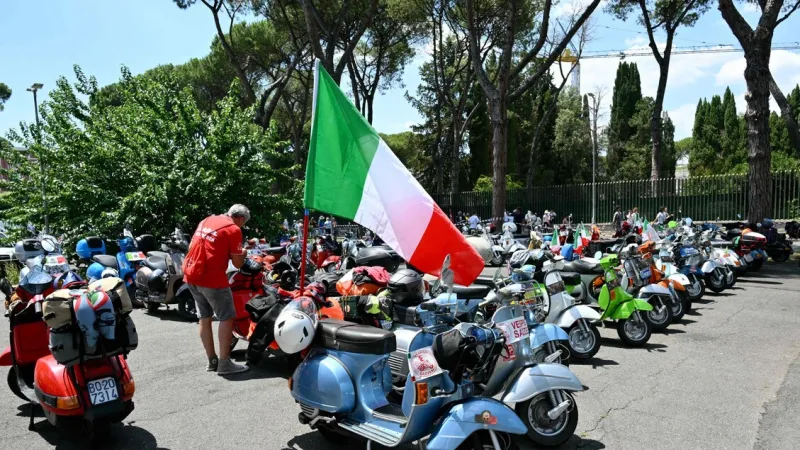
PONTEDERA, Italy – The iconic Vespa scooter, a quintessential symbol of Italian ingenuity and global mobility, marks its 80th anniversary this year, celebrating eight decades since its patent in 1946. What began as a post-war innovation by Piaggio has evolved into a worldwide cultural phenomenon, synonymous with freedom, elegance, and practical design.
This significant milestone commemorates the enduring legacy of a machine that transcended its utilitarian origins to become a powerful emblem of Italian lifestyle and creative spirit. From the cobbled streets of Rome to the bustling boulevards of New York, the Vespa has etched itself into the collective consciousness.
The genesis of the Vespa lay in Italy's immediate post-World War II need for affordable and accessible personal transportation. Piaggio, a company with a history in aeronautical manufacturing, sought to pivot its expertise to meet this demand, envisioning a simple, robust, and economical vehicle.
Engineer Corradino dAscanio, renowned for his aviation designs, was tasked by Enrico Piaggio with developing a scooter. dAscanio, who reportedly disliked motorcycles, designed a vehicle that was radically different, featuring a unibody chassis, a protective front shield, and an engine positioned to the side, eliminating the traditional central frame and making it accessible for riders in dresses or suits.
The resulting design, patented on April 23, 1946, quickly earned the nickname Vespa, meaning wasp in Italian, due to the buzzing sound of its engine and its distinctive body shape. Its immediate popularity stemmed from its ease of use, reliability, and innovative engineering.
Beyond its practicality, the Vespa rapidly cultivated a powerful cultural identity. It became an integral part of Italian cinema, most famously starring alongside Audrey Hepburn and Gregory Peck in the 1953 film Roman Holiday. This cinematic exposure cemented its status as a symbol of youthful freedom and romantic adventure.
Its elegant lines and vibrant color options made it a fashion statement, embraced by generations of riders seeking style alongside mobility. The Vespa became more than just a means of transport; it was an expression of individuality and an aspirational object.
Over the decades, the Vespa expanded its global footprint, with production facilities and enthusiasts spanning continents. It adapted to various markets while steadfastly retaining its core aesthetic and engineering principles that defined its original appeal.
The Piaggio Group, which owns the Vespa brand, has continued to innovate, introducing models with advanced technology, improved environmental performance, and enhanced safety features. Yet, each new iteration still carries the unmistakable DNA of dAscanio pioneering design.
Today, the Vespa remains a highly desirable product in urban environments, offering nimble navigation through congested streets and a sustainable option for short-distance travel. Its appeal resonates with a new generation valuing both heritage and contemporary functionality.
As the Vespa celebrates its 80th anniversary, its journey from a post-war necessity to a global luxury item underscores the power of timeless design and a product deeply embedded in the narrative of Italian craftsmanship. It continues to inspire loyalty and passion worldwide.
The scooter not only provided mobility but also contributed significantly to Italy's economic recovery and cultural resurgence in the mid-20th century. Its success story mirrors the broader narrative of Italian ingenuity finding global acclaim.
The celebration of this milestone highlights not just the past achievements but also looks toward the future. Piaggio Group remains committed to evolving the Vespa, ensuring its relevance in an ever-changing world while preserving its iconic character that has captivated millions for eight decades.