 Demian Sahputra
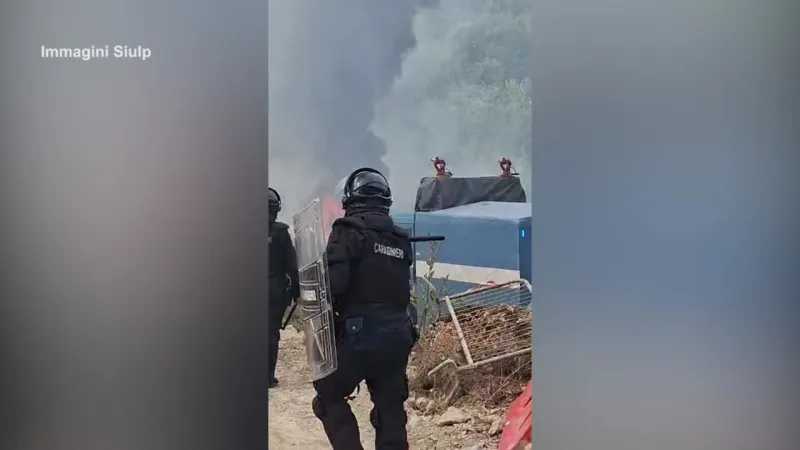
CHIOMONTE, Italy – Police union Siulp released unsettling images depicting carabinieri vehicles engulfed in flames following a violent assault in the Piedmontese municipality of Chiomonte. The union swiftly condemned the incident, characterizing it as a direct attack on the Italian state and its institutions, raising alarms about escalating tensions in the region.
The brazen act of arson occurred during what authorities describe as a targeted assault, causing significant material damage and prompting an immediate response from law enforcement. The images, widely circulated, show the charred remains of the vans, stark reminders of the aggression directed at state symbols.
Siulp leadership issued a robust statement, asserting, "It is an attack on the State." This declaration underscores the gravity of the situation, suggesting the incident transcends mere vandalism to become a challenge to national authority and public order.
While official investigations are ongoing, the attack bears hallmarks of past disturbances associated with the No Tav movement. Chiomonte lies at the heart of the contested high-speed rail link between Turin and Lyon, a project that has historically ignited fierce opposition and, at times, violent clashes.
The No Tav movement, an acronym for No TAV (Treno ad Alta Velocita or High-Speed Train), has long been a source of significant civil unrest in Italy. Its proponents argue against the environmental impact, cost, and necessity of the rail line, often resorting to aggressive protest tactics.
Previous incidents, including masked No Tav assaults that escalated and arsonists torching police vehicles, have marked the movement's history. The current assault in Chiomonte aligns with a concerning pattern of increasing violence aimed at symbols of state authority and infrastructure projects.
Italian political leaders have consistently vowed firm state resolve against such acts. Following past violent demonstrations, officials, including Prime Minister Giorgia Meloni, have emphasized that the state would not yield to intimidation or allow violence to dictate public policy.
The incident not only highlights the operational risks faced by carabinieri and other law enforcement personnel but also reflects a broader societal challenge. The deliberate targeting of police vehicles, symbols of public safety and order, erodes public trust and undermines the rule of law.
Authorities are appealing to the public for any information that might assist in identifying those responsible for the assault. Security measures in the area are expected to intensify as investigators work to piece together the events leading to the attack and apprehend the perpetrators.
This latest act of aggression renews calls for a more robust approach to managing protests that turn violent. It also rekindles debates surrounding the delicate balance between the right to protest and the imperative to maintain public safety and uphold the authority of the state.
The Chiomonte region has become a flashpoint for anti-establishment sentiments, with the TAV project serving as a tangible manifestation of government policy deemed by some as disregarding local communities and environmental concerns. The ongoing presence of carabinieri and other security forces in the area is a testament to the persistent tensions.
As images of the burning vehicles circulate, they serve as a stark visual reminder of the deep divisions and intense passions surrounding major infrastructure projects in Italy. The response from both law enforcement and the government will be closely watched as they navigate this latest challenge to state authority.