 Angela Stefani
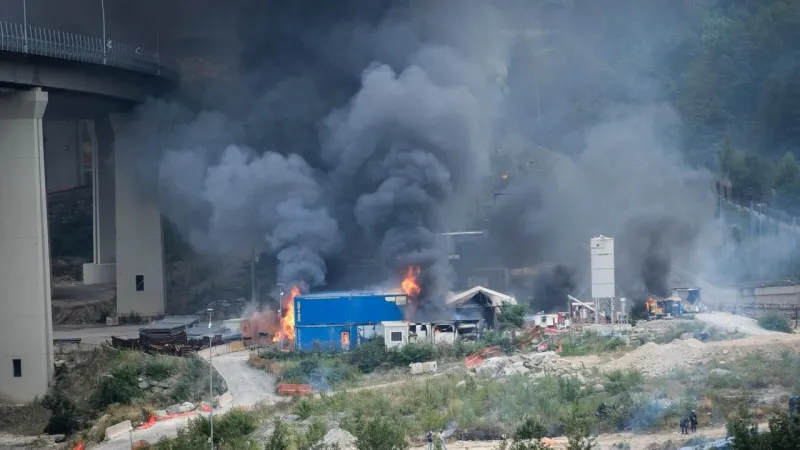
SUSA VALLEY, Italy – A demonstration against the Turin-Lyon high-speed rail project, widely known as the No Tav movement, erupted into significant violence recently when hundreds of hooded individuals assailed construction sites along the A32 highway, leading to its temporary closure. The clashes involved the hurling of paper bombs and tear gas, prompting an immediate condemnation from Prime Minister Giorgia Meloni, who affirmed, "Violence will not bend the State."
The confrontation occurred during a planned march through the Susa Valley, a region consistently at the heart of opposition to the infrastructure initiative. What began as a protest quickly devolved into an organized attack, targeting the perimeter defenses of the vital construction zones.
Authorities swiftly responded to the escalating unrest. The A32 motorway, a critical artery connecting Oulx and Susa Est, was shut down for public safety. This measure aimed to prevent further incidents and allow law enforcement to manage the volatile situation.
Prime Minister Meloni issued a robust statement following the disturbances, underscoring the government's unwavering resolve against such acts. Her words emphasized that the state would not yield to intimidation or illegal actions, reiterating a consistent stance of Italian governments regarding the contentious project.
The No Tav movement, which translates to "No High-Speed Train," has historically opposed the construction of the TAV (Treno Alta Velocita) line, citing environmental concerns, economic viability, and democratic processes. Activists argue the project is an unnecessary drain on public resources and poses irreversible ecological damage to the Alpine region.
However, proponents of the project, including successive Italian governments and the European Union, highlight its strategic importance for cross-border connectivity, economic growth, and reducing carbon emissions by shifting freight from road to rail. The Turin-Lyon line is a key component of the trans-European transport network.
The recent violence is not an isolated incident in the prolonged history of the No Tav protests. The movement has periodically seen clashes between protesters and security forces, with previous demonstrations also resulting in significant property damage and arrests. A related incident saw No Tav Protest Turns Violent: Arsonists Torch Police Vehicles, highlighting the persistent challenges to maintaining order.
The use of paper bombs and tear gas by the masked assailants signals a deliberate escalation of tactics, moving beyond peaceful demonstration to direct confrontation with state authorities and construction personnel. Such actions raise serious questions about the nature of the movement's more radical factions.
Local residents and businesses in the Susa Valley often find themselves caught between the conflicting ideologies and the practical disruptions caused by these protests. While some sympathize with the No Tav cause, many express frustration over the recurrent violence and the impact on daily life and economic activity.
Law enforcement officials have initiated investigations to identify those responsible for the assaults and the damage incurred. The government maintains that while the right to peaceful protest is fundamental, acts of vandalism and violence will be met with the full force of the law.
The incident serves as a stark reminder of the deep-seated divisions surrounding the Turin-Lyon high-speed rail project. As the construction continues, the Italian government faces the ongoing challenge of balancing infrastructure development with public dissent, ensuring security, and upholding the rule of law against persistent opposition.
Prime Minister Meloni’s swift and firm response aims to project an image of state resilience and control in the face of domestic unrest. The coming weeks will reveal the extent of the investigations and any subsequent legal actions against those involved in the recent violence.
The sustained resistance to the No Tav project continues to be a complex political and social issue for Italy, involving not only infrastructure and environment but also fundamental questions of governance and public participation in large-scale national endeavors.