 Robert Andrison
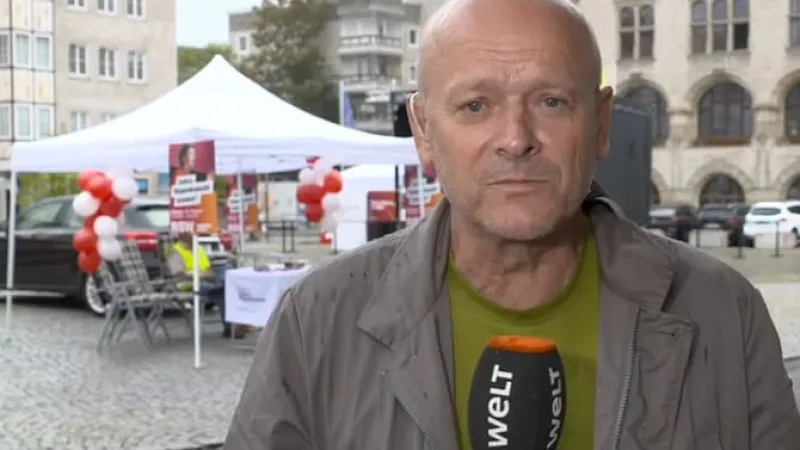
Dessau — The Bündnis Sahra Wagenknecht (BSW) party officially launched its election campaign in Sachsen-Anhalt today, facing crucial polls that place it precariously close to the five percent threshold required for parliamentary representation. This regional contest is widely seen as an existential test for the fledgling political movement, a challenge its leader, Sahra Wagenknecht, aims to overcome by rallying support through her distinct anti-CDU stance.
Polls currently indicate BSW hovering just around the critical five percent mark, making every percentage point vital for its entry into the state parliament. Failure to surpass this hurdle would deal a significant blow to the party's national ambitions and legitimacy, questioning its viability beyond its initial surge of interest.
According to political analyst Lutz Stordel, Wagenknecht has adeptly galvanized a segment of the electorate, particularly by adopting a firm anti-Christian Democratic Union (CDU) position. This strategy, Stordel reports, has successfully consolidated parts of the party's base, providing a foundation as they enter the campaign's intensified phase.
The Sachsen-Anhalt election serves as an early litmus test for BSW, which emerged as a significant new force in German politics. Its platform often blends traditional left-wing economic policies with more conservative stances on immigration and foreign policy, differentiating it from established parties.
Party strategists are reportedly banking on Wagenknecht's personal appeal and her ability to articulate a clear alternative to the centrist consensus that many voters feel has failed to address their concerns. Her populist rhetoric often resonates with voters disillusioned by mainstream politics.
The political landscape in Sachsen-Anhalt is complex and often contentious. The state has previously seen strong performances from the Alternative for Germany (AfD), and the presence of a new, protest-oriented party like BSW further fragments the electoral field. The fight for survival for BSW is not merely about gaining seats, but about establishing a foothold in a politically diverse region.
For more context on the regional political climate, an expert recently warned that AfD rule in Saxony-Anhalt risks economic isolation, highlighting the significant stakes involved in these elections beyond just party survival.
BSW's campaign launch in Dessau signals its intent to engage directly with local communities, presenting its vision for the state's future. The party aims to tap into sentiments of economic insecurity and a desire for stronger national sovereignty, themes frequently emphasized by Wagenknecht.
Critics argue that BSW's ambiguous positioning on certain issues and its reliance on Sahra Wagenknecht's charismatic leadership could be both its greatest strength and its ultimate weakness. A diverse voter base drawn by a single figure might prove unstable under electoral pressure.
As the campaign unfolds, all eyes will be on BSW's ability to convert initial interest into concrete votes. The Sachsen-Anhalt election will undoubtedly shape perceptions of the party's longevity and its potential to become a lasting force in Germany's intricate political fabric.