 Edward DP Situmorang
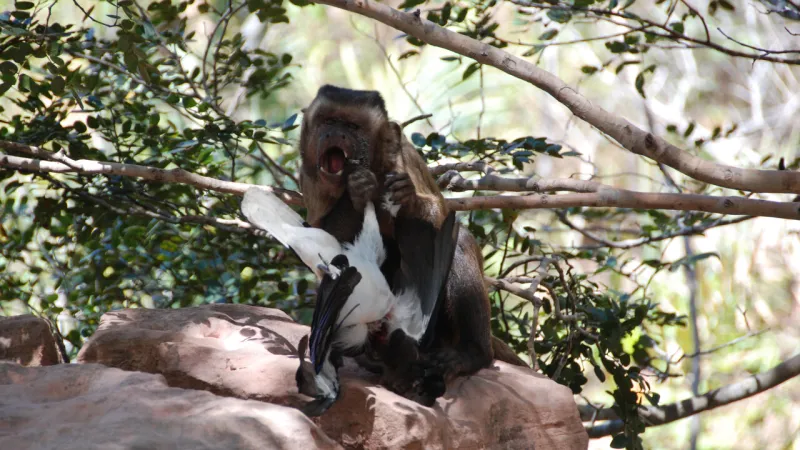
Nairobi, Kenya Recent scientific observations from diverse field studies are reshaping long-held assumptions about primate diets, revealing that several monkey species actively engage in hunting and meat consumption. This behavior, captured through extensive documentation, offers critical new perspectives for evolutionary biologists and anthropologists seeking to understand the complex dietary shifts that fundamentally influenced the trajectory of human evolution.
For decades, the conventional view posited that the development of systematic hunting and carnivory was a distinguishing feature of early hominids, marking a significant divergence from their more herbivorous primate ancestors. This new evidence, however, suggests a broader evolutionary continuum in dietary strategies than previously recognized, challenging the notion of a clear, abrupt transition to meat-eating among our forebears.
Researchers highlight that these monkey species employ varied hunting techniques, ranging from opportunistic predation on small vertebrates like birds and lizards to coordinated group efforts targeting larger prey. Such sophisticated behaviors indicate a level of cognitive and social complexity that parallels, in some aspects, the early hunting practices hypothesized for ancient human ancestors.
The nutritional benefits derived from meat are well-documented, providing concentrated sources of protein, fat, and essential micronutrients vital for brain development and energy. The discovery of these benefits being actively sought by modern monkeys reinforces theories that similar dietary pressures and advantages played a crucial role in the cognitive and physiological evolution of early humans.
These findings compel scientists to revisit traditional models of human ancestral diet. Rather than viewing the shift to carnivory as a sudden innovation, the observed monkey hunting behaviors suggest that the underlying capacities for opportunistic predation and even planned hunting might have been present in a common ancestor, emerging more gradually through evolutionary adaptation.
The studies, often conducted over years in various natural habitats across continents, utilize advanced tracking and observation technologies. This meticulous data collection provides an unparalleled glimpse into the daily lives of these primates, showcasing their adaptive capacities in securing diverse food sources, including animal protein.
Understanding the ecological drivers behind these monkey species incorporating meat into their diets is also a key focus. Environmental factors, availability of plant-based foods, and interspecies competition could all contribute to the emergence and persistence of predatory behaviors, mirroring conditions that might have shaped early hominid foraging strategies.
Experts suggest that the energy expenditure required for hunting, coupled with the potential rewards, could have spurred evolutionary pressures leading to enhanced problem-solving skills, improved coordination, and advanced communication within primate groups. These traits are considered foundational for the complex social structures seen in humans.
Dr. Alistair Finch, a primatologist at the University of Cambridge, stated, "These observations are not merely anecdotal; they represent consistent patterns of behavior. They compel us to reconsider the timeline and the inherent capabilities for meat consumption that existed within the broader primate lineage, long before the emergence of Homo sapiens."
This research builds upon a growing body of evidence indicating that primate dietary habits are far more flexible and diverse than once believed. From tool-using chimpanzees fishing for termites to capuchin monkeys cracking nuts, the picture emerging is one of highly adaptable creatures constantly navigating their environments for optimal sustenance.
The implications extend beyond diet, touching upon our understanding of early hominid social structures. Cooperative hunting, even in rudimentary forms, requires coordination and communication, fostering social bonds and potentially leading to the development of more complex group dynamics essential for survival and reproduction.
Ultimately, the phenomenon of monkey hunting serves as a living laboratory for human evolution. By studying contemporary primate behaviors, scientists gain proxy insights into the environmental pressures, dietary choices, and behavioral adaptations that may have shaped our own lineage millions of years ago, offering a clearer picture of what it truly means to be human.