 Dorry Archiles
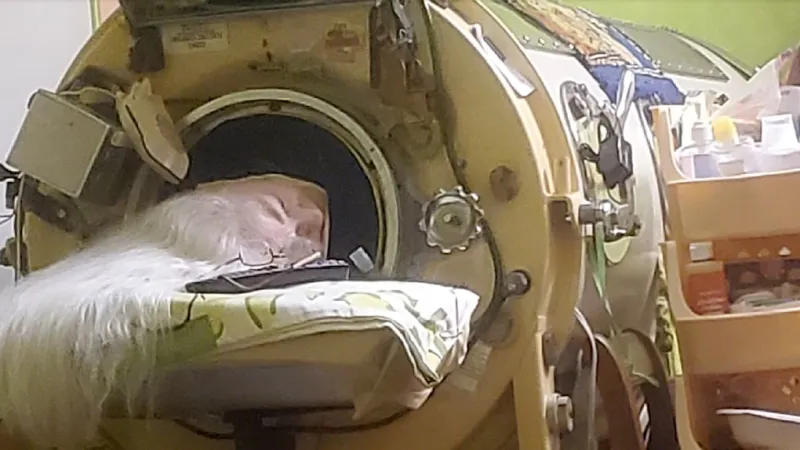
The extraordinary medical era of the iron lung, a critical device that once saved innumerable lives during devastating polio epidemics, has concluded with the passing of Martha Lillard. Lillard, believed to be the last patient globally to rely on the historic machine, succumbed after more than 70 years of dependency following her childhood polio diagnosis.
Lillard's life was inextricably linked to the metallic behemoth since contracting poliomyelitis as a child. Her reliance on the negative-pressure ventilator underscored a bygone chapter in medical history, a time when such devices were at the forefront of respiratory support for victims of the crippling viral disease.
The iron lung, or tank respirator, encased the patient's body from the neck down, using negative pressure to mechanically expand and contract the lungs, thereby facilitating breathing. It became a ubiquitous symbol of the global fight against polio throughout the mid-20th century, transforming hospital wards into a landscape of rhythmic hums and mechanical sighs.
For Lillard, the device was not merely a machine but a lifeline, enabling her to live a life far beyond what her initial diagnosis might have suggested. Her journey highlighted the enduring human spirit and the profound impact of medical technology, however archaic it may now seem, on individual lives.
Her passing marks the symbolic end of an era dominated by a disease that once terrorized communities worldwide. Polio, an infectious disease primarily affecting young children, led to muscle weakness, paralysis, and in severe cases, respiratory failure, necessitating interventions like the iron lung.
The widespread adoption of the polio vaccine, pioneered by scientists like Jonas Salk and Albert Sabin in the 1950s, dramatically reduced the incidence of the disease. This monumental public health achievement rendered the iron lung largely obsolete, replaced by more compact and sophisticated positive-pressure ventilators.
Yet, a small cohort of long-term survivors, including Lillard, continued their lives within these vintage machines. Their continued existence presented unique challenges, from the scarcity of replacement parts to the specialized care required for maintenance and daily living.
Lillard's seven decades within the iron lung offered a rare glimpse into a highly individualized and technologically demanding form of long-term care. Her experience serves as a testament to both the severity of polio and the ingenuity of early medical interventions.
The global health community continues its efforts toward complete polio eradication, with only a few countries still reporting wild poliovirus cases. The eventual triumph over polio will be a direct legacy of the breakthroughs that made devices like the iron lung a historical artifact.
As the world moves forward with advanced medical technologies, Lillard's life and her reliance on the iron lung will remain a poignant reminder of past epidemics, the relentless march of scientific progress, and the profound resilience of those who navigated extraordinary medical challenges.