 Demian Sahputra
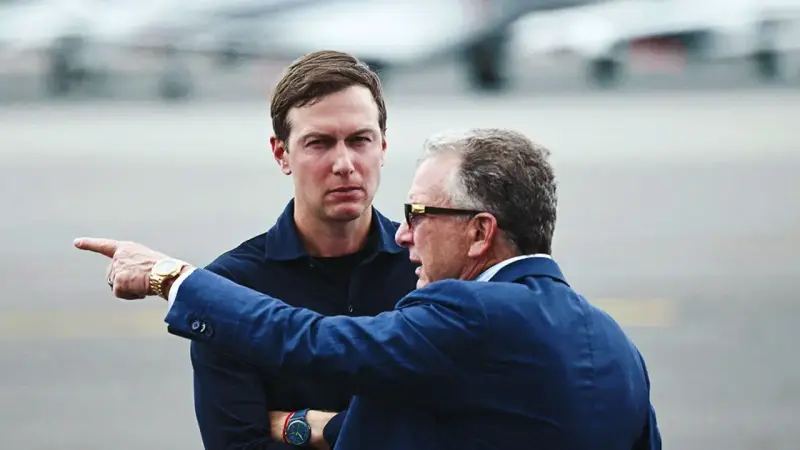
ISLAMABAD — Real estate moguls and presidential advisors Steven Witkoff and Jared Kushner are expected to hold a high-stakes diplomatic meeting with Iran's Foreign Minister, Hossein Amirabdollahian, in Pakistan this week. This signals a potential back-channel effort by the President Donald Trump administration to de-escalate regional tensions and explore new avenues for dialogue between Washington and Tehran.
The unannounced gathering, confirmed by sources close to the discussions, underscores a significant, if unorthodox, diplomatic push. Witkoff, a prominent real estate developer, and Kushner, President Trumps son-in-law and a former senior advisor, are undertaking this sensitive engagement outside traditional diplomatic frameworks, raising questions about its nature and objectives.
Their involvement suggests a direct, albeit informal, channel to the White House, allowing for a bypass of conventional State Department protocols. This approach mirrors elements of President Trumps previous foreign policy strategies, which often favored direct negotiations and unconventional emissaries.
Relations between the United States and Iran have remained strained throughout President Trumps current term, marked by ongoing sanctions, regional proxy conflicts, and persistent disagreements over Irans nuclear program. This meeting could represent an attempt to break the diplomatic impasse.
Pakistan, which shares a border with Iran and maintains complex relationships with both Washington and Tehran, is positioned as a neutral ground for these sensitive discussions. Its role as a facilitator highlights its growing geopolitical importance in regional stability efforts.
While the specific agenda remains officially undisclosed, observers anticipate discussions will likely encompass a broad range of critical issues. These may include the status of the 2015 Iran nuclear deal, the lifting of US sanctions, regional security concerns, and potential pathways for economic cooperation.
Irans Foreign Minister Amirabdollahian is known for his firm stance on national interests but has also demonstrated a pragmatism in foreign policy, particularly concerning engagement with regional powers. His presence indicates a willingness from Tehran to at least listen to these unconventional proposals.
Critics of this back-channel approach express concerns about the lack of transparency and potential for missteps when relying on individuals without formal diplomatic experience. However, proponents argue that such direct access to the presidential circle can sometimes yield breakthroughs that traditional diplomacy cannot.
President Trump has consistently expressed a desire for a new, comprehensive agreement with Iran, one that addresses both its nuclear ambitions and its regional behavior. This meeting could be a preliminary step toward assessing the feasibility of such a grand bargain or a more limited de-escalation agreement.
No official statements have been released by the White House, the Iranian Foreign Ministry, or the Pakistani government regarding the impending meeting. The clandestine nature of the preparations suggests a deliberate attempt to manage expectations and allow for open, unconstrained dialogue without public pressure.
The outcome of the Witkoff and Kushner meeting with the Iranian foreign minister in Pakistan could significantly influence the trajectory of US-Iran relations. It represents a critical juncture where informal diplomacy attempts to bridge deep-seated geopolitical divides. The international community will be closely watching for any signs of progress from this surprising encounter.
The high-level engagement reflects the intricate balance of power and the complex web of alliances and rivalries in the Middle East. Any move toward de-escalation, even through unconventional channels, is viewed with both hope and skepticism by various stakeholders in the region and beyond.