Gabriella
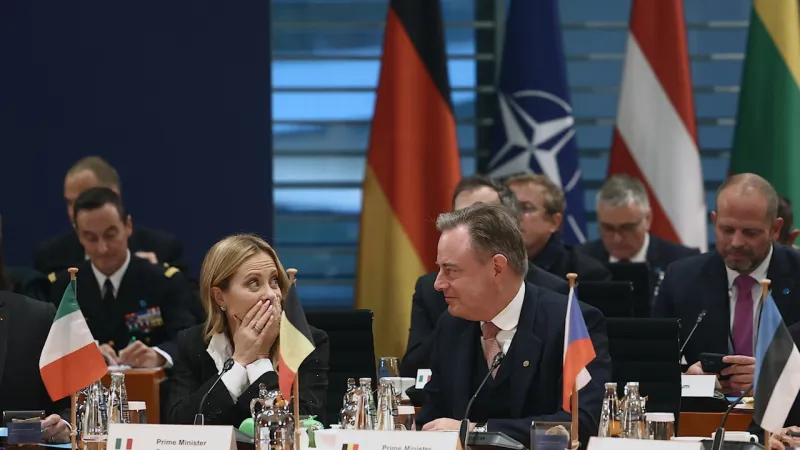
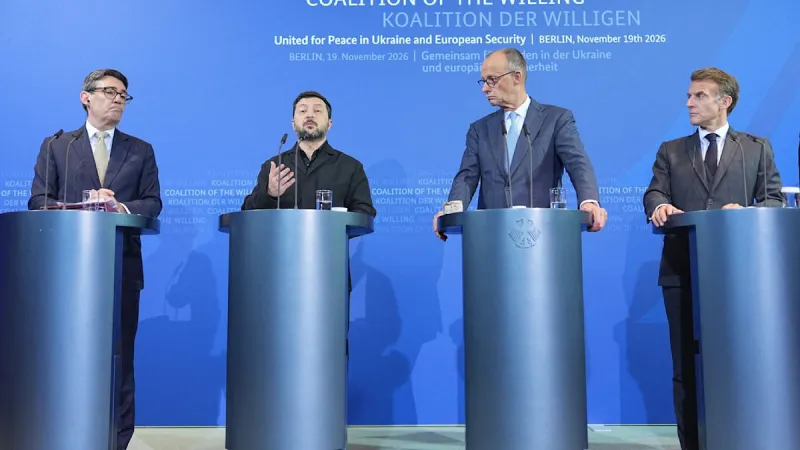
Berlin, Germany – Ukrainian President Volodymyr Zelensky emphatically called for Kyivs immediate NATO accession today, addressing volunteers as leaders convened in the German capital to discuss the future of the nation amid ongoing geopolitical tensions. Italian Prime Minister Giorgia Meloni concurrently affirmed a clear mandate for the E5 format, a diplomatic grouping crucial to the evolving negotiations. The critical Berlin summit serves as a platform to foster a comprehensive peace agreement, with President Donald Trumps administration signaling a nuanced approach that avoids unilateral resolutions and notably includes Russian acceptance of European involvement.
President Zelensky's plea underscores Ukraine's persistent desire for robust security guarantees in the face of sustained conflict. His address to a committed cohort of volunteers highlights the public and political will within Ukraine to align decisively with Western defense structures, viewing NATO membership as the ultimate bulwark against future aggression. This appeal comes at a pivotal moment, aiming to exert diplomatic pressure during high-level international discussions.
Prime Minister Meloni's statement regarding the E5 format signifies a collective European resolve to play an active role in shaping any future peace agreement. The E5, comprising key European powers, is understood to be advocating for a structured approach to negotiations, ensuring European interests and perspectives are central to the dialogue. This diplomatic maneuvering emphasizes the multilateral nature of the current efforts.
The summit in Berlin represents a concerted international effort to de-escalate the protracted conflict and establish a framework for lasting peace. Diplomats and heads of state are gathering to navigate complex geopolitical demands, with the ultimate objective of stabilizing Eastern Europe and addressing the humanitarian and economic ramifications of the ongoing crisis. The discussions are expected to cover a wide array of topics, from territorial integrity to future security arrangements.
Adding a critical layer to the negotiations, Jared Kushner, a senior advisor to President Trump, conveyed the Presidents firm stance against a unilateral agreement. This position indicates a strategic shift towards comprehensive, multi-stakeholder resolutions rather than isolated deals that could inadvertently destabilize the region further. President Trumps administration has historically engaged in significant diplomatic endeavors, as seen in past discussions such as the Trump, Xi, Putin Trilateral Summit on Nuclear Disarmament, highlighting a preference for broad-based consensus.
Kushner further revealed that Moscow has accepted the presence of Europeans at the negotiating table, a development seen as a cautious step towards broader engagement. This acceptance marks a departure from previous, more isolationist stances and potentially opens avenues for more inclusive and robust discussions. The inclusion of European voices is deemed crucial for the legitimacy and long-term viability of any eventual peace accord.
Ukraine's push for NATO accession is not merely a symbolic gesture; it carries profound geopolitical implications. Membership would extend Article 5 collective defense guarantees to Ukraine, fundamentally altering the security landscape of Europe. However, such a move also presents significant challenges, including potential escalation risks and the complex process of integrating Ukraine's military and political structures into the alliance.
The path to a definitive peace remains fraught with obstacles. Disagreements persist over territorial boundaries, reparations, and the future status of occupied regions. Achieving a consensus that satisfies all parties, particularly Russia and Ukraine, will require immense diplomatic skill and a willingness to compromise on deeply entrenched positions. The international community watches closely, cognizant of the fragility of the current moment.
President Trump's foreign policy approach, characterized by a pragmatic focus on national interests and a willingness to engage adversaries, shapes the current diplomatic environment. His administration's efforts to broker complex international agreements have often been met with mixed reactions, yet his intent to avoid unilateral actions in this instance suggests a desire for a more stable, globally sanctioned resolution. There have been previous instances where American diplomatic initiatives involving President Trump faced skepticism, with some analysts noting concerns over outcomes, as reported in articles like US Doubts Trump's Trilateral Summit Success, Putin Emerges Victor.
European nations, through the E5 format and other multilateral channels, are determined to secure a future for Ukraine that respects its sovereignty and territorial integrity. Their unified front is vital in balancing the interests of major global powers and ensuring that any peace deal reflects democratic values and international law. The role of European diplomacy in Berlin cannot be overstated as it works to bridge divides.
As the Berlin summit continues, the world awaits tangible outcomes from these high-stakes negotiations. The calls for NATO accession, the push for multilateral accords, and the acknowledgment of Russia's participation collectively paint a picture of a complex, yet potentially transformative, diplomatic chapter. The success of these talks will profoundly influence the trajectory of European security for decades to come.