 Edward DP Situmorang
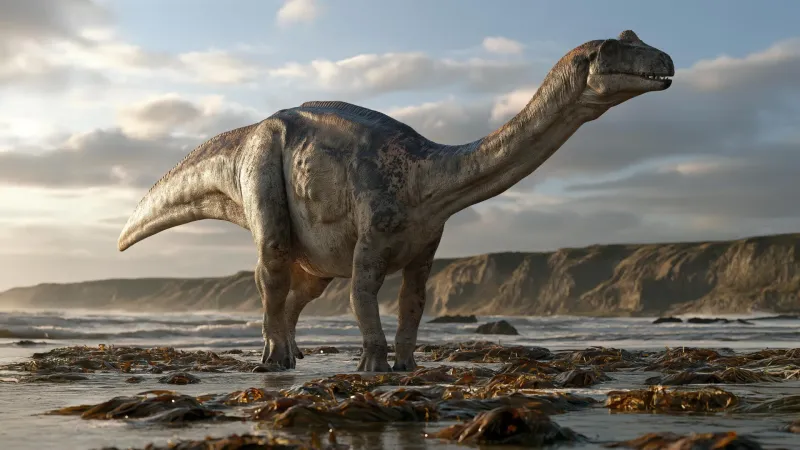
New scientific evidence, meticulously unearthed from fossilized teeth, indicates that various dinosaurs and other prehistoric creatures inhabiting coastal regions more than 100 million years ago likely supplemented their diets with marine resources, including seaweed. This surprising discovery challenges conventional understanding of ancient food chains and highlights a previously unappreciated link between terrestrial and aquatic ecosystems.
Researchers meticulously analyzed chemical signatures preserved within these ancient dental remains, uncovering telltale markers of nutrients originating from the sea. These specific chemical tracers suggest that oceanic flora and fauna played a significant, albeit partial, role in the sustenance of diverse prehistoric animals.
The findings fundamentally reshape paleontological perspectives on dinosaur dietary habits. Historically, plant-eating dinosaurs, or herbivores, were thought to subsist almost exclusively on terrestrial vegetation. This new data introduces a novel dimension to their nutritional strategies.
Furthermore, the study extends beyond herbivores, indicating that marine resources traversed ancient food webs, ultimately reaching predators. This suggests a more intricate and interconnected ecosystem than previously imagined, where oceanic productivity contributed to the caloric intake across various trophic levels.
The technique employed involved isotope analysis, a sophisticated method that examines the ratios of different isotopes of elements like carbon and nitrogen within biological samples. These ratios act as unique fingerprints, revealing the ultimate source of an organisms diet. Marine ecosystems possess distinct isotopic signatures compared to terrestrial ones.
During the period over 100 million years ago, vast shallow seas covered significant portions of Earths landmasses. These dynamic coastal environments would have offered ample opportunities for various species to exploit both terrestrial and marine food sources, fostering a unique blend of ecological interactions.
Consider a large herbivorous dinosaur foraging near a shoreline. Instead of solely consuming ferns and cycads, it might have occasionally grazed on nutrient-rich seaweeds washed ashore or accessible in shallow waters. Similarly, smaller predators could have preyed on coastal animals that themselves consumed marine life, demonstrating a diverse consumption pattern for dinosaurs eating seaweed.
This adaptability to incorporate diverse food sources could have been a crucial survival mechanism, allowing species to thrive in fluctuating environments or when preferred terrestrial resources were scarce. Such dietary flexibility demonstrates the evolutionary ingenuity of these ancient giants.
Scientists anticipate that these findings will spur further investigations into other fossil sites globally, searching for similar marine dietary indicators in diverse prehistoric faunas. Expanding the dataset could confirm whether this was a widespread phenomenon or localized to specific coastal regions.
For decades, paleontologists have categorized dinosaurs largely based on their presumed terrestrial diets. This discovery urges a reevaluation of these long-held classifications and encourages a more nuanced understanding of their ecological niches.
The presence of these marine chemical signatures in teeth — structures known for their robustness and long-term preservation — provides compelling, direct evidence rather than inferential assumptions based on gut contents, which are rarely fossilized.
The concept of marine-derived nutrients supporting terrestrial food chains is not unique to the age of dinosaurs. Modern ecosystems, such as coastal forests nourished by ocean aerosols or riparian zones benefiting from anadromous fish, exhibit similar cross-ecosystem nutrient flows.
The geological and climatic conditions of that specific ancient period likely supported a flourishing marine environment along coastlines, creating a rich interface for nutrient exchange between land and sea.
A deeper understanding of ancient dietary flexibility contributes to a broader appreciation of prehistoric biodiversity and the complex strategies life employed to sustain itself across millions of years.
As more evidence accumulates, future paleontological research might even identify new ecological categories or sub-categories for dinosaurs that regularly engaged in marine foraging, furthering our knowledge of these magnificent creatures.