 Chandra Wijayanto
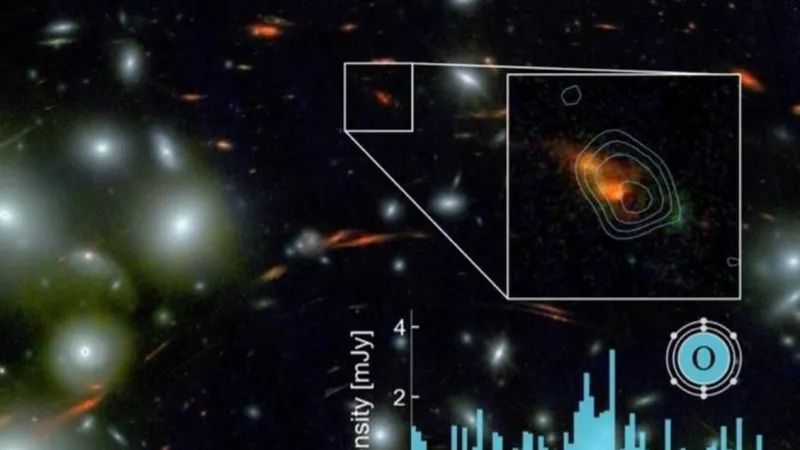
The scientific community is abuzz with a groundbreaking astronomical achievement: the direct observation of the primordial gas responsible for shaping the universe's earliest stars. This monumental discovery offers an unprecedented view into the cosmic dawn, capturing the universe as it existed a mere one million years after the Big Bang. Researchers leveraged advanced observational techniques to pinpoint the faint signatures of this ancient material, providing empirical evidence for the genesis of the first celestial structures.
This pivotal finding significantly advances our comprehension of the universe's infancy. Before this observation, theories regarding the formation of the first stars, known as Population III stars, relied primarily on sophisticated simulations and indirect cosmological data. Now, scientists possess tangible evidence, bridging a critical gap between theoretical models and empirical reality. The detection of this specific gas component is a testament to the persistent ingenuity in astrophysics.
At one million years post-Big Bang, the universe was a vastly different environment from the cosmos we observe today. It was a hot, dense soup of predominantly hydrogen and helium, largely devoid of the heavier elements forged within subsequent stellar generations. Gravity acted upon subtle density fluctuations in this early gas, gradually drawing material together to form the first massive clumps that would eventually collapse under their own weight to ignite as stars.
These first stars were gargantuan, often hundreds of times the mass of our sun, and lived incredibly brief, incandescent lives. Their explosive deaths, in the form of supernovae, were the universe's original factories for heavier elements like carbon, oxygen, and iron, seeding the interstellar medium for the formation of later generations of stars, planets, and ultimately, life itself. Understanding the properties of the gas that fostered these cosmic behemoths is thus fundamental to tracing our own origins.
The methodological breakthroughs enabling this observation are as significant as the discovery itself. While specific instrument details are often under embargo or part of ongoing research, such feats typically involve arrays of highly sensitive radio telescopes or next-generation space-based observatories capable of detecting incredibly faint signals from billions of light-years away. These instruments act as cosmic time machines, capturing light that has traveled across the expanding universe for nearly its entire history.
This observation validates long-standing cosmological theories regarding the early universe's composition and the mechanisms of structure formation. It confirms that the conditions predicted by models for the earliest stages of star birth were indeed present. The subtle spectral lines analyzed by astronomers provide a chemical fingerprint of this ancient gas, revealing its elemental purity and physical state before it was processed by stellar nucleosynthesis.
The implications for future astrophysical research are profound. Scientists can now refine their simulations of the cosmic dawn, incorporating direct observational constraints. This will lead to more accurate models of how the first galaxies coalesced, how the universe transitioned from its dark ages to a reionized state, and the precise timeline for the emergence of complex chemical elements. The direct study of such pristine gas offers a unique laboratory for understanding fundamental physics under extreme conditions.
Furthermore, this discovery underscores the immense power of sustained investment in cutting-edge astronomical instrumentation. Projects that push the boundaries of sensitivity and resolution are continuously unveiling new layers of cosmic history, challenging and confirming our understanding of the universe's evolution. Each new observation from the deep past acts as a new chapter in the cosmic narrative.
The identification of this gas provides a missing piece in the grand tapestry of cosmic evolution. It lays the groundwork for further investigations into the characteristics of these earliest stellar nurseries, including their temperature, density, and kinematic properties. Such details are crucial for understanding the initial mass function of Population III stars and their ultimate impact on galactic evolution.
Researchers anticipate that follow-up observations will aim to map the distribution of this primordial gas more extensively, potentially revealing the nascent structures that would later evolve into the first proto-galaxies. This ongoing quest to illuminate the universe's earliest moments promises to redefine our cosmic perspective repeatedly, offering deeper insights into the fundamental processes that shaped everything we see.