 Debby Wijaya
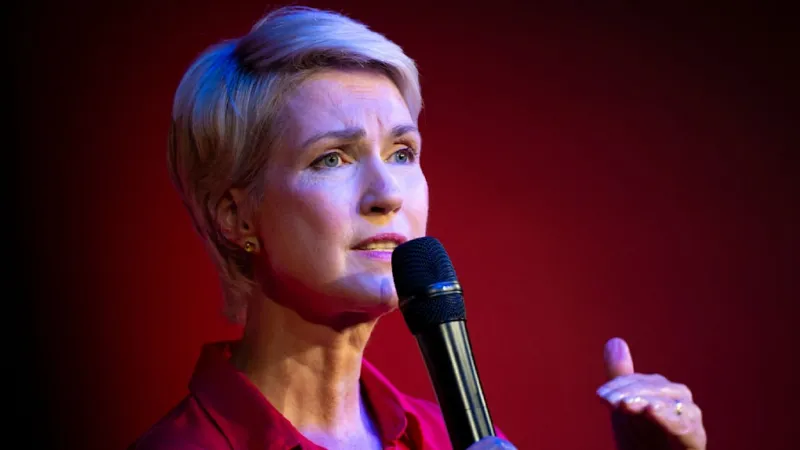
SCHWERIN, Germany – With just six days remaining until the critical state election in Mecklenburg-Vorpommern, Minister President Manuela Schwesig is forcefully urging the federal Chancellor to take decisive action regarding persistently high fuel prices. The Social Democratic Party (SPD) leader has made this economic issue, which directly impacts countless citizens, a central pillar of her campaign's final push, as the race against the Alternative for Germany (AfD) remains exceptionally close.
Schwesig's appeal underscores the growing frustration among the populace over rising costs at the pump, a sentiment she is strategically leveraging to mobilize voters. Her declaration, reflecting widespread public concern, emphasizes a clear expectation for federal intervention to alleviate the financial burden on households and businesses across the state.
The political landscape in Mecklenburg-Vorpommern has seen a narrowing gap between the SPD and AfD, intensifying the electoral stakes. Opinion polls suggest a highly contested outcome, making every campaign issue, particularly those with tangible economic consequences, potentially decisive in swaying undecided voters.
High fuel prices have emerged as a significant grievance for many German citizens, affecting daily commutes, logistics, and the overall cost of living. Schwesig's focus on this issue is a calculated move to address a core concern that resonates deeply within the working-class communities of the northeastern state.
Her demand for the Chancellor to act implies a call for concrete federal measures. These could range from temporary tax reductions on gasoline and diesel to subsidies for consumers or a re-evaluation of energy policy frameworks designed to stabilize market volatility. Such interventions would require significant political will and a coordinated federal response.
Recent global events, including supply chain disruptions and geopolitical tensions, have contributed to the upward trajectory of energy costs worldwide. For instance, a recent report highlighted how a Saudi pipeline halt previously sent oil prices past the $100 mark, illustrating the fragility of global energy markets and their direct impact on domestic fuel costs.
While the Chancellor's office has acknowledged the challenges posed by high energy prices, specific proposals for immediate relief have remained a subject of ongoing debate within the ruling coalition. Schwesig's direct challenge aims to accelerate this process, demanding tangible results before voters head to the polls.
The AfD, a party that often capitalizes on public discontent with federal policies, has also voiced concerns over economic hardship, potentially vying for the same voter demographic affected by fuel costs. Schwesig's proactive stance seeks to demonstrate the SPD's commitment to pragmatic solutions over rhetoric.
Addressing the spiraling cost of living, particularly related to essential expenses like transportation, is not unique to Mecklenburg-Vorpommern. Across Germany, regional leaders face similar pressures to mitigate the economic strain on their constituents, often looking to Berlin for national remedies.
The outcome of the Mecklenburg-Vorpommern election will not only determine the state's political direction but could also serve as a barometer for national sentiment, particularly regarding economic policy and the perceived responsiveness of the federal government. Schwesig's bold stance on fuel prices is a high-stakes gamble in the final stretch of a crucial election campaign.
Political analysts suggest that the Chancellor's response, or lack thereof, could significantly influence voter perceptions beyond Mecklenburg-Vorpommern, potentially impacting future electoral contests. The intricate dance between state and federal politics, particularly on an issue as universally felt as fuel prices, will be under intense scrutiny in the coming days.