 Demian Sahputra
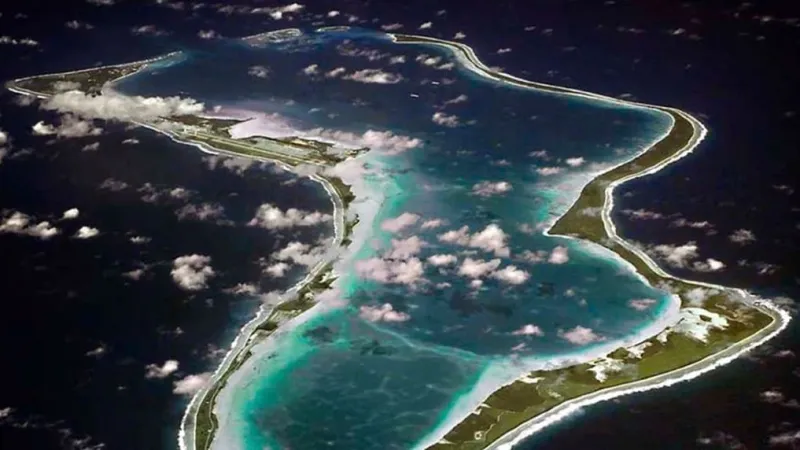
London, United Kingdom - Great Britain has formally abandoned its previously announced plan to return the contested Chagos Islands to Mauritius, a significant policy reversal directly attributed to a lack of support from the United States following a course correction by President Donald Trump's administration. The decision, revealed recently, effectively halts a long-standing diplomatic process aimed at decolonization and sovereignty transfer in the Indian Ocean.
The British Foreign Office cited the shift in American policy as the critical factor underpinning its withdrawal from the proposed agreement. President Trump's administration reportedly communicated its disinclination to endorse the handover, casting doubt on the future operational capabilities of the strategically vital US military base on Diego Garcia, the largest island in the Chagos archipelago.
The Chagos Islands, officially a British Indian Ocean Territory (BIOT), have been a persistent point of contention for decades. Mauritius claims sovereign rights over the archipelago, asserting it was illegally detached from its territory prior to its independence in 1968. The International Court of Justice and the United Nations General Assembly have largely supported Mauritius position, urging Britain to complete decolonization.
Diego Garcia hosts a crucial US naval support facility and air base, playing a pivotal role in American military operations across the Middle East, Africa, and Asia. Its strategic location offers unmatched logistical advantages for power projection and surveillance, making its continued unfettered use a high priority for Washington.
For years, London had been exploring avenues for a settlement with Port Louis, including discussions about a potential return of the islands under certain conditions. This progressive diplomatic track acknowledged growing international pressure and the advisory opinions from international bodies. This recent abandonment marks a stark departure from that previous engagement.
Officials in Port Louis are expected to express profound disappointment, potentially viewing the decision as a significant setback for their nation's territorial integrity and a disregard for international law and UN resolutions. The Mauritian government has consistently pressed its claim on global stages, seeking a peaceful and just resolution.
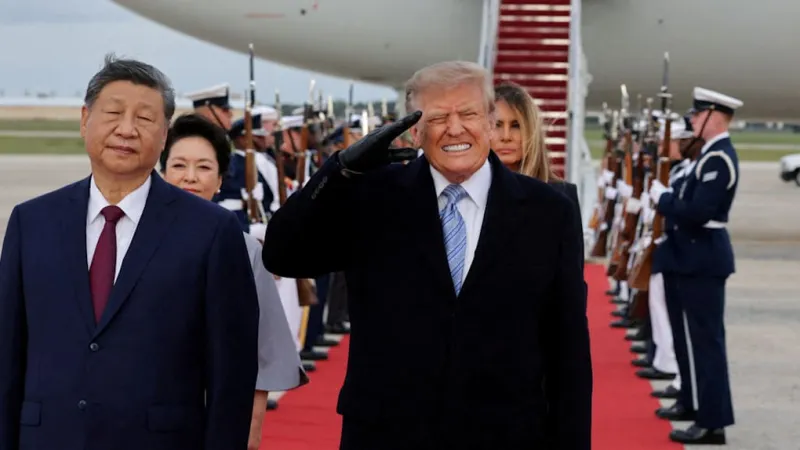
The Trump administration's foreign policy has often prioritized perceived national security interests and strategic alliances, sometimes leading to re-evaluations of previous diplomatic commitments. This latest development concerning the Chagos Islands aligns with a broader pattern of asserting American geopolitical advantage, as seen in complex international negotiations like those during President Trump's summit with Chinese President Xi Jinping.
A central humanitarian aspect of this dispute involves the original inhabitants, the Chagossians. They were forcibly removed from their homeland by the British in the late 1960s and early 1970s to facilitate the construction of the US military base. Their right of return and compensation remains a significant moral and legal issue intertwined with the sovereignty debate.
The United Nations General Assembly voted overwhelmingly in 2019, urging Britain to cede the Chagos Islands to Mauritius, following a non-binding International Court of Justice advisory opinion. Britain's latest move challenges this international consensus and could invite further criticism from global bodies and sympathetic nations for defying widely accepted principles of decolonization.
The abandonment of the Chagos return plan suggests a hardening of positions and likely portends continued diplomatic friction between the United Kingdom and Mauritius. It also underscores the significant influence the United States wields over its allies, particularly when its strategic military interests are at stake in regions as vital as the Indian Ocean.
This decision occurs within a complex geopolitical landscape where control over key maritime routes and strategic territories is increasingly scrutinized by major global powers. The Indian Ocean region, in particular, has seen intensified competition and strategic maneuvering, heightening the perceived importance of bases like Diego Garcia.
The British government's decision, heavily influenced by President Trump's administration, marks a definitive pause in the Chagos Islands decolonization process. It prioritizes the continuation of the US military presence on Diego Garcia, potentially at the expense of international legal consensus and Mauritian sovereignty claims. The long-term implications for the Chagossians and Anglo-Mauritian relations remain a critical concern.