 Chandra Wijayanto
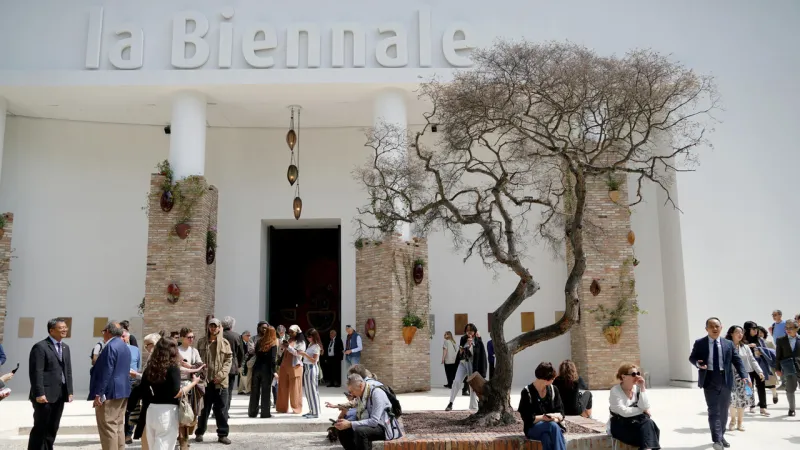
ROME – A significant political confrontation has erupted between Italy's right-wing Lega party, spearheaded by Senator Lucia Borgonzoni, and the European Union, centering on the prestigious Biennale cultural event. This escalating dispute has further fractured Italy's opposition, with the Five Star Movement (M5s) criticizing the European Commission while the Democratic Party (Pd) voices its defense.
Senator Borgonzoni, a prominent Lega figure and former Undersecretary for Culture, publicly decried what she perceives as undue European influence over Italian cultural institutions. Her statements ignited the controversy, framing it as a defense of national sovereignty against bureaucratic overreach.
The precise nature of the European Union's perceived intervention remains a key point of contention. While specific directives or actions from the European Commission have not been detailed, the Lega's narrative suggests a broader concern about EU attempts to standardize or exert control over national cultural programming and funding.
The Biennale, an internationally acclaimed series of art, architecture, cinema, dance, music, and theater festivals held in Venice, represents a cornerstone of Italy's cultural heritage and global artistic reputation. Its governance and artistic direction are subjects of immense national pride and political interest.
The Five Star Movement swiftly aligned with critics of the EU, echoing sentiments of concern regarding potential infringements on national cultural autonomy. M5s representatives articulated their apprehension about the Commission's perceived attempts to meddle in affairs traditionally managed by Italian authorities.
Conversely, the Democratic Party adopted a stance defending the European Commission, emphasizing the benefits of international cooperation and shared European values in cultural initiatives. Pd spokespersons highlighted the importance of Italy's role within the broader European framework and the positive aspects of EU engagement.
The current skirmish extends beyond cultural policy, reflecting deeper ideological fissures regarding Italy's relationship with the European Union. It underscores an ongoing debate about national prerogatives versus supranational governance, a theme frequently invoked in Italian political discourse.
Similar tensions have surfaced in the past concerning various sectors, from economic policy to industrial regulations. Critics often point to instances where they believe EU bureaucracy suffocates national industry or cultural expression, as noted by figures like Herrenknecht in Germany.
The Lega party, known for its Eurosceptic leanings and emphasis on national identity, frequently leverages such disputes to consolidate its base. Its confrontational approach towards Brussels resonates with segments of the electorate feeling disenfranchised by EU policies.
Senator Borgonzoni specifically argued for the preservation of Italian artistic independence, asserting that decisions concerning the Biennale should remain firmly within the purview of Italian cultural bodies, free from external impositions.
While direct statements from the EU Commission are not provided, their general position typically advocates for shared cultural values, funding opportunities, and collaboration across member states, often viewing national projects through a lens of European integration.
At stake is not only the governance of a prestigious cultural event but also the delicate balance of power between Rome and Brussels, particularly as Italy navigates its post-pandemic economic recovery and its position within the bloc.
While the current Italian government includes parties with varying EU perspectives, the opposition's internal division on this matter showcases the complex political landscape. The controversy could influence future governmental decisions regarding cultural funding and EU engagement.
Public opinion in Italy remains divided on issues of EU integration and national sovereignty. The debate surrounding the Biennale provides a fresh battleground for these long-standing societal discussions.
The resolution of this particular dispute will likely set a precedent for future interactions between Italy and the European Union on cultural matters. Observers anticipate continued scrutiny of EU involvement in national cultural assets.
This incident is a microcosm of the broader political struggles playing out across Europe, where populist and nationalist movements frequently challenge the authority and scope of the European Union.
For the Lega and its allies, the defense of the Biennale is symbolic of a larger fight to maintain national sovereignty in the face of what they perceive as an ever-expanding European federal project.
For parties like the Pd, finding common ground with European institutions is crucial for Italy's stability and prosperity, underscoring the challenge of bridging the internal political divide.
As the situation unfolds, political analysts expect an ongoing dialogue between Rome and Brussels, with both sides likely seeking to assert their influence over the cultural domain.
The escalating rhetoric ensures that the future of the Biennale, and indeed the broader relationship between Italian cultural policy and European oversight, will remain a focal point of national and international attention.