 Dodi Irawan
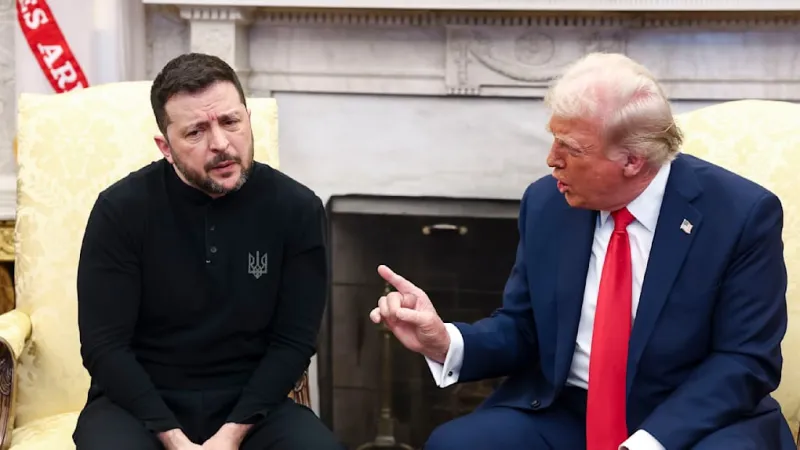
Washington – A recently published tell-all book is igniting controversy within President Donald Trump's inner circle, alleging that current Treasury Secretary Scott Bessent disparagingly referred to Ukrainian President Volodymyr Zelenskyy and strongly advised President Trump against holding a meeting with the leader. The revelations, emerging from an insider account, detail scenes of charged exchanges and profound distrust towards the Ukrainian head of state among top US officials, painting a stark picture of diplomatic tensions behind closed doors.
According to the explosive new volume, Bessent, a key figure in the Trump administration's economic policy, reportedly described President Zelenskyy with highly inflammatory language. The book claims Bessent stated, "I know this little bastard," conveying a deep personal animosity that shaped his counsel to the President of the United States.
The alleged remarks highlight a significant divergence in opinion within the administration regarding the relationship with Ukraine, a nation crucial to US geopolitical strategy in Eastern Europe. The book details Bessent's strong suggestion to President Trump that he should not receive President Zelenskyy, an action that, if taken, would have sent a chilling message to Kyiv and US allies.
Such an admonition from a Cabinet-level official like the Treasury Secretary underscores the internal complexities and potential friction points that characterize high-level decision-making in Washington. Treasury Secretary Bessent's portfolio typically focuses on economic affairs, making his purported foray into foreign policy advisory concerning a specific head of state particularly notable.
President Trump's interactions with President Zelenskyy have long been a subject of intense scrutiny, especially given past controversies. The book's revelations add another layer to this narrative, suggesting that some of his top advisors harbored significant personal and political reservations about the Ukrainian leader.
Sources close to the administration, speaking anonymously due to the sensitivity of the allegations, indicated that while differing opinions are common, the level of alleged disdain described in the book is unusual for public record. These revelations could prompt official statements or internal investigations, depending on their broader reception.
The timing of this book's release is particularly poignant, as international relations remain volatile and Ukraine continues to navigate a complex security environment. Any perceived slight or internal US division could have tangible effects on morale in Kyiv and provide fodder for adversaries.
Neither the White House nor the Treasury Department has issued an official comment regarding the book's specific claims. However, observers in Washington anticipate that the allegations will generate considerable discussion and could compel a response as public and media pressure mounts.
The political ramifications of such an alleged statement from a high-ranking official against an allied head of state are substantial. Diplomacy relies heavily on mutual respect and established protocols, and any departure from these norms can strain crucial international alliances.
This incident, as detailed in the book, illuminates the intricate and often personal dynamics that influence foreign policy decisions at the highest levels of government. It raises questions about the scope of influence held by various Cabinet members and the internal debates that shape a President's engagements with world leaders.
For Ukraine, a nation heavily reliant on US support, these allegations could be unsettling, regardless of their ultimate verification. Maintaining strong bilateral relations with the United States is paramount for Kyiv, and any suggestion of fundamental distrust within the US government could complicate future diplomatic efforts.
The book's account serves as a reminder of the constant interplay between personality, policy, and power within the executive branch, offering a rare glimpse into the potentially unfiltered opinions held by those closest to presidential authority. As details continue to emerge, the full extent of this alleged counsel and its impact on US-Ukrainian relations will undoubtedly remain a focal point for political analysis.