 Angel Doris
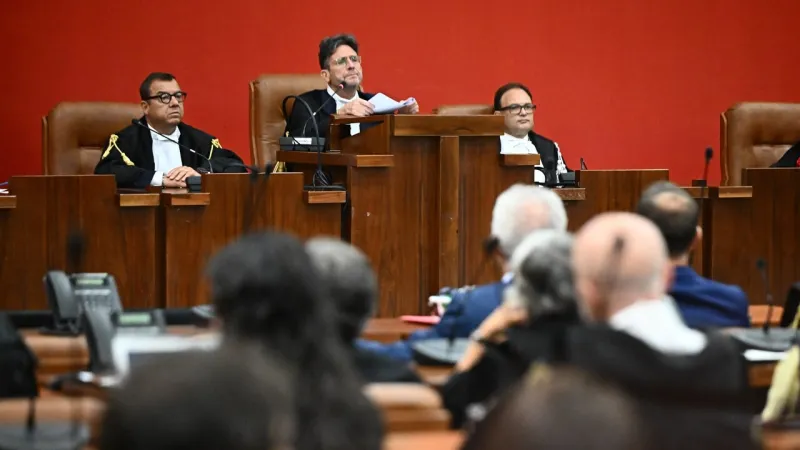
Genoa, Italy – Giovanni Castellucci, the former chief executive of Autostrade per l'Italia (Aspi), received a 12-year prison sentence today for his involvement in the catastrophic Morandi Bridge collapse on August 14, 2018. The tragic event claimed 43 lives and exposed significant failures in infrastructure management, culminating in a protracted legal battle that has gripped the nation for over eight years.
The verdict, delivered by the court in Genoa, marks a pivotal moment in the quest for justice for the victims and their families. Prosecutors had sought a more substantial sentence of 18 years and six months for Castellucci, accusing him of negligent homicide and disaster for his alleged role in failing to ensure the safety and maintenance of the vital artery.
The Morandi Bridge, an integral part of the A10 motorway connecting Genoa to the French border, crumbled during a torrential downpour, plunging vehicles and concrete sections hundreds of feet to the ground below. The sheer scale of the disaster sent shockwaves across Italy, sparking widespread outrage and calls for immediate accountability from the companies responsible for the nation's infrastructure.
Castellucci, who led Aspi until 2019, was among more than 50 defendants initially indicted in the extensive probe. The investigation meticulously scrutinized years of alleged underinvestment in maintenance, falsified safety reports, and a corporate culture prioritizing profit over public safety within the concessionaire.
The judicial process proved arduous and complex, with numerous hearings, expert testimonies, and a mountain of evidence. For the families of the 43 who perished, each court session served as a painful reminder of their loss, their resolve for justice unwavering throughout the prolonged proceedings. As early as 2018, Genoa awaited the Morandi Bridge verdict with bated breath, knowing the eventual outcome would carry immense weight.
The collapse not only devastated a community but also triggered a national debate over the state of Italy's aging infrastructure and the oversight mechanisms for private concessionaires. Critics argued that the tragic incident was an avoidable consequence of systemic neglect.
Evidence presented during the trial focused on critical structural deficiencies that were allegedly known to Aspi management but were not adequately addressed. The prosecution contended that cost-cutting measures took precedence over essential repairs, ultimately leading to the bridge's catastrophic failure.
The sentence handed down to Castellucci is viewed by some as a partial vindication for the victims, while others contend it falls short of the full measure of justice demanded for such a profound loss of life. The disparity between the prosecution's request and the court's final ruling highlights the intricate legal interpretations of corporate responsibility in cases of this magnitude.
Reports like Morandi Bridge Collapse: Verdict Looms Eight Years After Tragedy underscored the painstaking pace of the investigation and trial, reflecting the Italian legal system's thorough, albeit slow, approach to complex cases involving multiple defendants and voluminous documentation.
Beyond the courtroom, the Morandi Bridge disaster spurred significant political and economic repercussions. Autostrade per l'Italia, a unit of the Atlantia group, eventually lost its lucrative concession to manage much of Italy's motorway network, leading to its nationalization. The company's prior apology regarding the Morandi Bridge had itself stirred national debate.
The bridge itself has since been replaced by the Genoa-San Giorgio Bridge, designed by architect Renzo Piano, which opened in 2020. This new structure stands as a symbol of resilience and renewal for Genoa, even as the memory of the collapse lingers.
This verdict serves as a stark reminder of the critical importance of robust maintenance and ethical oversight in managing public infrastructure. It underscores the profound legal and societal consequences that await those deemed responsible for neglecting such duties.
While the legal battle concerning the Morandi Bridge collapse may see further appeals, this initial sentence for a former top executive marks a significant milestone. It reinforces the principle that corporate leaders can and will be held personally accountable for the gravest of corporate failings, particularly when public safety is jeopardized. The pursuit of full justice continues, yet this ruling offers a measure of closure for a nation still grappling with the tragedy.