 Chandra Wijayanto
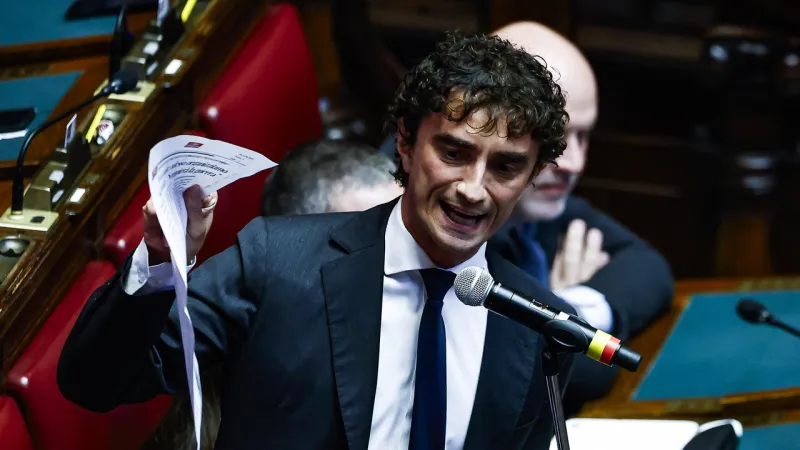
ROME – Italy's Catholic community has voiced robust condemnation against Representative Galeazzo Bignami following recent allegations of gratuitous attacks on the revered legacy of former President Oscar Luigi Scalfaro. The late former President's nephew publicly responded to the controversy, expressing profound "compassion" for individuals who exploit Scalfaro's memory for political ends, signaling a deep disapproval within both political and religious circles.
The strong reaction underscores the enduring respect held for Scalfaro, a statesman whose career spanned decades, culminating in his seven-year term as President of the Italian Republic from 1992 to 1999. His tenure was marked by efforts to uphold constitutional principles and national integrity during a period of significant political upheaval and corruption investigations.
Religious leaders and prominent Catholic lay organizations across the nation have collectively decried what they perceive as an unwarranted attempt to sully the reputation of a figure widely seen as a paragon of public service and moral rectitude. Statements released by several dioceses and Catholic associations highlighted Scalfaro's unwavering commitment to ethical governance and his profound personal faith.
Representative Bignami, a figure within the current political landscape, has not directly addressed the Catholic community's specific charges regarding his remarks on Scalfaro. However, the intensity of the backlash suggests that his comments, though not fully detailed in the provided source, were interpreted as a significant affront to Scalfaro's memory.
The former President's nephew, whose name was not specified in the initial report, emphasized the inherent sadness in witnessing the past leveraged for present-day political maneuvering. "We feel compassion for those who resort to using the memory of others to launch attacks," he stated, reflecting a sentiment of sorrow rather than outright anger, though the underlying criticism was unmistakable.
Oscar Luigi Scalfaro, a deeply committed Catholic, often drew on his faith as a guiding principle in his public life. His presidency coincided with the "Mani Pulite" (Clean Hands) investigations, a time when Italy grappled with pervasive political corruption. Scalfaro's steadfast moral stance during this tumultuous era earned him considerable admiration.
This current controversy highlights a recurring theme in Italian politics: the posthumous re-evaluation, or sometimes denigration, of national figures. Such episodes often ignite passionate debate, especially when they involve individuals with strong moral or religious affiliations, or those who served as symbols of national unity.
The Vatican itself, while not issuing a direct statement on Representative Bignami, often subtly indicates its views on matters touching upon the moral fabric of public life and respect for national institutions. The broader "Catholic world," encompassing various organizations and individuals, frequently acts as a moral compass in such debates. The Pope Francis Urges Youth to Shape Future at Assisi Gathering, a testament to the Catholic Church's ongoing commitment to shaping societal values, reflects this broader engagement.
For many, attacks on Scalfaro are not merely political skirmishes but impugn the values he represented – honesty, dedication to the republic, and a deep-seated sense of justice. The incident serves as a reminder of the delicate balance between political critique and historical reverence.
As the discussion continues to unfold in Italy, political analysts anticipate further reactions from various factions. The episode is a potent illustration of how the legacies of past leaders remain relevant and potent battlegrounds in contemporary political discourse, shaping public perception and setting moral benchmarks.
The demand for respect for deceased public figures, especially those held in high esteem, appears to be a consistent expectation from a significant segment of Italian society, particularly within its religious communities. The condemnation of Bignami underscores the limits of acceptable political rhetoric when it impinges upon deeply held societal values and historical memory.
The controversy places Representative Bignami under scrutiny for his approach to political discourse, particularly regarding historical figures. The Catholic world's unified stance sends a clear message about the perceived sanctity of certain national legacies.