 Debby Wijaya
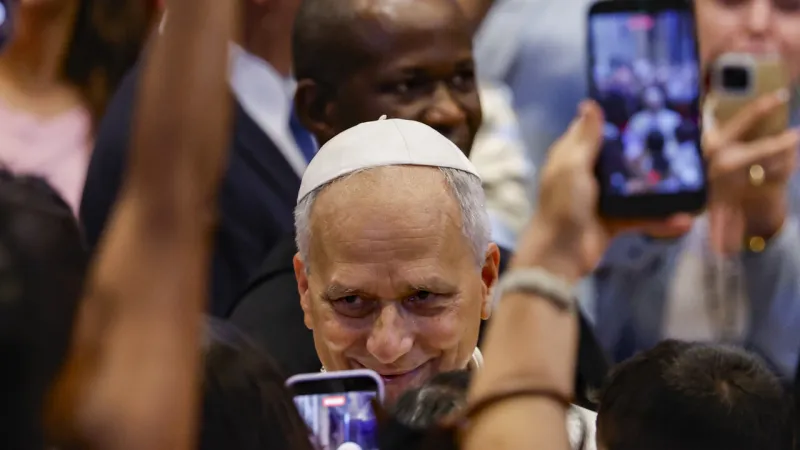
ASSISI — Pope Francis recently embarked on a significant apostolic visit to Assisi, the revered spiritual home of Saint Francis, where he convened a vital meeting with young people. The pontiff's arrival underscored a renewed emphasis on youth engagement within the Catholic Church, focusing on their perspectives and contributions to global challenges.
Upon his descent in the Umbrian town, Pope Francis received a warm official welcome. Among the dignitaries present were Bishop Domenico Sorrentino of Assisi-Nocera Umbra-Gualdo Tadino, Undersecretary to the Prime Minister, Alfredo Mantovano, and various local authorities. Their presence highlighted the institutional importance of the gathering, reflecting both ecclesiastical and governmental recognition of the event's significance.
The choice of Assisi for this encounter is profoundly symbolic. Revered globally as a beacon of peace, simplicity, and interfaith dialogue, the city offers a potent backdrop for discussions concerning the future. Saint Francis of Assisi, whose legacy resonates through centuries, championed humility and care for creation, principles often echoed in Pope Francis's pontificate.
This engagement aligns with Pope Francis's consistent focus on empowering younger generations. Throughout his papacy, he has repeatedly called upon youth to be active protagonists in society and the Church, challenging them to embrace their responsibilities and cultivate hope amidst complex global landscapes.
Previous papal initiatives, such as the World Youth Day celebrations and the Synod on Young People, the Faith and Vocational Discernment, have consistently demonstrated the Pope's dedication to fostering a dynamic dialogue with youth. These platforms aim to understand their aspirations, anxieties, and unique contributions to the contemporary world.
Discussions during such papal youth meetings often span a wide array of critical issues. These typically include urgent matters like environmental stewardship, as articulated in his encyclical "Laudato Si", as well as social justice, peacebuilding, ethical implications of technology, and the universal call to spiritual growth.
The encounter in Assisi is expected to foster an environment of open dialogue. It serves as an opportunity for the young participants to voice their concerns, share their visions for a better world, and directly interact with the leader of the Catholic Church on matters pertinent to their lives and the broader human family.
Such high-profile papal interactions carry substantial implications for the Catholic Church. They represent an ongoing effort to remain relevant and responsive to the needs of modern society, particularly in regions where secularization trends challenge traditional faith adherence. By directly engaging youth, the Church seeks to inspire a renewed sense of purpose and commitment.
For Italian society, the meeting also holds particular resonance. Italy, like many European nations, grapples with demographic shifts and the integration of young people into its social and economic fabric. A papal appeal to youth in a quintessentially Italian spiritual center sends a powerful message of encouragement and solidarity.
The spiritual atmosphere of Assisi is anticipated to deeply influence the proceedings. Drawing inspiration from Saint Francis, who famously rebuilt his Church and preached harmony with nature, the discussions are likely to emphasize themes of reconciliation, service, and the urgent need for collective action on planetary challenges.
This gathering is more than a ceremonial visit; it is a strategic outreach aimed at galvanizing the energies and idealism of young people. Pope Francis consistently believes that young individuals possess the innate capacity and moral imperative to drive positive transformation in a world often characterized by division and despair.
Observers anticipate that the Pope's address will deliver a potent message of hope and a clear call to action. He is likely to challenge attendees to confront apathy, champion ethical leadership, and dedicate themselves to building communities founded on principles of love, compassion, and mutual respect.
The meeting also implicitly addresses the Church's internal vitality. By actively listening to and empowering young voices, the hierarchy aims to ensure that the faith remains vibrant and culturally resonant for future generations, fostering a sense of ownership and belonging among its youngest adherents.
Undersecretary Mantovano's presence underscores the Italian government's recognition of the Pope's influence on national consciousness and the value of promoting initiatives that engage youth constructively. It reflects a shared interest in fostering a responsible and engaged citizenry.
Ultimately, the Assisi encounter serves as a testament to Pope Francis's unwavering commitment to placing young people at the forefront of the Church's evangelizing mission. It is a moment designed to inspire, educate, and mobilize, shaping the discourse on faith and future direction for countless individuals.
The outcomes of such dialogues frequently reverberate beyond the immediate event, influencing pastoral strategies and community initiatives globally. The pontiff's messages from Assisi are expected to reinforce universal values and encourage youth to become agents of peace and profound social change.
The meeting concludes a series of papal engagements focusing on dialogue and outreach, reinforcing the Vatican's strategic vision for a more inclusive and forward-looking Church. The insights gained from these interactions are crucial for guiding future Church policies and programs tailored to younger demographics.