 Angel Doris
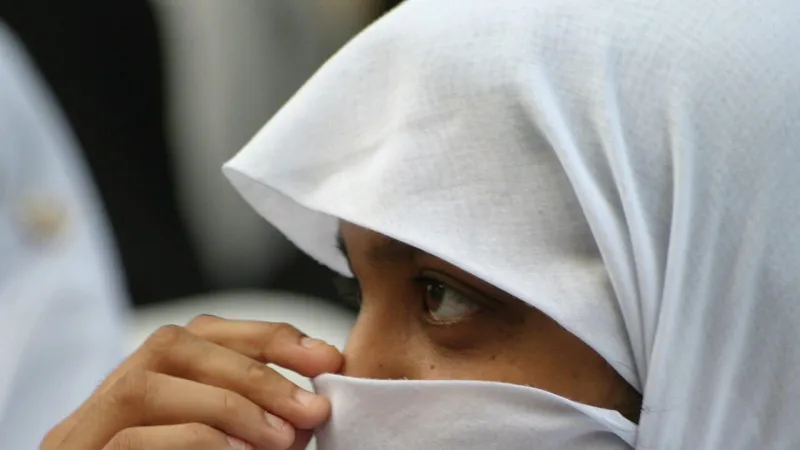
ROME – Italian Education Minister Giuseppe Valditara has forcefully advocated for a proposed ban on the burqa and niqab in the nations schools, asserting the measure is crucial to reaffirm the dignity of women and promote societal integration. The minister, speaking recently, dismissed criticisms from opposition parties and labor unions as mere political posturing and demagoguery, emphasizing the governments commitment to clear principles within the educational system.
Valditara underscored that the initiative stems from a profound commitment to individual identity and human dignity, which he considers foundational to Italian society and the educational environment. He articulated that fully veiled faces obstruct essential interpersonal communication and recognition, vital for both teaching and learning processes, and for fostering a sense of community among students.
The proposed regulation specifically targets the full face veil, such as the burqa and niqab, and does not apply to other forms of head covering like the hijab. This distinction is paramount, as the government seeks to balance cultural sensitivity with the imperative of fostering an open and integrated school setting.
Critiques swiftly emerged from the Democratic Party (PD) and the General Italian Confederation of Labor (CGIL), both of whom branded the proposal as a step backward. They argued that the move risks alienating communities and infringes upon religious freedoms, diverting attention from more pressing educational reforms. Valditara, however, maintained that such reactions were predictable and lacked substantive engagement with the underlying principles of the ban.
The minister stated, "From PD and CGIL, it is a step backward, only polemics and demagogy." His remarks highlight a growing ideological chasm between the ruling right-wing coalition and opposition factions concerning issues of cultural integration, secularism, and individual liberties within public institutions.
This debate occurs within a broader European context, where several nations have already implemented similar restrictions. France, Belgium, the Netherlands, and Austria, among others, have introduced bans or partial bans on full-face veils in public spaces or specific institutions, citing various justifications ranging from security to secular values and gender equality.
The Italian governments stance, led by Prime Minister Giorgia Meloni's Brothers of Italy party, frequently emphasizes national identity and traditional values. The proposed burqa ban in schools aligns with this broader political agenda, which prioritizes social cohesion and the assertion of state principles over what it perceives as divisive cultural practices.
Legally, the implementation of such a ban would likely face scrutiny regarding constitutional rights and international human rights conventions. Proponents argue that the measure is not discriminatory but rather a necessary step to ensure the proper functioning of public services and maintain security within school premises.
Education officials are examining existing regulations and potential legislative pathways to enact the ban. It could manifest as an amendment to existing school conduct codes or a new ministerial decree. The goal remains to establish clear guidelines for student attire that support safety, effective communication, and the civic values taught in Italian schools.
While the current focus is on schools, this discourse inevitably touches upon wider societal integration challenges. The government posits that public institutions, especially those responsible for education, play a critical role in modeling behavior and instilling shared values across diverse populations.
The discussion surrounding the burqa ban in Italy is not new. Earlier reports have detailed initial proposals and the evolving national dialogue on the subject, reflecting a continuous effort by various administrations to define the boundaries of religious expression in public life. For instance, discussions surrounding such policies have been ongoing, as detailed in reports like Italy Proposes School Burqa Ban for Womens Dignity.
Minister Valditara remains steadfast in his conviction that the proposed ban is a progressive move, fundamentally aimed at empowering women by ensuring their full recognition and active participation in society, starting with the formative environment of schools. The government appears resolved to move forward, viewing this measure as integral to upholding the dignity of all individuals within the Italian educational system.