 Chris Robert
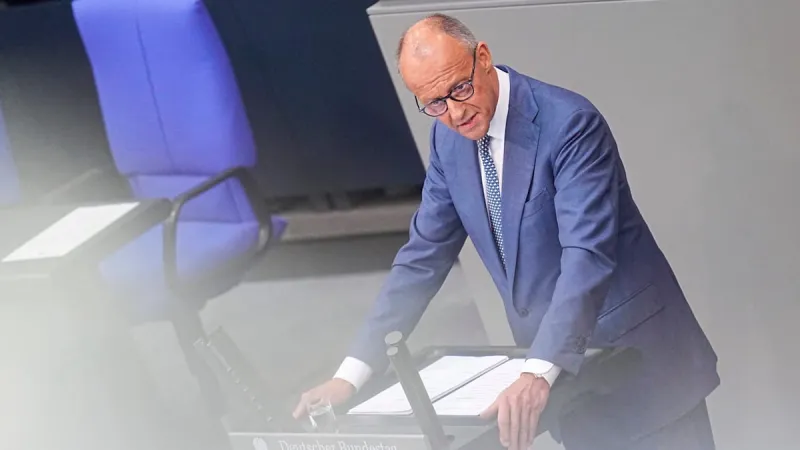
BERLIN – Chancellor Friedrich Merz, addressing the Bundestag during a session ostensibly focused on the Chancellery budget, dramatically shifted the political discourse by directly confronting Dr. Alice Weidel, co-leader of the Alternative for Germany (AfD), over her party's recent electoral showing in Saxony-Anhalt.
“You did not reach your election goal in Saxony-Anhalt,” Merz declared, his words resonating through the plenary hall and highlighting the deep divisions within German politics. The unexpected broadside underscored how the General Debate often transcends its scheduled agenda, becoming a battleground for national political narratives and party standings.
The Chancellor's pointed remark came amid a broader discussion concerning the financial allocations for his office, yet the underlying current of the debate revolved around the shifting political landscape and the growing influence of the AfD, particularly in eastern German states.
Merz, leader of the Christian Democratic Union (CDU), seized the moment to question the AfD's celebratory rhetoric following the Saxony-Anhalt election, suggesting their actual performance fell short of their publicly stated ambitions, thereby attempting to deflate their perceived momentum.
The Saxony-Anhalt election, a regional barometer for national sentiment, saw the AfD achieve significant gains but, according to Merz, not the outright dominance they had projected or desired. His challenge forces the party to re-evaluate their narrative of unqualified success.
The confrontation highlights the CDU's strategy to directly engage and challenge the AfD, rather than ignoring or downplaying its rise. This direct approach signals an intensifying political struggle as Germany approaches future federal and state elections.
Dr. Weidel, a prominent figure within the AfD, often champions the party's strong showing in state elections as evidence of a burgeoning national movement. Merz's intervention aims to undermine this perception by drawing attention to specific, unachieved targets.
Political analysts suggest Merz's aggressive stance is also a response to growing concerns within traditional parties regarding the AfD's increasing popularity. Related discussions, such as those raised by Bavarian Minister-President Markus Söder, have warned that AfD economic policies will lead Germany to bankruptcy, illustrating the widespread apprehension.
The General Debate is traditionally a high-profile event where the government outlines its policies and the opposition scrutinizes them. This year, the focus on the Chancellery budget provided a platform for Chancellor Merz to assert his leadership and directly counter his political adversaries on crucial electoral outcomes.
The exchange also implicitly touched upon the broader national political climate, where the AfD continues to poll strongly, leading to heightened tensions and strategic repositioning among Germany's established parties. The party's regional aspirations are frequently touted, with figures like AfD's Holm declaring 'storm at our back' and eyeing Mecklenburg-Vorpommern victory, further illustrating the party's ambitious targets and the mainstream response to them.
This public challenge by the Chancellor serves as a clear indication that the political sparring between the government and the largest opposition parties is intensifying, with each side eager to define the success or failure of the other, especially concerning critical electoral contests.
The political implications of Merz's statement extend beyond Saxony-Anhalt, influencing the rhetoric and strategy for upcoming regional and national campaigns. It sets a combative tone for future parliamentary sessions and political discourse as the nation grapples with its political future.
The session concluded without a definitive response from Dr. Weidel regarding the specific claim, yet the challenge posed by the Chancellor firmly placed the AfD's electoral narrative under scrutiny, demanding a detailed justification for their perceived successes.
As Germany navigates a complex political landscape, the direct engagement between its leading political figures signals a period of heightened contention and strategic realignments, with every election result becoming a battleground for interpretative dominance.