 Demian Sahputra
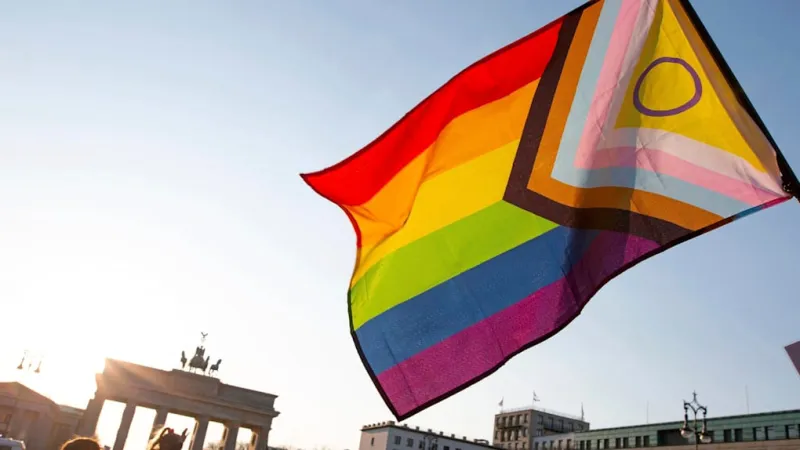
BERLIN – Following a recent and deeply disturbing attack at a Christopher Street Day (CSD) event, a significant political debate has ignited in Germany regarding the explicit protection of sexual identity within the nation's Basic Law. The Left Party, segments of the Green Party, and the Social Democratic Party (SPD) are actively advocating for such an amendment, arguing it would provide clearer and stronger legal safeguards for LGBTQ+ individuals.
This renewed push comes as a direct response to the violence, which underscored vulnerabilities within the community. Proponents contend that while Germany's constitution, known as the Grundgesetz, offers general protections, specific inclusion for sexual identity would send an unequivocal message against discrimination and hate-fueled acts.
Conversely, critics, including some legal scholars and conservative lawmakers, maintain that the existing Basic Law already provides ample protection against discrimination for all citizens, irrespective of their sexual orientation. They argue that Article 3, which ensures equality before the law and prohibits discrimination based on various attributes, sufficiently covers sexual identity without requiring a specific amendment.
Their perspective suggests that the current constitutional framework is robust and comprehensive, having been designed to be broadly applicable to evolving societal understandings of equality. Adding new categories, they warn, could inadvertently lead to a hierarchy of protected characteristics or open the door to a proliferation of specific inclusions.
Advocates for the amendment, however, emphasize that explicit language provides a stronger symbolic and legal foundation. They point to the need for proactive recognition in the wake of continued prejudice and violence targeting LGBTQ+ communities, arguing that general clauses may not always translate into robust protections during legal challenges or in public discourse.
The debate has quickly moved beyond legal technicalities, touching upon fundamental questions of societal values and the role of the constitution in reflecting contemporary German identity. It also probes how political bodies react to acts of hatred and what measures are most effective in fostering a truly inclusive society.
While the Grundgesetz has seen amendments over its history, changes to its core principles are rare and require substantial political consensus. The current discussion highlights a significant ideological divide on whether the perceived clarity of the existing law is sufficient or if a more explicit declaration is necessary to address modern challenges.
The parties pushing for the amendment cite the CSD attack as a stark reminder of the threats faced by the community, asserting that a constitutional recognition of sexual identity would represent a powerful legislative shield. They believe it would bolster anti-discrimination efforts and provide a clearer mandate for policy makers and law enforcement.
The argument against the amendment often invokes the principle that the Basic Law should remain a timeless document, not subject to constant revision for every emerging social issue. They suggest that legal interpretations and ordinary legislation are more appropriate tools for addressing specific discriminatory acts, rather than altering the foundational text itself.
This nuanced discussion is taking place within a broader political landscape where issues of identity, democracy, and legal interpretation are frequently debated. For a related perspective on constitutional challenges and public discourse, one might consider the ongoing discussions about the maturity of voters and the perils facing democracy, as explored in the article “German Author Juli Zeh: Voters Lack Maturity, Democracy Faces Peril”.
The proponents of the amendment also highlight the international trend, where some nations have explicitly included sexual orientation or identity in their constitutional frameworks, positioning Germany as a potential leader in this human rights area. Such a move, they argue, would align Germany with progressive global standards.
As the dialogue continues, the focus remains on finding a path forward that ensures maximum protection for all citizens while upholding the integrity and foundational principles of Germany's Basic Law. The outcome of this debate will undoubtedly shape the future of LGBTQ+ rights in the nation for years to come.
Political observers anticipate robust discussions in the Bundestag as parties navigate these complex legal and ethical considerations. The implications extend beyond legal text, touching upon how Germany defines equality and inclusion in the 21st century. The CSD attack, tragic as it was, has undeniably served as a catalyst for this pivotal national conversation.
"We are not talking about a trivial matter here," stated a spokesperson for the SPD, who declined to be named due to ongoing internal party negotiations. "This is about visible protection for a community that still faces violence and discrimination. The constitution must reflect our commitment to every single individual."
Yet, a legal expert from a prominent Berlin university, speaking off the record, countered, "The Basic Law is intentionally broad. Its power lies in its universal application. Specificity can sometimes narrow, rather than expand, protection."
The intensity of the debate underscores the deep societal divisions that sometimes emerge when fundamental rights are re-evaluated or re-contextualized. It compels lawmakers to weigh the symbolic power of explicit inclusion against the established breadth of existing protections.
Ultimately, the legislative process for amending the Basic Law is rigorous, requiring a two-thirds majority in both the Bundestag and the Bundesrat. This high threshold ensures that only widely supported and significant changes are made to Germany's foundational document.
The discussions are expected to continue for months, with various proposals and counter-proposals likely to emerge. The gravity of enshrining sexual identity protection in the Grundgesetz ensures that all arguments are thoroughly vetted and debated before any potential legislative action is taken. The tragic impetus of the CSD attack has, thus, set in motion a profound examination of Germany's core legal principles and societal values.