 Dorry Archiles
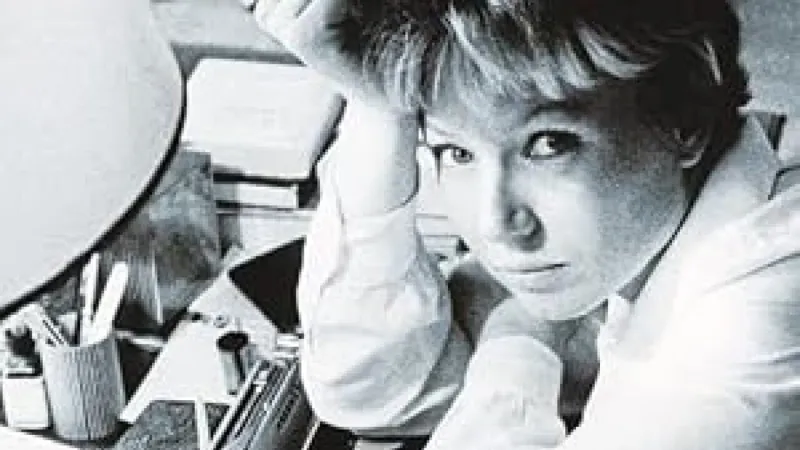
ROME – Renowned Italian author Dacia Maraini has marked her 90th birthday, a significant milestone punctuated by the release of her new book, Agro e dolce, and her candid reflections on pivotal figures in her life, Alberto Moravia and Pier Paolo Pasolini. Maraini also voiced profound support for contemporary youth movements, stating, "I am pleased to see young people protesting in the streets."
Maraini, an enduring voice in Italian literature and a celebrated feminist icon, reached her ninth decade with undiminished intellectual vigor, continuing to engage with both her literary past and the pressing social issues of today.
The occasion of her birthday coincides with the publication of Agro e dolce, a new literary offering that promises to further enrich her extensive bibliography. The book arrives as a testament to her prolific career, which spans more than six decades and encompasses novels, plays, poetry, and essays.
Her comment regarding youthful activism resonates deeply with her lifelong commitment to social justice and civil discourse. Maraini has consistently used her platform to advocate for human rights, women's empowerment, and freedom of expression.
Her connection to two of Italy's most formidable intellectuals, Alberto Moravia and Pier Paolo Pasolini, forms a central theme of her personal and professional narrative. Maraini has often referred to them as the fundamental people of her life, acknowledging their profound influence on her artistic and ideological development.
Alberto Moravia, a towering figure in 20th-century Italian literature, was Maraini's long-term companion and collaborator. Their relationship was not merely personal but a vibrant intellectual exchange that shaped much of her early work and worldview, encouraging her exploration of psychological depth and societal critique.
Pier Paolo Pasolini, the iconic poet, film director, and intellectual, represented another crucial influence. Pasolini's radical critiques of Italian society, his commitment to the marginalized, and his fierce independence deeply resonated with Maraini, fostering a shared spirit of intellectual rebellion and artistic courage.
Maraini's own work has consistently explored themes of identity, memory, gender, and political struggle, often drawing from her personal experiences and observations of a rapidly changing Italy. Her narratives offer intimate glimpses into the complexities of the human condition against broader historical and social backdrops.
The release of Agro e dolce offers readers a fresh opportunity to engage with her nuanced perspectives. While details about the book's specific content are emerging, it is anticipated to carry her signature blend of poignant introspection and sharp societal observation, reflective of her vast life experience.
Her support for young protestors underscores a belief in the power of collective action and the importance of dissent in a democratic society. It suggests a continuity between her own generation's struggles for reform and the current generation's pursuit of change, whether on climate, social equity, or political governance.
This endorsement comes at a time when protests are a regular feature across global landscapes. Recent events, such as the Post-Protest Violence in Frankfurt and widespread French Protests, highlight the ongoing tensions and the public's desire to be heard. Maraini's voice adds a historical weight to the contemporary clamor.
Maraini's intellectual journey has consistently been one of fierce independence. She has never shied away from challenging established norms or speaking truth to power, a trait undoubtedly honed through her associations with figures like Moravia and Pasolini.
Her contributions to Italian literature have earned her numerous accolades, cementing her status as one of the nation's most respected living writers. Her work is studied globally, a testament to its universal themes and lasting impact.
The enduring relevance of Dacia Maraini in 2026 speaks volumes about the timeless quality of her writing and her unwavering commitment to cultural and political engagement. She remains a vital commentator on both the past and the potential future of human society.
As she enters her ninth decade, Maraini continues to inspire new generations of writers and activists, proving that the pursuit of truth and beauty through art knows no age limit. Her life serves as a powerful reminder of the intellectual's role in shaping public discourse.